
The Importance of Trading Psychology in Forex Success

The Importance of Trading Psychology in Forex Success

The Role of Trading Psychology in Forex Success

Forex trading is not only about charts, indicators, and macroeconomic headlines. You can have a solid strategy and still bleed money because your brain starts bargaining with you at the worst possible moment—right when your plan is supposed to run the show. Trading psychology is the part of the process that explains why two traders can see the same setup and produce wildly different outcomes.

In other words: the market doesn’t change because you feel nervous. But your decisions do. When traders learn to manage emotions, improve self-control, and build repeatable habits, their performance usually becomes more consistent. This article focuses on the mental mechanics behind trading decisions—what goes wrong, why it happens, and how to fix it without turning your trading life into a 24/7 mindfulness seminar.

Understanding Trading Psychology

Trading psychology refers to the emotional and mental state that shapes your decision-making. It includes how you interpret uncertainty, handle losses, react to wins, cope with drawdowns, and follow your own rules. Market conditions may be chaotic, but your internal conditions can be chaotic too—and that’s often the real problem.

At the center are emotions like fear, greed, frustration, and anxiety. These aren’t “bad” in a moral sense; they’re just signals your brain produces under stress. The danger comes when emotion starts overriding your strategy. A trader who can recognize the emotion quickly can still act, but in a way that matches the plan rather than the mood.

There’s also a mental layer that sits underneath emotion: beliefs about your ability, your confidence in the system, and your expectations of what “should” happen. For example, if you assume you’re due for a win after a losing streak, you may start taking trades that don’t match your criteria. If you believe losses mean you’re doing something wrong, you may hesitate to cut positions that should be closed. Psychology isn’t just about feelings; it’s about assumptions that determine behavior.

What Psychology Does to Decision-Making

Your trading decisions usually come from a process that looks like this: you see information, interpret it, decide, execute, and then evaluate. Trading psychology affects the interpretation and evaluation steps the most.

When you’re calm, you tend to interpret setups based on structure and probabilities. When you’re stressed, your brain shifts toward threat detection—what can go wrong—and you may overweight negative outcomes. After a loss, many traders interpret the same market differently, even when nothing materially changed.

When you win, the brain often does something else: it assigns the win to your skill and the loss to randomness. That’s fine as a temporary story, but it becomes dangerous when it leads to increased risk or sloppy execution. Eventually, your behavior drifts and your results follow.

Emotions Are Useful Data—Until They Aren’t

Emotion can be a source of valuable insights. For example, fear before entry might be your brain detecting that you’re forcing a trade, that liquidity is thin, or that the setup is less clean than you want to admit. Greed can sometimes show up when the reward-to-risk looks unusually good, and your brain latches onto easy profit thinking.

But here’s the catch: emotions are noisy. Your job isn’t to obey them. Your job is to interpret them like a dashboard light. When you feel an emotion, you ask a simple question: “Is this a warning that my trade doesn’t match my plan?” If the answer is yes, you pause. If the answer is no, you execute according to your rules even if your stomach feels like it’s filled with unsweetened coffee.

Common Psychological Pitfalls

Most psychological issues in forex trading fall into a handful of buckets. You don’t need to “fix your personality.” You need to recognize the patterns and stop feeding them.

Overconfidence is one of the most frequent problems. It often appears after a string of wins, when your confidence spikes and your risk management loosens. This can happen subtly. A trader might start increasing lot size, skipping a portion of the analysis, or taking trades that are slightly outside the original strategy because “it’s basically the same.” Overconfidence creates a blind spot: the trader starts believing they’ve mastered the market’s behavior when they’ve only mastered a short sample of outcomes.

Fear is the flip side. Fear can prevent traders from entering trades that meet their criteria. Instead of waiting for a proper setup, they wait for emotional comfort. The problem is that emotions rarely provide accurate timing. A “safe feeling” does not equal an edge. Fear also causes premature exits, especially when a trade goes into drawdown and the trader decides the market is “definitely reversing.” Sometimes it is. Often it isn’t—and the trader just paid a tuition fee to a market that doesn’t care.

Inability to accept losses can lead to holding losing positions longer than necessary. This is driven by hope: the belief that the price will come back to your entry just because you want it to. Traders get stuck in what looks like patience but behaves like denial. The hope-despair cycle describes the emotional oscillation between optimism and disappointment. You expect recovery, you see it almost happen, you feel relief, and then the market moves against you again. Each swing makes it harder to act rationally.

Revenge trading follows that cycle. After a loss, the trader wants to “win it back” quickly, which turns trading into a reaction instead of a strategy. Revenge trading tends to reduce discipline: you enter faster, justify questionable setups, and abandon the risk plan because you’re trying to fix an emotional problem with money.

Chasing and late entries are another issue. When price moves without you, you feel like you missed the boat. So you jump in after the move has already happened. In many strategies, late entries carry worse structure and higher risk. Psychology makes you pay the “missed opportunity tax” with your account balance.

Results-thinking also causes damage. Some traders evaluate their strategy based on profit alone instead of process. If a trade loses but followed rules, it still has value as data. If a trade wins but violated rules, it may tempt you to keep the violations going. Results-thinking turns your trading plan into a hostage situation: the market controls your confidence rather than your process.

Strategies to Manage Trading Psychology

The good news is that trading psychology is trainable. Not in the “be positive and everything works out” way. Trainable in the “change your inputs and your behavior will follow” way. You can build structure around decisions so your emotions have less room to hijack the plan.

Build a Trading Plan You Can Actually Follow

A trading plan reduces emotional decision-making by forcing you to follow rules during both calm and stressful moments. It should cover what you trade, why you trade it, when you enter, when you exit, and how you size risk.

Most plans fail for one boring reason: they’re too vague. “Buy when the trend is strong” is not a plan. “Buy EURUSD on a daily trend alignment with a defined trigger, place a stop based on swing structure, and risk 1% per trade” is closer to something you can execute without improvising like a jazz musician.

When your plan is specific enough, you can treat your emotions as an alert system instead of a boss. If the setup exists, you can enter. If it doesn’t, you wait—even if waiting feels like losing time.

Use Risk Management as Emotional Management

Risk management isn’t just for math. It’s for your mindset. If position sizing is capped and consistent, losses become less personal. They become measurable outcomes within a process.

When traders ignore risk limits, every loss becomes a bigger psychological event. That increases the likelihood of revenge trading, overcorrection, or “I’ll just risk more to recover faster.” A good risk system keeps the account from turning every minor mistake into a crisis.

A simple way to think about it: if your risk per trade is reasonable, your brain has less reason to panic. It’s harder to feel helpless when your plan limits damage.

Maintain a Trading Journal That Captures Emotions, Not Just P/L

A trading journal helps in two ways. First, it turns your trading history into pattern data you can review. Second, it captures the emotional context that production systems often miss.

Instead of only recording entry, exit, and results, log a short note about your mental state and the situation before you traded. For example:

  • “Felt rushed; entry was earlier than planned.”
  • “Felt confident after prior wins; increased size.”
  • “Felt fear during drawdown; moved stop further than planned.”

Over time you’ll begin to see correlations between emotions and behavior. Many traders discover they don’t have a strategy problem—they have a trigger problem. Maybe the real pattern is entering impulsively after a news spike, or exiting too early when you’re up but not at the take-profit level. The journal gives you evidence rather than guesses.

It also helps to track what you did right, not only what you did wrong. If you never record wins as part of the process, you’ll forget what discipline looked like when it was working.

Practice Pre-Trade and Post-Trade Checklists

Checklists are underrated because they feel “robotic.” That’s the point. You want to reduce room for improvisation. A pre-trade checklist can include: “Does the setup match rules?” “Is the stop placed based on structure?” “Is risk within limit?” “Do I understand the exit conditions?”

A post-trade checklist can focus on behavior: “Did I follow the plan?” “Did I change anything emotionally?” “What did I learn?” That helps switch your brain from outcome chasing to process evaluation.

This is particularly useful during drawdowns. When your confidence drops, you stop trusting yourself. A checklist acts like a decision prosthetic—temporary, but helpful.

Maintain a Balanced Lifestyle to Reduce Stress Effects

A balanced lifestyle supports better decision-making. Regular exercise and adequate rest improve stress tolerance. That matters because trading stress can be cumulative. If you’re constantly short on sleep, your patience shrinks. Your tolerance for uncertainty drops. You may interpret normal price fluctuation as a threat rather than background noise.

Relaxation techniques—breathing exercises, meditation, walking, or even turning music on while reviewing charts—often help, but the main goal is consistency. Traders who train their routines usually trade with fewer emotional spikes than traders who only manage stress when things go wrong.

Also, watch the “life distraction tax.” Long workdays, family stress, and poor eating habits show up in your charts as haste and impatience. Not glamorous, but common.

The Impact of Mindset on Trading Performance

Skill matters, but mindset shapes how you use that skill. It influences whether you treat trading as learning or as judgment. It determines whether losses are treated as feedback or as proof that you’re failing.

A growth mindset is one of the most practical approaches. It means you focus on learning and improvement, not on proving your identity as a “great trader” or “not a trader.” With a growth mindset, losses don’t trigger shame. They trigger review. You ask: “What did I do? Was it within my rules? If not, what do I change?”

This style of thinking builds resilience. Forex markets can be brutal over short time periods, and resilience is not a personality trait you either have or don’t. It’s a response pattern you develop.

Emotional Intelligence: Knowing What You Feel and Why

Developing emotional intelligence helps you manage emotions without pretending they aren’t there. Emotional intelligence means you can identify what you’re feeling, trace it to the situation, and decide how to respond.

For example, a trader might feel “confused” during a trade. Emotional intelligence asks whether “confused” actually means “uncertain about plan execution,” or whether it’s code for “I don’t trust my stop,” or whether it’s “I’m seeing things that aren’t in the chart.” If you can label the feeling, you can address its cause.

This also helps with adaptation. Markets change. Your setups may degrade. A trader with higher emotional intelligence is more likely to pause and reassess rather than stubbornly apply a strategy after it stops performing.

Risk Perception and How It Drives Behavior

Mindset influences how you perceive risk. If you treat risk as a highlight reel—“risk is exciting”—you might ignore limits. If you treat risk as a controllable tool, you’ll size appropriately and stick to stops more consistently.

Many traders don’t lose money because they don’t know about stops. They lose because they relate to stops emotionally. A stop feels like a promise being broken, a signal that you “were wrong.” But your system should treat a stop as a tool, not a personal verdict. When your mindset supports that, decision quality improves and you reduce needless emotional interference.

Common Mindset Errors Traders Don’t Talk About

There are a few mindset mistakes that sound harmless until they show up in your trading account:

  • All-or-nothing thinking: “If I’m not up today, I failed.” That pushes revenge and activity bias.
  • Over-identification: “My strategy is me.” When the strategy produces losses, the personal ego gets bruised.
  • False certainty: “This time the market has to respect my level.” Markets don’t bargain.
  • Ignoring variance: Expecting smooth equity curves. Real trading includes periods of randomness and grind.

These beliefs shape behavior on both sides of the trade—entry decisions and exit decisions.

Psychology in Real Trading: What It Looks Like Day to Day

Let’s make this practical. Imagine a trader who has a decent system but struggles with discipline. The system looks good on paper. The charts often match entry criteria. But the trader’s emotional pattern repeatedly creates avoidable errors.

On a Tuesday morning, the setup appears. The trader likes the chart, but price is a touch extended from the entry point. The plan says “only enter at the trigger.” The trader feels impatient. Instead of waiting, they enter early, “just this once,” and the stop gets tagged. That loss doesn’t just hurt the account; it fuels the next day’s behavior.

On Wednesday, after a loss, they become risk-averse. They start skipping trades to avoid another stop-out. Then they chase a later move because they refuse to miss the opportunity again. The trade ends in a partial loss, but this time the trader also starts adjusting the stop “to give it room.” The emotional driver is fear of realizing the stop-out again.

Now the account is down, and the trader’s confidence is low. They start searching for a “stronger sign” that doesn’t exist. They overtrade until they find something worse than their original setup. It feels like desperation because, psychologically, it is.

This pattern is common. It’s not a sign that the strategy is worthless. It’s a sign that emotional triggers are changing behavior: overconfidence after wins (bigger size, looser criteria) and fear after losses (skip rules, move stops, revenge trades).

Tools and Techniques That Support Trading Discipline

Think in Rules, Not Feelings

One of the best ways to manage psychology is to convert it into rules your brain can follow under stress. Instead of “I’ll feel confident enough to enter,” you define “I enter only when X occurs.”

If you do that, the trading decision becomes a checklist verification rather than a mental debate. The market will still be unpredictable; your execution won’t be constantly negotiated.

Separate Trade Planning From Trade Execution

Many traders plan while emotionally engaged. They look at a setup, feel excited or worried, then execute immediately. When emotions spike, plan accuracy drops.

A cleaner method is to do planning with full attention, then execute without renegotiating. That might mean: mark the setup, set the order, and step away for a moment. Not because you’re scared of your own trade, but because you’re reducing the chance of “fixing” when nothing is broken.

Use Limits on Frequency When You’re Overstimulated

Trading psychology gets worse when you’re tired, bored, or overly focused. Some traders start charting constantly, hunting for setups that aren’t in the strategy. That’s when mistakes increase.

If you notice that pattern, create a rule: maximum number of trades per day, or maximum active analysis windows. That reduces the chance of impulsive entries.

Reframe Losses as Feedback

Losses feel personal when you interpret them as failure. But losses are part of any probabilistic system. Even good strategies experience losing streaks because markets are noisy and because probabilities don’t guarantee a straight line.

A useful reframe is: “This loss helps me locate where my process deviated.” If your process followed the plan, you learn about variance and market conditions. If it didn’t, you learn about your triggers. Either way, the loss becomes information rather than a verdict.

When You Should Pause Trading

There are times when trading psychology is telling you to step back. Those times don’t require drama. They require honest observation. If you’re unable to follow your rules, if you feel angry, if you keep checking price obsessively, or if you’re making “fixes” like moving stops without a rule—pause.

A pause can be an hour, a day, or longer. The point is to stop the behavior spiral. Many traders only pause after damage. Better to pause before the account takes a bigger hit.

How Long Does Trading Psychology Training Take?

There’s no fixed timeline, because it depends on how consistent you are with journaling, checklists, and plan execution. But you can expect changes to show up in a measurable way rather than a motivational way.

In practice, many traders notice improvement when they reduce rule violations. The first wins often come from preventing the obvious psychological mistakes: no revenge trading, no late entries, no “one more trade” after a loss, no random stop changes. Over time, you’ll likely become more consistent in execution even when emotional heat rises.

It’s tempting to want faster results. If you’re improving your process, it will feel slow. That’s because consistency usually grows from small corrections, not from one big breakthrough session.

Conclusion

Trading psychology is not a side topic. It’s the operating system behind your strategy. Even when your technical analysis is decent, emotions and beliefs shape how you enter, how you manage risk, and how you respond to losses and wins. That’s why traders who understand trading psychology often perform more consistently: they reduce rule violations and turn emotions into usable signals.

A trader who recognizes their psychological tendencies gains an advantage that charts can’t provide. They can harmonize emotion with strategy and keep decision-making aligned with the plan. The forex market will still move unpredictably. The difference is that your process stays intact.

For more insights into the world of forex trading, consider visiting reliable trading resources. Through continual learning and adaptation, traders can enhance their trading acumen and navigate the challenging yet rewarding terrain of the forex market.
Understanding Forex Slippage and How to Minimize It

Understanding Forex Slippage and How to Minimize It

Introduction to Forex Slippage

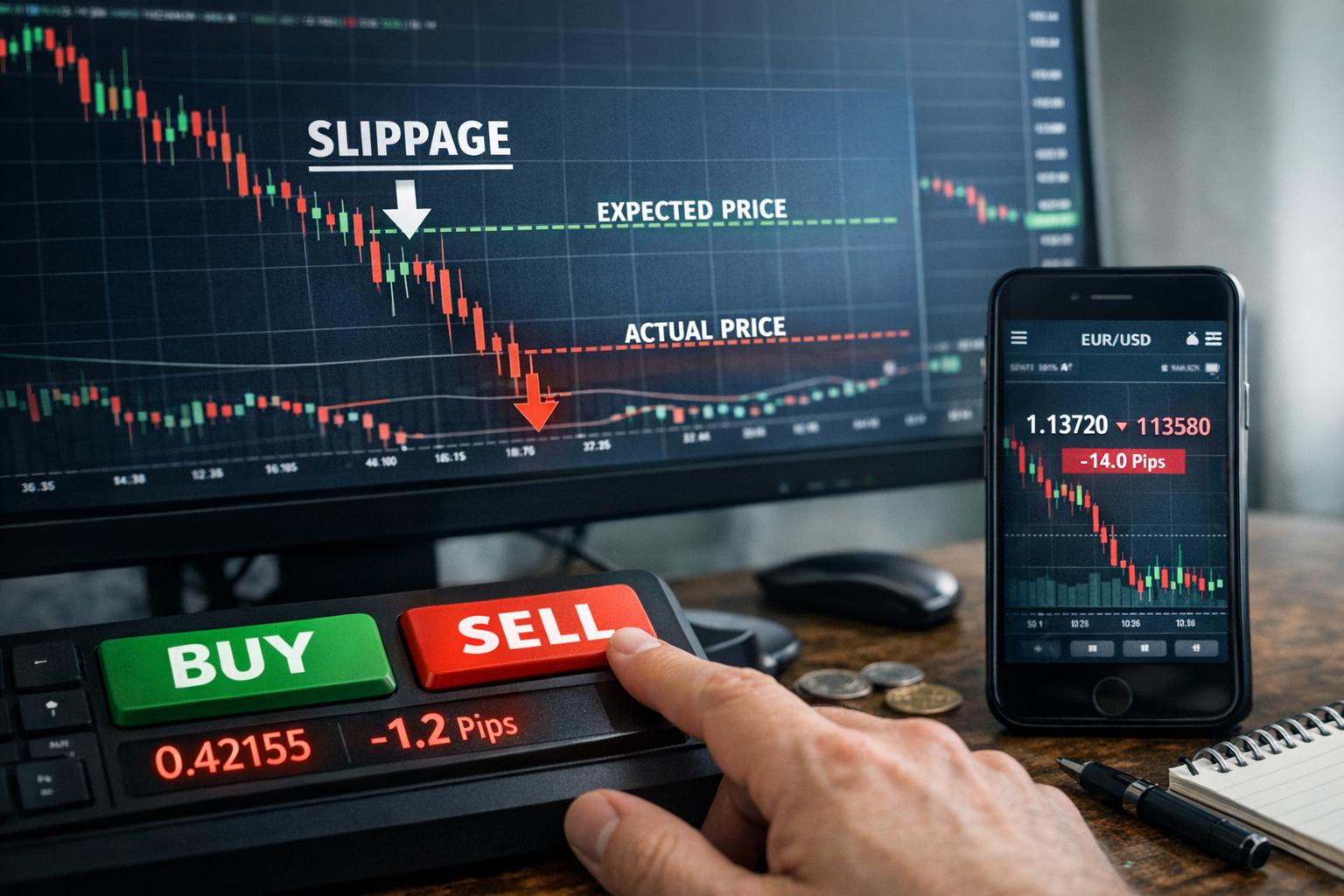
In forex trading, slippage shows up more often than most traders expect—usually on the day they swear they’re being careful. Slippage is the gap between the price you thought you were getting and the price your trade actually fills at. If you’ve ever placed an order expecting a clean entry and then watched the chart print a fill that’s a few pips worse, you’ve seen slippage in action.

While one trade won’t make or break your account, slippage becomes a real issue when you trade frequently, hold tight profit targets, or run automation that places orders at high speed. It’s also worth knowing that slippage doesn’t affect every broker equally. Different execution models and liquidity sources can change how often you get decent fills versus “surprise, here’s a worse price.”

What Slippage Looks Like in Real Trading

Slippage usually comes up in one of these scenarios:

When you place a market order (you accept the current price), but the market moves during order processing.
When liquidity thins out (fewer buyers/sellers), so your order can’t match at the intended level.
When volatility spikes (news releases, sudden geopolitical headlines), causing rapid price jumps.

A lot of traders describe it as “the broker changed the price.” More accurately, the market changed while your order was moving through the execution chain. Even the best systems can only execute against what’s available at the moment the request is processed.

What Causes Slippage?

Slippage is primarily caused by market volatility and liquidity. During highly volatile periods, such as after major news announcements, prices change rapidly, so trades can fill at prices different from those seen at order placement. Additionally, low liquidity in the market can cause slippage, because there may not be enough buyers or sellers at the specific price level your order needed.

Market Volatility

Market volatility refers to how quickly and sharply the price of a currency pair moves. In high-vol environments, a bid/ask can shift multiple times in a second, and your order may not lock onto the price you expected.

This is common around:

Major economic news releases (inflation, jobs reports, central bank decisions)
Geopolitical developments that alter risk sentiment
Unexpected policy statements that move interest-rate expectations

When volatility rises, the spread can widen too. The spread widening means even “normal” price moves start to feel more expensive.

Liquidity Levels

Liquidity is the availability of buyers and sellers at different price levels. With higher liquidity, trades match more easily, and fills are closer to the quoted price.

Low liquidity tends to show up when:

Trading occurs during off-market hours
You trade during thinner session overlaps
You trade less popular pairs that don’t have consistent participation
A broker routes orders to liquidity sources that are temporarily strained

If there aren’t enough counterparties at your intended price, the system has to fill closer to the next available level—which can be worse than expected.

Order Execution Speed and Technology

Even outside major news, slippage can occur due to execution timing. Your order has to pass through several steps: your platform sends an instruction, your broker receives it, routing chooses counterparties, and the execution platform confirms the fill.

If any part of this pipeline delays processing by milliseconds, the market can move a bit in the meantime. That may not matter in slow markets, but it matters in fast markets or for scalping strategies.

Types of Slippage

Slippage can be positive, negative, or zero.

Positive slippage occurs when the executed price is more favorable than the quoted price.
Negative slippage results in a less favorable price.
Zero slippage means the trade is executed exactly at the quoted price.

From a trader’s perspective, zero slippage is never guaranteed—especially when you’re using market orders. Still, understanding these categories matters because it helps you evaluate whether the average outcome is acceptable or if slippage is silently eating your edge.

Impact on Forex Trading

Forex slippage can affect traders of every experience level. The bigger the number of trades, the more slippage accumulates. That’s why the effect shows up loudly for:

Scalpers who target a few pips per trade
High-frequency systems (manual or automated) that place many orders
Traders using tight stop-loss and take-profit levels

When your strategy relies on consistent entry prices, slippage distorts probability. Even if your win rate stays similar, your average win and average loss sizes can change. A few extra pips on entry, and suddenly your risk/reward math looks less… math-y.

Automated trading systems and algorithms also need to be careful. Many of them assume an expected fill structure—especially if they test back in a simulator that doesn’t model real execution costs accurately. If slippage isn’t modeled (or is modeled poorly), the live results can drift.

Strategies to Minimize Forex Slippage

Slippage can’t be eliminated completely because it’s tied to how fast markets move and how orders get filled. But you can reduce how often it happens and how costly it is. Most slippage minimization comes down to three variables: execution quality, order type, and trading conditions.

Choose the Right Broker

Selecting a broker matters more than most traders admit. A broker’s execution model affects whether your orders get routed efficiently and how honestly slippage is reflected in reporting.

Some brokers use execution methods that can reduce the chance of worse fills, while others may show more variation. In general terms, brokers with Electronic Communication Network (ECN) accounts can offer more direct access to market participants and typically provide competitive execution speeds and less slippage. The basic idea is that your order interacts with a pool of liquidity providers rather than only going through a single internal path.

Before opening an account, it’s smart to:

Read the broker’s execution and slippage policy
Check how they define “market execution” for your account type
Look at spread behavior during volatile periods
Test on a demo account, then compare fills on a small live account

Also, don’t ignore the boring reading. “Market orders are executed at the best available price” is common wording and it sounds reassuring until you see how execution behaves during news.

Trade During Optimal Market Hours

Timing affects slippage because it changes liquidity and spread. Trading when the market is busiest tends to reduce the distance between quoted and executed prices.

The overlap between the London and New York sessions is often characterized by higher liquidity and usually less slippage. Meanwhile, the Asian session can be thinner depending on what pairs you trade, which can lead to wider spreads and more price jumps.

A practical approach is to track slippage patterns on your own account. If you notice consistently worse fills at certain hours, that’s useful information—even if the headline “best trading hours” chart says otherwise.

Utilize Limit Orders

When you have the choice, use limit orders rather than market orders.

Limit orders give you control over the price you’re willing to accept. The trade won’t fill unless the market reaches your limit price. This approach can reduce negative slippage because you’re not accepting “whatever next price is available.”

There’s a trade-off, of course. Limit orders can fail to fill, especially in fast markets where price jumps past your level. But for traders who care more about entry precision than guaranteed fills, limit orders are one of the simplest slippage controls.

Use Stop-Limit Orders (When Appropriate)

For strategies that depend on breakout or stop entries, consider stop-limit logic instead of plain stop-market orders. A stop-limit order activates at your stop level, but it only executes within your specified price range.

This can reduce extreme negative slippage during sudden spikes, because the system refuses to fill at a worse-than-acceptable price. The drawback is that it can miss the entry entirely during violent moves—again, not always a problem if your plan allows it.

Monitor Economic News

Economic news is one of the most predictable sources of slippage, even if it’s still not predictable in timing down to the millisecond.

Major announcements can cause sharp price movements, widened spreads, and sudden liquidity shifts. If you trade around news, slippage can spike simply because the market reprices quickly.

A common risk-management setup is:

Avoid new market entries shortly before and during high-impact releases
If you trade those times, use order types that reduce “worst fill” exposure (like limits)
Reduce position size during scheduled volatility, just so your account doesn’t do parkour

If you’re not sure which events matter, start with the high-impact categories: central bank rate decisions, CPI, jobs reports, and surprise statements.

Broker Execution Testing: A Practical Way to See Slippage

If you want to stop arguing with theory and look at reality, run a small execution test:

Take notes for a specific pair (for example EUR/USD) and a specific time window.
Place a set of market orders of the same size.
Compare expected quoted price vs actual fill price.
Log the difference in pips, and calculate the average and worst-case.

Do this for a normal session and a high-volatility session. You’ll quickly see whether your slippage problem is occasional and controllable, or structural.

Conclusion

Slippage is an unavoidable aspect of forex trading, but it doesn’t have to be a mystery tax that you keep paying. By understanding the causes—volatility and liquidity—and using practical controls like a solid broker choice, trading during liquid hours, and order types like limit orders, you can reduce slippage’s impact on your overall performance.

Most importantly, slippage management should be part of your strategy, not an afterthought you notice when your results look off. When execution conditions are factored in, your strategy becomes easier to trust, and your risk calculations stay closer to reality.

Through comprehension and adaptation, traders can better manage slippage and refine their approach to risk. Aligning trading practices with market conditions and broker capabilities improves consistency, even when the market is doing its usual best impression of a rollercoaster.

Slippage vs Spread: They’re Related, But Not the Same

Traders often mix up slippage and spread because both affect your execution cost. They’re connected—especially during volatility—but they describe different things.

Spread

Spread is the difference between the bid and the ask prices at any moment. It’s visible on your trading platform all the time. When volatility rises, spreads often widen, which immediately makes entries and exits more expensive.

Slippage

Slippage is the difference between the price you expect at order placement and the price you actually get at execution. It’s about movement between “send” and “fill.”

A simple way to remember it:
Spread is the cost you see.
Slippage is the cost you sometimes get.

During fast markets, you can experience both: spreads widen and price moves between your quote and fill. That combination tends to hit especially hard for short-horizon strategies.

How Slippage Affects Backtesting and Strategy Performance

Backtesting is where dreams often happen. And then live trading arrives with receipts.

Why Backtests Miss Slippage

Many backtests use historical prices without modeling real execution behavior. If the simulator assumes mid-price fills or uses a fixed spread, it may ignore the “gap” between expected and actual fills. As a result, your backtest might show smooth execution and consistent trade results.

In real trading, you may see:

Worse entries due to negative slippage
Different stop-loss triggers because fills happened at less favorable prices
Take-profit exits that occur earlier or later than expected

Even if your backtest uses a realistic spread, slippage can still cause performance drift. That’s because spread deals with the bid/ask gap at one moment, while slippage deals with price changes over execution time.

What to Do About It

If your platform or strategy tooling allows it, improve your backtesting by adding slippage assumptions. You can estimate slippage from your own account logs. Then, set slippage ranges by time of day and volatility level.

One practical approach:
Collect fill data for a few weeks.
Calculate average slippage and worst slippage for each session type.
Use those numbers in your backtest model (even a simple range works better than zero).

Your goal isn’t perfect simulation. It’s better realism, so you don’t end up surprised when the live account behaves like the real world.

Measuring Slippage: What Numbers Actually Matter

You’ll get more useful insights if you track slippage in a consistent way. Otherwise it becomes a feeling, and feelings don’t rank well on search engines.

Track Slippage in Pips (Not Vibes)

For most forex pairs, measure slippage in pips and record it per order. Also keep the currency pair and order type.

Example metrics you can use:
Average slippage in pips
Count of negative slippage orders vs positive
Maximum observed adverse slippage
Slippage differences between market orders and limit orders

Track It by Session and Volatility

Slippage during a major news release can be several times higher than slippage during a calm afternoon. If you lump everything together, you’ll miss patterns.

Separate your data by:
London/New York overlap vs other hours
High-impact news windows vs normal windows
Pairs with higher liquidity vs less-traded pairs

Once you segment the data, your conclusions stop being vague. You can decide, for example, that your strategy is fine in normal hours but needs changes around specific releases.

Broker and Execution Models: Why They Change Slippage

Different execution setups can change how your orders are treated. Even without diving into overly technical detail, you can still make practical decisions.

Market Execution vs Limit Execution

Market execution is the area where slippage most commonly appears. You’re essentially saying: “Fill me now at the best available price.” If the price moves before your order locks, you may end up with a fill that wasn’t your initial hope.

Limit execution is different because you specify the price. That reduces negative slippage, but it also reduces your probability of getting a fill.

Routing and Liquidity Pools

Where your order is sent matters. If your broker routes orders to multiple liquidity providers and tries to find best price quickly, you may see lower slippage. If routing is slower or depends heavily on less flexible counterparties, slippage can rise.

This is another reason broker testing helps. Two brokers can quote the same spread, but fill at different prices during volatile periods due to different internal handling and routing.

Trading Tactics That Reduce Damage When Slippage Hits

Even if you minimize slippage chances, it will still happen. So it helps to design tactics that handle it without blowing up risk control.

Widen Stops Carefully (and Then Recheck Risk)

Some traders widen stop-loss levels to absorb slippage. That can reduce the rate at which slippage causes an early stop-out, but it changes your risk per trade.

If you widen the stop by 2 pips, you also need to adjust position size so your account risk stays constant. Otherwise, you traded slippage problems for size problems. Those are not the group chats you want to join.

Reduce Position Size During High Volatility

If your system indicates you’ll face higher slippage during certain times, lower the size. This makes the “worst possible fill” less damaging.

It’s not about being fearful. It’s about matching your risk budget to real conditions. A smaller position during red-hot volatility often performs better than a big position that gets stopped by execution noise.

Avoid Overtrading Around Execution-Sensitive Moments

If your strategy triggers too many entries when the market is unstable, slippage will become a recurring cost. Consider adding filters based on volatility or spread.

A simple filter is to avoid trading when spreads are unusually high compared to the pair’s recent average. While this doesn’t directly prevent slippage, it often reduces negative fills because liquidity is failing less often.

Positive Slippage: The Part Traders Don’t Complain About (Too Much)

Positive slippage can feel like free money. And sometimes it is. But it’s not something you should plan your strategy around.

Positive slippage tends to occur when:
Your order references a price that becomes better before execution.
Liquidity improves quickly.
The market reverses slightly during the execution delay.

If you build a system that assumes positive slippage regularly, you’re betting that your future executions will line up nicely. In practice, slippage is random enough to make that expectation unreliable. Track it, don’t worship it.

Negative Slippage and “Slippage Disputes”: What to Do

Sometimes traders believe the broker is acting unfairly. Before you start yelling at customer support, do a few checks.

Check the Order Type and Expected Price

If you used a market order, negative slippage is possible by definition during fast moves. If you used a limit order and it filled elsewhere, then you should investigate.

Also check whether the platform showed a price from “last tick” or a cached quote. Some platforms display quotes that can lag in fast conditions.

Review Execution Logs

Most platforms can show an order history with:
Order submission time
Fill time
Requested price and executed price

If you compare those timestamps against known news events, you can often explain slippage just from market behavior. If slippage is repeated even during calm periods, it’s time to test with another account or another broker.

Set Expectations With Your Broker

A good broker explains how market execution works, what slippage ranges are typical, and how they handle liquidity routing. If the answer is evasive or unclear, that’s useful information too.

Slippage Scenarios by Strategy Type

Different strategies “feel” slippage differently. Here’s the practical version.

Scalping

Scalping lives and dies by tight spreads and tight execution timing. One or two pips matters a lot. Negative slippage on entry can eat an entire portion of your take-profit target. It also changes your stop-out frequency.

For scalpers, slippage control usually means:
Choose brokers with strong execution quality
Prefer limit-based entries when possible
Trade during liquid hours

Intraday Swing Trading

Intraday systems tend to have wider targets than scalping, so slippage often matters less per trade. But it still affects risk. Poor fills can alter stop placement and reduce reward efficiency, especially when trades cluster during volatility spikes.

Filters based on time of day and news can help a lot.

Position Trading

Position trades typically use larger stop distances and longer holding periods. Slippage is less likely to dominate performance. Still, if you place large orders during volatile sessions, fills can vary. It’s less common to “lose the thesis” from slippage here, but it can distort exact entry levels.

Common Questions About Forex Slippage

Can I completely eliminate slippage?

No. As long as you trade in live markets and place orders that require execution through time, slippage can happen. What you can do is reduce frequency and reduce the worst-case impact.

Does slippage only happen with market orders?

Most slippage discussions involve market orders because they rely on immediate execution. Limit orders reduce the chance of getting a worse price than planned, but they don’t remove execution variability completely in every situation. Stop orders can also produce an “execution vs stop level” difference during fast moves.

Is slippage always bad?

Technically, no. Positive slippage is good. But you shouldn’t assume it will consistently happen. Over time, both positive and negative slippage will show up. What matters is the average impact and how it compares with your strategy’s expected edge.

Building a Slippage-Resilient Trading Plan

Slippage management doesn’t need to be complicated, but it does need to be consistent. If it’s random in your approach, slippage will feel random in your results.

Decide How Much Execution Error You Can Tolerate

Before trading, determine whether your strategy can handle a few pips of execution variance. If your take-profit is smaller than typical slippage during your trading window, your plan needs adjustment.

Use a “Fill Quality” Habit

Make slippage tracking part of your regular review. Look at:
Which order types caused negative slippage
At what times it spikes
Which pairs suffer more
Whether slippage matches market volatility

This is less about building stats for bragging rights and more about protecting your future decisions.

Adjust Position Sizing Instead of Pretending Everything Is Perfect

If slippage is unavoidable in certain conditions, size down. Your account will thank you later. A stable risk curve beats occasional hero trades that only worked because the market was in a good mood.

Final Thoughts on Forex Slippage

Slippage can be annoying, especially when you’re doing everything “right.” But it’s also a normal part of how live markets execute orders under changing conditions. The market is moving, your order has latency, and liquidity availability changes minute by minute. Once you accept that, slippage stops being a conspiracy and starts being an engineering problem you can manage.

Understanding slippage means you can make smarter choices about broker selection, trading timing, and order types. It also means your backtests become more realistic and your live expectations become more grounded. And while you can’t delete slippage from forex trading, you can absolutely reduce how much it hurts your edge.

How to Avoid Forex Trading Mistakes That Cost Money

How to Avoid Forex Trading Mistakes That Cost Money

Understanding Forex Trading Risks

Forex trading is the business of buying one currency while selling another, often across very different economies that don’t move at the same speed. That’s what makes it interesting, and also what makes it risky. Prices can shift on a headline, a surprise interest-rate decision, or even a rumor that spreads through markets before the “official” news catches up. For anyone who expects smooth progress, forex will correct that expectation quickly.

The important part isn’t fear. It’s recognition. When you understand the main sources of risk, you can set up your trading process so the risks don’t quietly eat your account. This article breaks down the biggest risk categories that trip traders up, why they happen, and what you can do to reduce the damage.

Lack of Knowledge and Experience

A lot of traders lose money before they ever place a proper trade. They start trading because the charts look readable, or because someone online showed a profit screen without showing the full sequence of losing trades. The forex market doesn’t operate on motivational quotes. It operates on liquidity, expectations, economic data, central bank policy, and risk sentiment.

When knowledge is thin, traders tend to treat forex like flipping a coin and then react emotionally when it doesn’t land on the same side twice. They misunderstand spreads, confuse pips with profit, and don’t realize how leverage interacts with their risk exposure. They also often overestimate how quickly they can learn. A few weeks of watching price action is not the same as developing a repeatable method.

The practical move here is straightforward: spend time learning how forex actually works. Start with the basics: currency pairs, how quotes work, what a pip is, how margin and leverage work, and why spreads matter. If you want a structured place to begin, educational resources like educational resources can be helpful for building a foundation instead of collecting random “bits” of advice.

Learning isn’t just theory, either. You should test ideas with small stakes or a demo account first. The point is to discover where your assumptions break. For example:
– You believe your stop-loss will protect you, but you forget slippage can happen.
– You believe a strategy will work “on any timeframe,” but you never checked performance across different conditions.
– You think you can trade during major economic releases comfortably, but volatility spikes and your entries slip.

A trade journal later might show you “bad luck.” In reality, it’s usually “bad preparation.”

Ignoring Risk Management

Risk management is the part of trading that feels boring right up until it saves your account. Then it becomes the most interesting topic in the room. A trader who understands market analysis but ignores risk management often ends up correct about direction and still loses money because position sizing was wrong, stops were too wide, or the trade was too large relative to the account.

In forex, the damage can be fast because leverage can turn a small move into a meaningful loss. That’s why risk management should be built into your rules before you enter the market, not decided after you’re already down.

One of the most basic tools is the proper placement of stop-loss orders. Stop-loss orders aren’t there to make you feel safe; they’re there to define your loss in plain numbers. Without that, you’re not trading—you’re “hoping with math.”

A common guideline is risking no more than 1-2% of your trading account on any single venture. This isn’t magic, but it prevents a string of normal losses from turning into account failure. If you risk 5-10% per trade, you’re effectively betting that you’ll be right more often than the market allows.

Position sizing is where many traders quietly fail. They see a setup on the chart and automatically choose a lot size that feels “reasonable,” without calculating what their stop-loss distance means in dollars. Tools such as position sizing calculators help translate your plan (stop distance) into your execution (trade size). When sizing is correct, your risk stays consistent even if volatility changes.

It’s also worth planning for the real world. Even with a stop-loss, markets can gap or move quickly. You might receive a worse price than your intended stop. That’s not a reason to skip stops—it’s a reason to keep your position sizes conservative so you can survive imperfect fills.

Emotional Trading

If you’ve ever watched a chart move in your favor for a few minutes and then felt weirdly tense, you already understand emotional trading. Emotions show up in predictable ways: fear makes you exit too early, and greed makes you hold too long. Confidence becomes overconfidence. A small win becomes a justification for larger risk. A larger loss becomes a reason to “get it back.”

Emotions are not the enemy. Acting on them blindly is. The market will keep doing market things: pulling back, ranging, trending, spiking on news, and then doing something you didn’t expect six minutes ago. Your job is to respond with process, not feelings.

One practical countermeasure is to write a detailed trading plan and follow it. A plan should include:
– Your criteria for entering a trade (what you see, where the setup is valid)
– Your stop-loss placement rules (what invalidates the trade)
– Your take-profit logic (where you intend to exit)
– Your max risk per trade (and max loss per day or week if you want to go further)

When those rules exist on paper, you’re less likely to improvise when the trade starts going sideways. Sideways is where emotions tend to multiply. People want certainty, but markets rarely give it in a neat little package.

Light discipline also helps in the moment. If you know your plan says “no moving stops,” you won’t suddenly decide the stop is “just a suggestion.” That alone can prevent some of the most common account blow-ups.

Overleveraging Positions

Leverage is basically borrowing power. It can multiply profits when you’re right, but it multiplies losses when you’re wrong. The problem isn’t leverage itself—it’s using it without respect for how quickly forex can move.

A common rookie mistake is treating leverage like speed. People think, “If I use more leverage, I can recover faster.” In practice, higher leverage usually makes you recover faster in the sense that it also speeds up account degradation.

When you overleverage, you effectively reduce the room for normal market noise. Minute-by-minute fluctuations that would be survivable at lower risk become dangerous when your position size is too large. You get stopped out more often, and then you try to win back losses with bigger risk. That pattern is how “one good idea” turns into a permanent hole.

So the rule is simple: use leverage responsibly and inside your personal risk tolerance. If you’re not sure what your risk tolerance is, figure it out the boring way—by calculating the maximum loss you can handle without panicking.

A helpful mental model is to imagine you’re trading without leverage. Ask: “If this were a smaller position, would I still feel comfortable with my stop-loss and timeline?” If the answer is no, your leverage is doing too much work.

Also note that leverage requirements can change depending on your broker and account type. Don’t assume every account uses the same leverage ratio. Check the contract specs and margin requirements.

Inadequate Market Analysis

Forex is not random, but it is messy. Prices respond to information, positioning, and liquidity conditions. If you don’t analyze what drives price, you’ll end up reacting to movement rather than understanding it.

“Inadequate market analysis” doesn’t only mean using the wrong indicators. It includes:
– Trading without a timeframe context (chasing entries on a chart that isn’t consistent with the broader trend)
– Ignoring economic calendars (and then getting hit hard during news releases)
– Treating technical signals as guarantees
– Confusing correlation with causation (two pairs move together, so you assume they’ll keep doing it)

Most traders benefit from combining technical analysis and fundamental analysis, or at least understanding when each one matters more.

Technical analysis uses price data—charts, trends, support/resistance, moving averages, momentum indicators. It helps answer: “Where is the market likely to react?” and “How is price behaving right now?”

Fundamental analysis uses macroeconomic information—interest rate expectations, inflation trends, GDP releases, employment data, and central bank statements. It helps answer: “What does the market believe about the currency’s future?”

You don’t have to be a macro economist to do this. The trick is to stay consistent. If you decide to trade technical setups, still be aware of the next high-impact news event that could override your chart pattern. Conversely, if you trade around fundamentals, you still need to plan how the market might behave after the news—sometimes the first reaction isn’t the full move.

Failure to Keep a Trading Journal

Trading journals are oddly unpopular until someone’s account stats start haunting them. Then suddenly everyone wishes they’d written things down earlier.

A trading journal helps in two major ways. First, it gives you feedback based on reality. Second, it reveals your patterns—especially the patterns you don’t notice while emotions are running high.

A good journal doesn’t just record “bought here, sold there.” It records why. That means:
– Entry and exit time and price
– The rationale behind the trade (setup type, analysis used, market conditions)
– Stop-loss placement reasoning
– Position size and risk per trade
– Performance results (profit/loss) and whether the trade followed the plan

After a few weeks or months, you’ll start spotting recurring mistakes. For example, you might notice that you lose most often when you enter late after price breaks support. Or you might learn that your strategy works only when spreads are tight. Or you might discover you ignore your journal during high volatility, which is basically “self-sabotage with a diary.”

Regularly reviewing the journal helps you refine decision-making. Maybe you adjust your entry trigger, or you reduce trading frequency on certain sessions, or you change which pairs you focus on. The point is not to eliminate all losses—it’s to reduce avoidable ones.

It’s also a sanity check. Some traders assume they’re “always right.” A journal proves whether that’s true or whether they’re just remembering wins and forgetting the bruises. Markets are expensive teachers, so at least make the lesson more efficient.

Choosing Unreliable Brokers

Broker risk is real, and people underestimate it because the broker often disappears behind the trading platform interface. In theory, the “market” should be the market. In practice, execution quality, spreads, and reliability vary.

Choosing a broker that is regulated by a respected authority matters because it adds oversight. Regulators can impose rules about capital, account protections, and conduct. Regulations vary by region, so you should verify the regulator listed by the broker and understand the protections that apply to your account.

After regulation, execution quality is next. You want consistent spreads, reasonable commissions if applicable, and stable platform performance. Check things like:
– How often the platform freezes during high volatility
– Whether quotes are “sticky” (delayed or changed prices)
– How slippage tends to behave during fast moves
– Withdrawal and deposit reliability

You can also evaluate practical details like customer service. When things go wrong, you don’t want a support ticket that takes three days and sends you in circles. Quick, clear responses matter when you’re trying to manage risk in live markets.

Also, read the fine print about trading conditions. Some brokers may have higher spreads around news or may impose additional constraints on stop orders. If you trade certain sessions or rely heavily on tight stops, these details can matter more than you think.

A good broker won’t automatically make you profitable. But a bad broker can make your trading decisions meaningless by breaking execution.

Other Risks Traders Often Miss

The original risk categories cover the big ones, but there are a few additional problems that quietly show up in real trading.

Market Volatility and News Events

Forex prices can shift rapidly around scheduled events like central bank announcements, inflation reports, and employment data. Even traders with solid analysis get caught when they assume volatility will behave. It rarely does.

When you trade through major news without a plan, you risk having your stop-loss executed at a worse level than you expected. Some traders avoid news entirely. Others trade only certain pairs or time windows. Either way, the key is having a rule.

A sensible approach is to check an economic calendar, then decide:
– Will you trade before the event, during it, or after it?
– If you trade, how will you adjust your position sizing?
– If you don’t trade, what’s your standby plan so you don’t “borrow trouble”?

Spread and Trading Costs

Spreads are the most common cost in forex trading. They’re also the cost many traders treat like a rounding error. A strategy might look profitable on a chart, but if your entry rate is high and your average stop distance is short, spread and commissions can eat the edge.

This is especially true if you trade frequently or on sessions where liquidity is lower. You might be correct in direction but still lose money after costs. The fix is not to avoid trading—it’s to confirm your backtests and forward tests include realistic spreads and limits.

If you’re experimenting, track net results. “Gross profit” and “real profit” are not the same thing.

Slippage and Execution Latency

Even if you place a stop-loss, you’re still subject to how quickly your broker (and liquidity providers) execute your order. In fast markets, there can be slippage. That means you get filled at a different price than expected.

Execution latency (delay) can also matter if your strategy depends on precise entry timing. Trend strategies might tolerate it better than short-term scalping strategies. That’s not a moral judgment, just physics.

So your trading approach should match your execution conditions. If you’re trading short timeframes, choose a broker and setup that handle fast execution. If your execution isn’t great, adjust your strategy so it’s less sensitive to minor timing differences.

Overtrading and Rule Drift

Overtrading usually shows up after the trader gets bored or emotionally restless. They feel like they should “do something,” and then they take setups that don’t meet their own standards. The plan disappears quietly.

Rule drift is what happens when you keep trading but gradually loosen the rules. At first, the deviation seems harmless: a slightly larger position, a stop placed a little wider, a trade taken one timeframe lower. Then one day you look at your journal and realize your “strategy” is no longer the same strategy from the beginning.

Borrowing a phrase from adult life: if you want consistency, you have to manage your impulses. Trading doesn’t reward random activity. It rewards repeatable behavior over time.

Time Horizon Mismatch

Some traders build strategies based on one timeframe, then execute on another. Or they plan to hold for days but exit after a few hours because the trade hasn’t moved enough yet.

This is a risk because it creates inconsistencies. A trade setup might be designed for a swing move, but if you manage it like a scalp, you often cut winners early and hold losers longer than planned.

Your trading plan should include a time horizon expectation. If you don’t like waiting, consider strategies designed for shorter durations—just be honest about what that implies for volatility and costs.

How to Reduce Forex Trading Risks in Practice

The best way to reduce risk isn’t just thinking about it. It’s turning risk control into habits.

Build a Risk Framework Before Trading

Start with account-level rules. Decide what maximum drawdown you can tolerate. Decide how much you’ll risk per trade. Decide whether you’ll stop trading after a certain number of losses, or after hitting a daily loss limit.

Then write these rules down. If you can’t describe your risk framework in one paragraph, it’s probably too vague to follow when things change.

You can keep it simple. Risk management doesn’t need to be complicated to work. Complicated rules fail more often because you don’t remember them under stress.

Use Stops, but Place Them with Reason

A stop-loss should be tied to market structure or invalidation, not just “some number of pips away.” If your stop is arbitrary, you’ll get stopped out in situations where the setup is still valid, or you’ll place it so wide that your position size becomes too large.

When you place stops based on invalidation, you’re making the trade’s logic testable. That makes it easier to maintain discipline. If the market hits your stop, your trade was wrong according to your plan. That’s it. No drama required.

Size Positions to Match Your Stop Distance

This is where the position sizing calculator earns its keep. Your lot size should be based on:
– Your risk percentage (like 1-2%)
– Your stop-loss distance (how far price can move against you)
– Your account currency and the pair’s pip value

Even if your analysis is excellent, wrong sizing can ruin it. Good sizing keeps your risk steady so you can evaluate your strategy fairly.

Match Your Trading to Your Schedule and Attention Span

Traders who work full-time usually don’t have all day to watch charts. That constraint is not a weakness; it’s a parameter. If you can only check markets once or twice per day, avoid strategies that require constant monitoring.

If you do watch constantly and still mismanage, that’s a different issue—one that usually involves emotional trading or rule drift. But either way, don’t pretend your lifestyle can magically support your trading plan.

Use a Journal Like a Feedback Loop

A journal becomes useful when you do something with it. Don’t just fill it in. Review it regularly and adjust based on evidence.

If your journal shows that you consistently lose trades in a certain scenario, then either avoid that scenario or adjust how you trade it. That might mean waiting for confirmation, reducing size, or changing timeframe.

If your journal shows you’re mostly losing due to execution issues (late entries, oversize, ignoring stops), that’s also useful. It tells you what needs fixing. Not every problem is a “market” problem. Sometimes it’s a process problem.

Be Selective About the Pairs You Trade

Some currency pairs behave more predictably than others. Liquidity also varies across pairs, which affects spreads, volatility, and slippage.

If you keep switching pairs whenever you feel impatient, you add complexity. Each pair has its own rhythm. Sticking to a set of pairs long enough to learn their behavior can reduce decision errors, and that lowers risk even if your entry and stop rules stay the same.

Understand the Costs and Execution Quality of Your Broker

If your broker has wide spreads during the hours you trade, your edge may vanish. If withdrawals are slow or support is unresponsive, you’re increasing operational risk. That’s not theoretical—it shows up when you least want extra stress.

So treat broker selection like part of your risk management. It deserves the same attention you give to your trading strategy.

Forex Risk Scenarios You Can Plan For

It helps to visualize how risks show up when you’re trading, because it’s easy to underestimate them in the abstract.

Scenario: You See a Good Setup, Then News Hits

Your analysis might be correct, and the price might still move your way later. But right now, volatility spikes and your stop-loss gets hit. In that case, your problem isn’t “bad luck,” it’s incomplete risk planning around event timing.

Workaround options include pausing during announcements, reducing position size into the event, or waiting for volatility to settle before entering.

Scenario: You Take a Small Loss, Then Take Another That Breaks Your Rules

This is the start of revenge trading. The market didn’t change your intelligence; it changed your emotions. After the second loss, you might widen stops or increase size without noticing. Your journal will show the exact point where discipline slipped.

Your fix is to have a clear rule for after-loss behavior: stop trading for a set amount of time, or reset to a strict risk plan for the next trade. The market will still be there later. Your account might not be, if you keep forcing it.

Scenario: You Think Your Stop Is Safe, but Execution Isn’t

Even solid stop placement can be affected by slippage during fast moves. That’s why your stop placement and your position sizing should assume you might be filled slightly worse than expected.

Conservative sizing is the antidote. It lets you absorb imperfect fills without turning one mistake into a catastrophe.

Conclusion

Forex trading is risky, but it’s not chaotic. The risks come from recognizable sources: insufficient knowledge, careless risk management, emotional decision-making, leverage misuse, weak market analysis, execution problems, and operational issues like broker reliability. When you treat risk as a system rather than a feeling, you give yourself a real chance to stay in the game long enough for your edge to matter.

If you take only one practical lesson from all this, let it be this: protect your account first, then try to improve your strategy. A trader with consistent risk control can survive while they refine entries. A trader who ignores risk control can be “right” on direction and still lose everything before refinement ever happens.

And if you’re thinking “yeah, yeah, I’ll do that later,” consider the market’s sense of humor: it doesn’t wait for your future plans. It just moves. So set up your process now, document what happens, and trade like the math matters—because it does.

The Impact of Interest Rate Differentials on Forex Trading

The Impact of Interest Rate Differentials on Forex Trading

Understanding Interest Rate Differentials

Interest rate differentials matter in forex trading in a way that’s hard to overstate. They sit behind a lot of the “why did this currency move?” questions traders end up asking—sometimes right after they’ve missed the move. At a basic level, an interest rate differential is the gap between the interest rates of two countries. That gap shapes how attractive each currency is for investors, and the forex market tends to react when that attractiveness changes.

When one country’s interest rates are higher than another’s, investors typically prefer holding assets in that higher-yielding currency. In practice, they may buy that currency (or buy assets priced in it), which increases demand and can push the currency upward. The opposite can happen when the yield advantage shrinks or disappears.

It’s not magic, and it’s not guaranteed. Currency values can move for many reasons (growth expectations, risk sentiment, trade flows, geopolitics). But interest rate differentials are a strong driver—especially over medium time horizons and in strategies that explicitly rely on carry.

The Mechanics of Interest Rate Differentials

Interest rate differentials are usually generated by central bank policy differences. Each central bank sets a target for short-term interest rates (or an equivalent policy rate). Those rates then filter into the money-market rates that investors actually earn.

Here’s a simple example. Assume the Federal Reserve in the United States sets an interest rate of 2%, while the European Central Bank sets theirs at 1%. The interest rate differential is therefore 1% (2% minus 1%).

Investors don’t just look at today’s differential, though. They also care about what the differential is expected to be tomorrow, next month, and by the time any position unwinds. That’s where expectation becomes as important as the current number. A currency can strengthen before a central bank decision if market pricing shifts toward higher future rates—or weaken if the market starts expecting cuts.

How Forex Turns Interest Into Price

Forex is essentially the price of one currency in terms of another. If investors believe that buying one currency will yield better returns, they may increase demand for that currency. Increased buying pressure can lift the exchange rate.

A helpful way to think about it:

– Higher relative interest rates make the currency more attractive to hold.
– Increased demand can lead to currency appreciation.
– Appreciation can combine with interest earnings to improve the trade’s results.

If this sounds similar to bond investing, you’re not imagining things. Many forex trades behave like a cousin of fixed income: a return stream exists (the interest differential), and the exchange rate can either help or hurt.

Implications for Forex Traders

For forex traders, interest rate differentials often show up in two ways:

1) As a direct ingredient in carry-oriented strategies
2) As a background factor that influences which currencies tend to outperform over time

Currencies with higher interest rates often become the “funding target” for investors who want yield. Traders may position for either continued rate advantage (and possible appreciation) or for a narrowing differential (and potential depreciation of the high-yielding currency).

Carry Trade: Where Differentials Earn Their Keep

A common approach that uses interest rate differentials is the carry trade. The mechanics are straightforward in concept:

– Borrow in a currency with a lower interest rate
– Convert into a currency with a higher interest rate
– Invest or hold the higher-yielding currency
– Earn the interest differential, ideally riding along exchange rate moves that don’t ruin the party

In real markets, the borrow-and-lend comparison isn’t always a literal bank-to-bank transaction for a retail trader. But the economic idea is the same: where you have a yield advantage, the position can earn over time.

A mild joke most professionals have heard at least once: “The market will pay you interest… until it doesn’t.” That’s the core risk in carry.

Risks Associated with Interest Rate Differentials

The biggest trap is assuming that a higher interest rate automatically means profits. Exchange rates can move sharply, and those moves can overwhelm the interest you’re earning.

For example, if you’re long a higher-yielding currency expecting a gradual grind upward, but risk sentiment flips or a policy outlook changes, the currency could drop quickly. The resulting exchange-rate loss might exceed the interest differential earned, turning the trade negative.

Other risk factors include:

– Sudden central bank shifts (rate hikes or cuts earlier than expected)
– Inflation shocks that force rapid policy changes
– “Risk-off” episodes that cause investors to unwind leveraged positions regardless of yield
– Liquidity changes that widen spreads and reduce the efficiency of exits

The point: treat interest rate differential as one input, not a whole thesis.

Staying Informed

Interest rates don’t sit still, and markets rarely wait for you to catch up. For forex traders, monitoring central bank communication is as important as the rate itself. Statements, minutes, economic projections, and press conferences often shift market expectations before any actual change happens.

This is also where geopolitical events matter. A country can technically “look fine” on inflation and growth, but if political risk rises and investors demand less exposure, the currency can weaken even if the central bank hasn’t changed policy.

Many traders rely on forex trading platforms for real-time rates, economic calendars, volatility metrics, and research tools. In practice, it helps to have alerts set for policy decisions, major macro releases, and high-impact data. You can’t trade what you don’t see—though yes, plenty of people try.

To be clear, interest rate differentials hold meaningful sway in forex outcomes. Traders who incorporate them—alongside risk management and macro awareness—usually make better decisions. Those who ignore the differential entirely may still trade profitably, but they’re missing an important piece of the puzzle.

What Drives Interest Rate Differentials?

Interest rate differentials don’t happen randomly. They’re the result of central bank policy decisions, which themselves react to a set of macroeconomic conditions. If you understand what central banks respond to, you’ll understand why differentials widen and narrow, and you’ll be less surprised when currency performance changes.

Central banks typically look at inflation trends, economic growth, financial conditions, labor market signals, and stability concerns. Traders don’t have the central bank’s internal model, but the public version is close enough to make real trading decisions—if you watch it consistently.

Inflation and Economic Growth

Inflation is usually the biggest driver. Central banks set policy rates partly to control demand and rein in price pressures. If inflation runs above target, the central bank usually increases rates to cool the economy. If inflation is below target, rates may be cut or kept low to support spending and investment.

Economic growth matters because it influences how strongly the central bank feels it needs to respond. A stronger economy can create demand that pushes inflation higher. Meanwhile, during a downturn, weaker demand can cause inflation to fall, giving the central bank more room to lower rates.

Put simply:

– Higher inflation risk tends to support higher interest rates.
– Lower inflation risk tends to support lower interest rates.
– Strong growth can intensify the inflation response.
– Weak growth can reduce inflation pressure and justify rate cuts.

How Growth Changes the Market’s “Rate Path”

Even when inflation looks stable, growth can shift expectations. Traders track not just actual data, but also forward-looking indicators like surveys, employment trends, and purchasing manager indexes.

This matters because markets often price interest rate paths months ahead. If investors expect the central bank to keep policy restrictive due to growth strength, the yield differential can remain wide longer than expected—supporting the higher-yielding currency.

Conversely, if growth data weakens quickly, a central bank may pivot. The differential starts narrowing in anticipation, and the high-yield currency may underperform before any vote ever happens.

Political Stability

Political stability affects interest rate differentials indirectly, but it can also hit them directly. When governments face uncertainty, investors may demand a higher risk premium for assets in that country. That increased risk premium can show up in bond yields and funding costs, which can influence or constrain central bank policy.

Sometimes central banks can still move rates based on inflation. Other times, they might prioritize financial stability and currency credibility. Foreign exchange markets react fast to credibility questions because currency weakness can amplify inflation.

In practice, traders should watch for:

– Sudden election outcomes or coalition instability
– Policy uncertainty (tax, regulation, central bank independence)
– Capital flow concerns and external financing needs
– Regional tensions that raise risk premia

A stable political environment often supports investment inflows, which can help keep interest rates structurally higher in some circumstances. The reverse is also true: instability can lead to higher volatility and weaker currencies.

Global Economic Trends

Central banks don’t operate in isolation. Global economic trends alter the exchange-rate and funding environment. Major economies influence everyone else through trade, capital flows, and the general “risk temperature” in markets.

For example:

– In global downturns, risk tends to rise and investors shift into safer currencies, regardless of relative yields.
– Commodity price swings can alter inflation outlooks for commodity-linked economies.
– Changes in global liquidity can affect how easily investors fund positions across borders.

A central bank might still want to keep rates high, but if capital flees the country due to risk sentiment, the currency can fall sharply. That can produce a yield differential that looks attractive on paper, yet fails in practice because the currency moves against you.

Supply and Demand for Currencies

Interest rate differentials operate through demand and supply dynamics in foreign exchange. If investors expect higher yields, they may buy the currency. If expectations change, that demand can evaporate quickly.

Supply and demand can also be influenced by:

– Balance of payments flows (trade vs capital flows)
– External funding needs (government and corporate borrowing)
– Hedging demand from multinational companies
– Bank funding costs and capital requirements

This is why attention to currency flow narratives helps. When a currency’s supply demand balance shifts due to funding needs or hedging activity, the exchange rate can move even if the central bank hasn’t changed policy recently.

Putting the Drivers Together

Inflation, growth, political stability, global trends, and money-market supply/demand all interact. That means a widening interest rate differential can be bullish for a currency, but not always.

A practical approach is to ask three questions before assuming a trend will continue:

1) Is the central bank likely to keep widening rates, or is the difference already priced in?
2) Is inflation trending in the same direction as policy expectations?
3) Is the market in a risk-on mood where carry strategies usually work—or risk-off, where they often don’t?

When these answers align, interest differential strategies tend to behave well. When they conflict, expect more price action.

Practical Tips for Forex Traders

Interest rate differentials are useful, but only if you treat them like they belong in a process—not a guess. The best traders tend to systematize the work: identify the differential, understand the “why,” monitor upcoming catalysts, and manage risk tightly.

Below are practical ways traders typically integrate interest rate differentials into their activity without turning every trade into a carry trade fantasy.

Recognizing Favorable Opportunities

Start with recognizing when a differential is likely to matter in the near term. That often depends on upcoming central bank events and high-impact macro releases.

Here’s what tends to create “real” trading opportunities:

– The market has shifted expectations for future policy (not just the current rate)
– A central bank signals a persistent stance (more hawkish than peers)
– Inflation data supports a continued restrictive policy path
– Economic growth continues to justify higher rates relative to peers

To stay consistent, many traders build a routine:

– Track central bank calendars
– Monitor inflation and labor updates
– Watch for guidance changes and official language shifts
– Compare those signals across the two countries in your currency pair

If you only check interest rate levels once a week, you’ll miss the part where markets move daily based on expectations.

Timing: The Part People Skip

Timing is where interest differentials often disappoint. Even if the long-term picture is correct, a position entered too late can face a currency adjustment that already happened.

For instance, if the market has been expecting a rate hike and the hiking decision arrives, the currency might already have strengthened beforehand. In that scenario, the differential may not expand further, and you can end up holding through a period of consolidation—or worse, a reversal if guidance turns slightly less hawkish.

This is why traders often distinguish between:

– Data-driven expectation shifts
– Actual policy events
– Post-event repricing

The post-event phase can still move prices, so don’t assume the “announcement day” is the end of the story.

Diversification and Risk Management

If you’re trading interest differentials, don’t treat it like a single-bet strategy where everything rides on one pair staying friendly. Exchange rates can change abruptly, and carry trades can unwind fast.

Diversification here doesn’t mean owning ten random currencies. It means reducing the chance that one macro scenario breaks your whole plan.

For example, spreading exposure across uncorrelated or differently driven pairs can reduce harm if one currency suffers a policy surprise or a risk-off drop.

Risk Controls That Actually Matter

Interest differential trades can have long holding periods, which is exactly when risk management gets lazy. Don’t.

Basic risk tools still matter more than almost anything else:

– Stop-loss placement that reflects volatility, not hope
– Position sizing aligned with account drawdown tolerance
– Limits on leverage, because carry strategies can feel stable until they’re not
– Plans for what happens if central bank communication contradicts the thesis

A useful mental model: assume the market will eventually correct. The job of risk management is to ensure the correction doesn’t end your account.

Leveraging Technological Tools

This isn’t about having the flashiest charting software. It’s about reducing reaction time and improving information flow when policy events hit. Trading platforms that provide real-time data, macro calendars, and analytics can help you respond faster without guessing.

Practical features many traders rely on:

– Economic calendars with impact ratings
– High-quality historical pricing and volatility measures
– Alerts for policy statements and key data releases
– Position tracking and journal tools for reviewing performance

If you can’t tell after a month whether your interest differential strategy works because of the differential or because of market timing, you’re flying blind. Tools help with the boring part: measurement.

Some traders also use automated systems for entry/exit based on predefined conditions (for example, when a yield differential reaches a threshold and price holds above a volatility-adjusted level). Automation can reduce emotional decision-making, though it won’t prevent wrong assumptions about macro outcomes.

Reviewing Trades Beats Re-reading Theories

After you trade, review what actually happened:

– Did the differential widen or narrow during your holding period?
– Did the central bank guidance match the expectation you based on?
– Was your exit driven by your plan or by frustration?

Over time, this builds real intuition. Theoretical knowledge is fine, but your own data tends to teach faster.

Continuous Learning and Adaptation

Forex markets evolve. Central bank behavior can shift with political changes, inflation regimes, and global financial conditions. A differential that worked well in one decade might behave differently in another.

So you need a learning loop:

– Keep reading macro updates from multiple sources
– Watch how policies in one country influence capital flows
– Learn from periods when carry does poorly (risk-off spikes)
– Adjust your time horizon when market behavior changes

For carry-heavy approaches, paying attention to volatility shifts is especially important. When volatility rises, exchange rate swings can wipe out interest gains quickly.

A Real-World Use Case

Imagine a trader planning a carry position between two currencies: Currency A offers consistently higher yields than Currency B. At first, everything looks fine: inflation in A remains controlled and central bank communication stays hawkish. The differential stays wide.

Then a few months later, inflation in B surprises to the upside. Market pricing starts expecting a tighter policy path for B. The differential begins shrinking, even before any actual rate changes occur.

A trader who only looked at the original yield gap might still feel “right,” but the market has started repricing expectations. At that point, performance depends less on the initial differential and more on whether the trader adjusted quickly when the differential logic changed.

That’s the recurring theme: interest differentials are a useful signal, but expectations shift. Your job is to track those shifts faster than your competitors—or at least fast enough that your risk plan holds.

Interest Rate Differentials, Expectations, and Market Mood

One last piece that’s easy to miss: interest rate differentials don’t operate in a vacuum. The market’s mood—risk-on or risk-off—can dominate whether carry strategies behave well.

On risk-on days, investors often tolerate higher leverage and hold higher-yield currencies, allowing interest differential logic to work more smoothly. On risk-off days, investors unwind positions, sell higher-yield currencies, and move into perceived safety. Even if the yield gap remains attractive, the exchange rate can move against the trade.

This is why two traders can look at the same differential and get different results. The difference is not the calculator—it’s how each trader accounts for volatility and macro timing.

If you’ve ever watched a trade go green slowly, then flip red on a single headline, you’ve seen this in action. Markets love a plot twist.

Conclusion

Interest rate differentials influence forex markets because they shape relative yield incentives across countries. Higher rates in one country often attract capital, supporting currency demand and potential appreciation. That’s why these differentials connect naturally to carry trade concepts, where traders attempt to profit from both yield and exchange rate movement.

But interest differentials also bring risks. Exchange rates can move fast when expectations change or when risk sentiment shifts. A widening differential can already be priced in, and a strategy that ignores central bank communication and volatility can quickly run into trouble.

Forex traders who treat interest rate differentials as a decision-support tool—while staying focused on inflation, growth, policy credibility, global trends, and sound risk management—tend to make more consistent choices. They’re not chasing a single number; they’re trading the relationship between that number and the market’s changing expectations. And yes, that’s the part that keeps it from being as simple as it looks on paper.