The Integration of AI in Forex Trading
The forex market moves in a way that makes humans feel like they’re always a few steps behind. Prices update constantly, headlines hit in real time, and liquidity shifts by the minute. So it’s not surprising that artificial intelligence (AI) has started showing up everywhere—from research desks at financial firms to screen-hungry retail traders. AI systems can process data faster than people, spot patterns that are hard to describe in plain English, and execute trades without pausing to “think about it.”
But the real change isn’t just speed. AI changes how traders form expectations about the market. Instead of relying only on manual chart reading or a fixed set of indicators, many traders now use models that learn from historical behavior and react to new information as it arrives. That means fewer decisions are based purely on gut feel and more are based on calculated probabilities.
In practice, AI-driven systems use historical data, chart patterns, and market signals to estimate likely price paths. Machine learning techniques can adjust those estimates over time as more data comes in. When done well, the result is a trading workflow that is more consistent, more disciplined, and better at dealing with uncertainty—at least more than the “try harder and hope” method most of us have probably used once or twice.
Automation Takes Center Stage
Automation has become the practical doorway that many traders walk through when adopting AI. Automated trading systems—often called “forex robots” or algorithmic trading programs—follow a set of rules for opening and closing trades. When those rules include AI-based signals, the system can react quickly to changing conditions without requiring constant monitoring from the trader.
The appeal is obvious. Automation reduces the influence of emotions like fear and overconfidence. It also cuts down on human mistakes that happen during busy hours, like clicking the wrong button or forgetting that a stop-loss exists. A good automated setup won’t care whether you’re tired after work. It just follows the plan.
Another advantage is the ability to operate 24/7. Forex doesn’t politely stop at the end of the trading day. Automated systems can watch multiple pairs, multiple timeframes, and multiple risk constraints at once, while still placing orders quickly enough to matter.
That said, automation is not “set it and forget it forever.” AI and automated execution systems still need monitoring. Markets change, data quality shifts, brokers change pricing behavior, and the model that worked last year might behave poorly if conditions evolve. The system should be supervised like a junior employee: you can trust it to do the tasks, but you still check whether it’s doing them correctly.
From Manual Rules to Model-Driven Decisions
Traditional trading strategies usually depend on meticulous analysis. Even discretionary traders—people who decide entry and exit points themselves—typically follow a personal logic based on indicators, support and resistance levels, and macro context. The weakness is that human decision-making can be inconsistent, especially when the market chops around and the temptation to “revenge trade” shows up.
Automated systems flip that pattern. They use predefined parameters to decide whether conditions meet a trade trigger. In many setups, the parameters include risk limits such as maximum drawdown, maximum open positions, and rules for managing spread slippage.
Where AI enters the picture, it often helps determine which conditions are most likely to produce favorable outcomes. For example, an AI model may analyze the relationship between news sentiment, volatility, and immediate price action to decide whether the next breakout is genuine or likely to fail.
This shift supports higher-frequency behavior. While most retail traders won’t run true high-frequency trading infrastructure, the broader idea still matters: automated systems can act more rapidly and consistently than manual methods, reducing the time lag between a signal appearing and a trade being placed.
High-frequency trading (HFT) uses automation to make dozens or even hundreds of trades in extremely short time intervals, often targeting small inefficiencies. In theory, small price differences add up. In practice, HFT relies on advanced execution, low-latency environments, and careful risk controls—so don’t assume anyone with a laptop can replicate that. Still, the underlying logic of “faster, more consistent execution” has pushed many less extreme automated systems forward too.
How AI Models Actually Use Market Data
AI in forex isn’t magic; it’s applied pattern recognition plus statistical inference. The market provides inputs, and the model outputs a decision or a forecast. The hard part is choosing the inputs and setting the training process so it generalizes rather than memorizes.
Common data sources include:
- Price and volume: open, high, low, close data; tick volume; and derived metrics like returns and volatility.
- Technical indicators: momentum measures, moving averages, oscillators, and volatility bands.
- Market structure signals: order flow proxies, spread behavior, and short-term liquidity changes.
- Macro and news signals: interest rate expectations, economic surprises, and sentiment indicators.
Then the model learns relationships between those inputs and outcomes. Outcomes might be future returns over a time horizon, probability of a trend continuing, or likelihood of a stop-loss getting triggered before a take-profit level.
One reason AI is popular here is that forex data is rich enough for experimentation. Traders can test hypotheses quickly across multiple currency pairs and timeframes—without traveling to a lab or building a rocket. The temptation, of course, is to run too many tests and end up with something that works by coincidence. That’s why evaluation methods matter.
Automation vs. AI: They’re Related, Not Identical
It helps to separate automation from AI. Automation describes the “execution engine.” AI describes the “prediction or decision engine.” You can automate without AI by using fixed rules, like “if RSI crosses above 70, short.” You can use AI without full automation by letting it suggest trades while a human decides what to do next.
Most modern systems blend the two: AI generates signals, and automation translates signals into orders with predefined risk management. For example, an AI model might output a probability that EUR/USD will rise by at least a certain amount within the next hour. The automated layer then uses that probability to decide whether to enter, size the position, and set stop-loss and take-profit levels.
Done reasonably well, that workflow reduces some of the operational messiness that humans can introduce—like changing risk rules mid-trade because the market “feels different” today.
Emerging Trends in Forex Trading
The forex market changes in ways that go beyond trading software. Traders also face shifting regulations, evolving infrastructure, and new technologies that affect settlement and verification. Here are a few themes that keep showing up as the market adapts.
Regulatory Scrutiny in Major Trading Hubs
Regulators have become more active in major trading centers, and that affects trading behaviors indirectly. Compliance rules influence broker operations, client protections, reporting requirements, and sometimes even acceptable marketing or leverage practices.
For traders, the impact is practical. If your broker changes reporting or if your account type gets reclassified, your execution environment might change—spreads might widen, order types might behave differently, or margin rules might tighten. That affects performance even if your strategy hasn’t changed.
Because of that, traders who use AI systems still need to track policy updates. A model can be brilliant and still lose money if the execution conditions violate assumptions it was trained on. In other words: the math doesn’t matter much if you can’t trade the way the model expects.
Blockchain Technology for Settlement and Traceability
blockchain technology is making headway in finance, including parts of the FX ecosystem. Its promise is straightforward: improved security, transparency, and efficiency. The main area of interest tends to be settlement processes and reducing counterparty risk through better verification.
Blockchain’s decentralized design means transactions are recorded in a way that’s harder to tamper with later. That can reduce disputes and fraud risk, which matters when multiple parties interact with different internal controls. For traders and brokers, trust in the integrity of recorded trades is not a small thing—it’s basically table stakes.
That said, blockchain implementations aren’t uniform. Different platforms, different rules, and different adoption timelines mean not every claim will apply to every participant. Still, as more infrastructure matures, the likelihood of broader use in trade settlement grows.
The Role of Big Data in Decision Making
AI doesn’t learn from thin air. It needs data, and that’s where big data becomes relevant. Forex trading can involve multiple streams: price history, macro indicators, order book information proxies, and sentiment measures. When combined, these data sources can help generate a more complete picture of market conditions.
Big data analytics helps traders identify patterns that don’t show up easily when you only stare at one chart. For example, volatility can rise without a corresponding directional trend, or sentiment can shift before price visibly reacts. By capturing relationships across multiple variables, analytics tools support more thoughtful scenario testing.
In day-to-day trading terms, big data helps with:
- Model input enrichment: adding more context about volatility, macro timing, and behavior around events.
- Risk management logic: estimating how spreads and volatility might impact stop-loss placement.
- Scenario simulation: running “what if” tests on how the model might behave under stress.
Machine learning methods can then sift through large volumes of data to discover correlations between market variables. The important word here is correlation, not certainty. Models might find patterns that look repeatable, but markets can always break rules—especially around regime changes like major policy shifts or unexpected economic shocks.
Practical Example: Where AI Helps Most
Consider a common situation for many traders: you see a setup on a chart you like, but the market is choppy around the entry. Sometimes the signal works. Sometimes it doesn’t. The difference might not be obvious from a simple indicator reading.
An AI-enhanced approach might add additional context. It could evaluate whether the signal occurs in a high-volatility environment or after a burst of news that often drives short-lived moves. It might also measure whether price action shows a tendency to revert rather than continue.
Instead of saying “buy because the chart looks good,” the system might say “buy only if the probability estimate clears a threshold based on how similar conditions performed historically.” That shift can reduce the number of low-quality trades, even if it doesn’t turn every losing trade into a winner.
Data Quality Matters More Than Most People Admit
AI performance is inseparable from how data is collected and cleaned. In real trading, data comes with quirks: missing ticks, inconsistent timezones, broker-specific spread behavior, and differences between backtest feeds and live execution.
Even a well-trained model can degrade if it meets conditions that didn’t exist in training data. A strategy might look perfect in a backtest because the simulation treated slippage politely. Live trading rarely does that. So traders implementing AI systems should pay close attention to data pipeline quality, not only the algorithm itself.
A practical way to sanity-check a model is to compare signals it produces across periods with different volatility regimes. If the model only behaves well during calm markets, that’s a warning label—not a surprise.
Automation, Risk, and the “Have You Actually Measured It?” Test
AI systems are often marketed as predicting the future. In reality, they better predict the odds of certain outcomes given certain inputs. That distinction matters when you integrate automation into a real trading process. If the model output is probabilistic, your trading rules should also be probabilistic. You should treat risk management as part of the model’s job, not an afterthought you bolt on later.
Position Sizing and Stop-Loss Logic
Many automated systems fail not because their signals are wrong, but because the risk controls are too simple. Over-leveraging is the fastest way to turn a “generally profitable” model into an account deletion event.
In a robust AI-driven setup, position sizing often depends on volatility and model confidence. For example, when volatility rises, the expected movement within the next horizon grows, so the stop-loss might need adjustment. If confidence is low, the system might reduce position size or skip the trade entirely.
Stop-loss and take-profit placement also matters. Fixed pip distances can behave differently across changing spread conditions. A model trained with one spread pattern might struggle if the broker’s spread widens during news events.
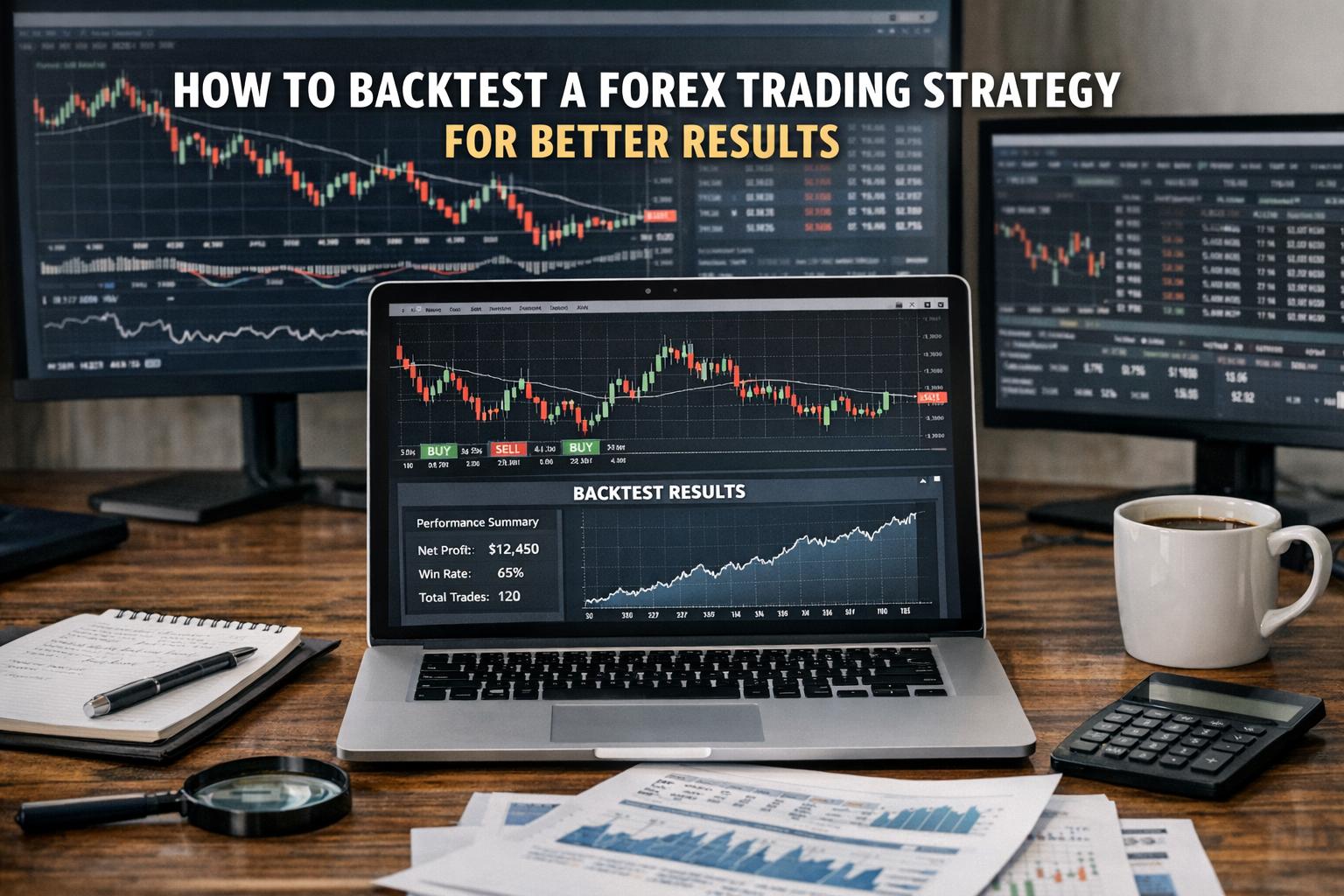
Backtesting: Useful, But Not the Whole Story
Backtesting is where many traders pin their hopes. It can show whether a strategy has historical merit, but it can also mislead if executed incorrectly. For AI-driven systems, the risk of overfitting is real. Overfitting happens when a model learns noise instead of signal—so it performs great on historical data, then falls apart in live markets.
To reduce that risk, traders typically use:
- Out-of-sample testing: training on one period, testing on another.
- Multiple timeframes and validation across different market regimes.
- Walk-forward validation: repeating training and testing in rolling windows.
None of these guarantee success, but they prevent the most common self-inflicted wounds.
Monitoring in Live Trading
Even a well-built system should be monitored. AI models can drift when the underlying input distributions change. A different economic calendar, a new broker liquidity profile, or changes in volatility behavior can all shift the environment.
Monitoring also helps identify operational issues. For example, if an automated system starts missing trades due to connectivity problems or order rejection, the backtest performance stops being relevant. A surprising number of “the strategy stopped working” incidents are really “the execution broke” incidents.
So, if you’re using automation, set up logging and alerts. You want to know when signals change, when orders get rejected, and when spreads behave abnormally. Traders who treat the machine like a black box usually learn hard lessons.
Where AI Fits Best: Style of Trading and Use Cases
Not every trading style benefits equally from AI. The fit depends on your time horizons, your tolerance for risk, and your willingness to manage a system rather than simply trade it.
Short-Term and Event-Driven Trading
AI tends to shine when markets respond quickly to changing information—like economic releases, central bank statements, and major geopolitical headlines. Even then, the model must handle the reality of fast-moving spreads and unpredictable execution. A signal that looks correct in slow historical data can fail if the live market whips around during a news spike.
Still, AI can be useful by detecting patterns around event timing. Instead of simply trading whenever news breaks, it can estimate when the market’s reaction is likely to trend versus when it’s likely to fade.
Trend Following and Regime Detection
Some traders prefer trend-following strategies. AI can improve these by identifying which “regime” the market is in—trending, ranging, or transitioning after a volatility expansion.
In a regime-based system, AI doesn’t just predict price direction; it predicts which strategy logic is more likely to work right now. That can reduce whipsaws when markets chop sideways. The benefit isn’t that the model becomes omniscient. It’s that it stops pretending the same strategy works in every condition.
Risk-Focused Strategies
Another practical use case is building strategies where the model primarily predicts downside risk. Instead of maximizing returns at all costs, the system tries to avoid periods where losses are likely larger than expected. Even if that reduces trade frequency, it can improve risk-adjusted performance.
This also fits the reality that traders often care more about drawdown than about the “perfect” entry point. Many people don’t blow up from one bad trade. They blow up from a streak of bad luck paired with oversized risk. Risk-focused AI can help interrupt that pattern.
Common Problems When Using AI and Automation in Forex
AI adoption in forex comes with plenty of optimism, and optimism is great—until it meets accounting and drawdowns. Here are the issues that repeatedly surface.
Overfitting and Performance Illusions
Overfitting is the classic problem. A model might learn very specific patterns that existed in the training period only. When the market changes, those patterns disappear. Two years later, you’re watching a system that used to behave like a philosopher now behave like a drunk poet.
To reduce this, people should validate using multiple time periods and consider simpler models when possible. Simpler doesn’t mean worse—it can mean more stable.
Data Leakage
Data leakage happens when the model unknowingly gets access to information it wouldn’t have in the real world. It can occur through mistakes in feature engineering or incorrect alignment between inputs and outputs. Once leakage is in play, the backtest becomes a misleading story.
In AI-driven trading, even small leakage can create what looks like “prediction skill” that evaporates in live trading. It’s worth checking that all features are available at the time of prediction.
Execution Slippage and Broker Variability
Forex trading happens through brokers, liquidity providers, and execution infrastructure. Two brokers can offer different spreads and different order fill behavior even for the same symbol.
AI models trained with one execution style might need adjustment when moved to another broker. This is why model portability is often limited. Traders who build a strategy and immediately change brokers should take extra care and use realistic assumptions in backtests.
Model Drift and Regime Changes
Markets don’t stay still. When inflation regimes shift or central bank behavior changes, the historical relationships that AI learned can weaken. AI systems can be updated and retrained, but retraining introduces its own risks and costs.
A well-run trading operation includes a plan for updating models when appropriate. That plan should define how much new data to use and what performance gates need to be met before switching the live system.
Putting It All Together: A Responsible AI Trading Approach
The integration of AI in forex is real, and it’s spreading for understandable reasons: faster processing, automated execution, and the ability to analyze large sets of signals. But responsible adoption still means treating AI as a tool, not a promise.
A practical approach looks like this:
- Use AI where it adds measurable value, like signal filtering, probability estimation, or risk forecasting.
- Automate execution only with risk controls that reflect how the system will behave live.
- Test properly with out-of-sample evaluation and realistic assumptions about spreads and slippage.
- Monitor ongoing performance and operational metrics, not just returns.
This is also where the emerging trends connect. Regulatory scrutiny affects broker conditions and reporting, blockchain efforts aim to improve settlement trust, and big data helps AI models extract signal from noise. Put together, these forces push trading toward more structured, more measurable workflows.
Practical Reading for Ongoing Updates
If you want to keep up with how these developments change the trade environment, specialized finance resources can help with context, terminology, and market timing. For example, market participants often reference financial websites when tracking updates and explanations around forex mechanics, AI adoption, and broader financial technology trends.
Final Thoughts
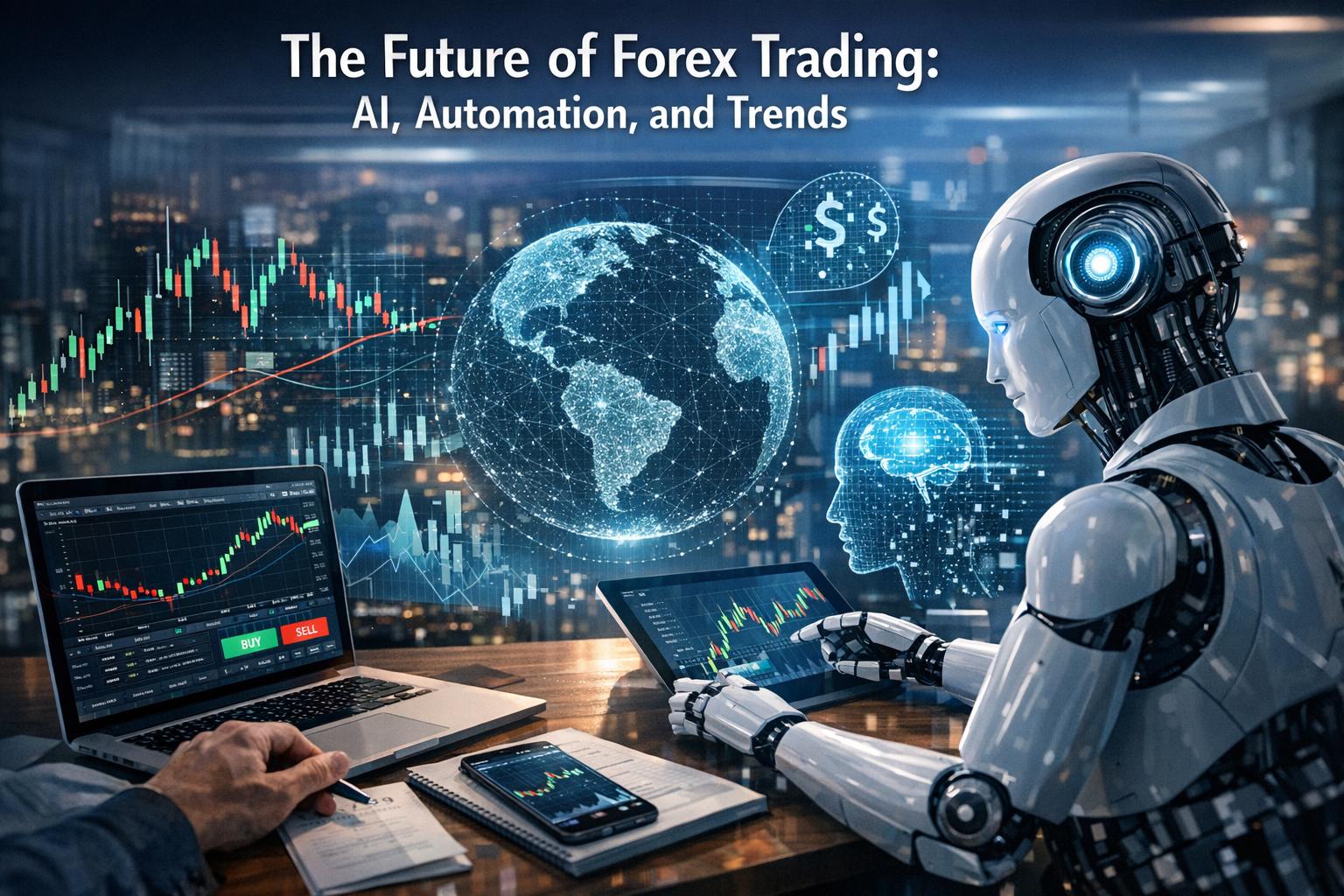
The future of forex trading increasingly blends AI, automation, big data analysis, and emerging technology like blockchain. The point isn’t to “replace traders” with machines. It’s to reduce guesswork, tighten risk control, and make execution more consistent.
AI-driven systems can analyze market trends, predict likely movements, and execute trades with speed that humans can’t match. Automation turns those signals into action, often with a discipline humans struggle to maintain when the market gets noisy. Big data supports the modeling work by improving the range and quality of information. And blockchain, while still developing in many places, points toward more transparent settlement and verification.
In the end, a trading setup succeeds or fails based on fundamentals: data quality, realistic backtesting, robust risk controls, and honest monitoring. Technology helps, but it won’t carry the trader. If you treat AI as a disciplined assistant rather than a fortune teller, it’s more likely to earn its spot on your workflow than take over your life like an overly confident spreadsheet.