What is Forex Hedging and How Does It Work?

What is Forex Hedging and How Does It Work?

Understanding Forex Hedging

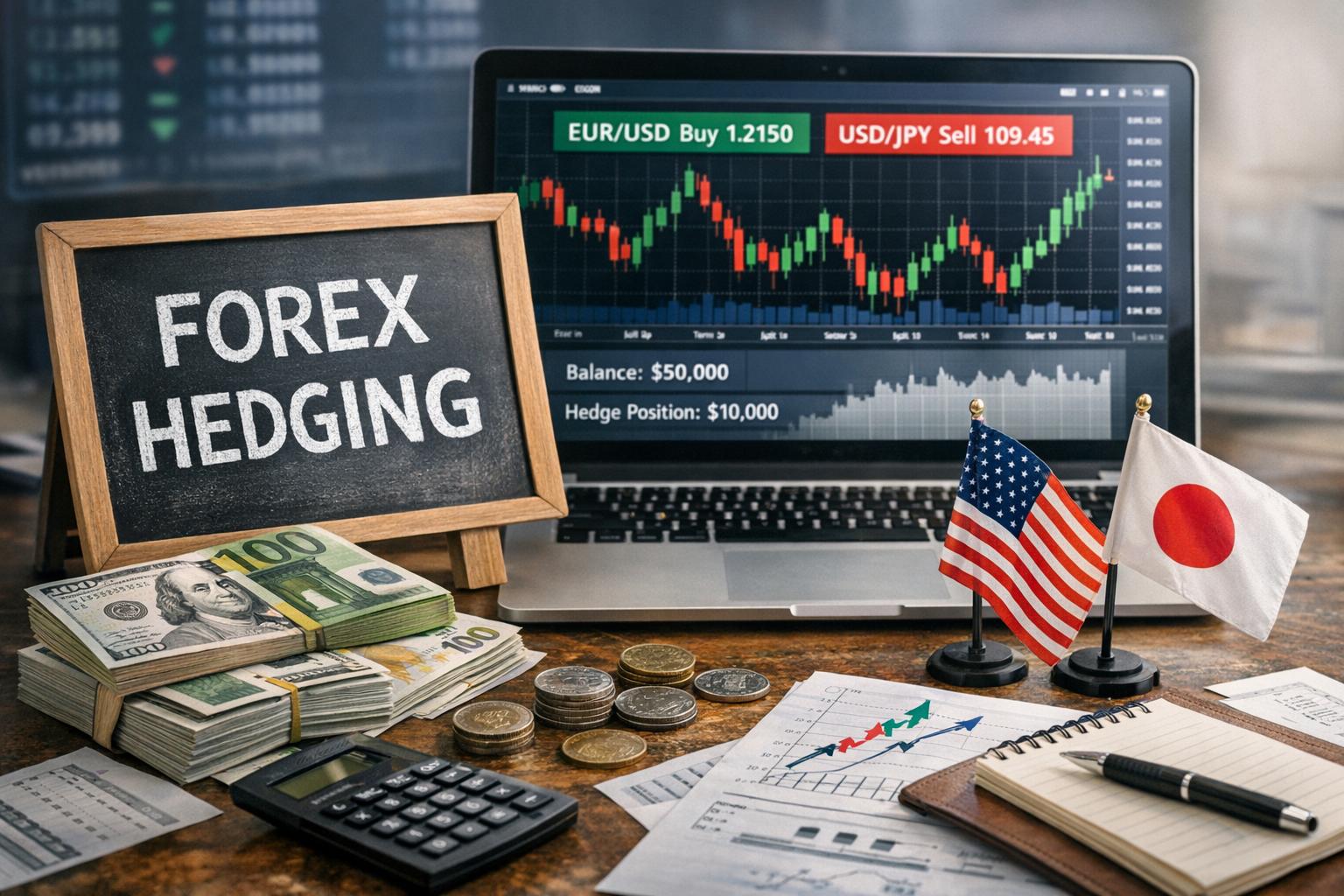
Forex hedging is a practical risk-management approach used by traders and businesses when they’re exposed to foreign exchange (FX) movements. In plain terms: if you have money coming in or going out in another currency, FX rates can move faster than your invoicing cycle. Hedging is how you try to avoid getting blindsided by that movement.

Unlike trading, where you’re actively trying to profit from market moves, hedging is usually about protection. It’s the financial equivalent of wearing a seatbelt—not because you expect a crash, but because you can’t control the road. FX prices can shift due to interest-rate changes, inflation surprises, central bank messaging, geopolitical headlines, and even simple market positioning. If your cash flows, costs, or portfolio values depend on exchange rates, hedging exists to reduce the damage when rates move against you.

Concept of Forex Hedging

The core idea behind forex hedging is to manage uncertainty. You can’t stop the market from moving, but you can structure your positions so that losses on one side are offset by gains or reduced losses on the other. That might mean locking in a future exchange rate, buying protection against adverse movement, or using standardized contracts that fix key terms in advance.

Practically, hedging does two things. First, it reduces the “currency risk” component of your results. Second, it helps you make better decisions because your budget or valuation becomes less dependent on the FX market behaving nicely. For a business, that can be the difference between planning confidently and constantly re-forecasting due to every tick in EUR/USD or GBP/JPY. For a trader, hedging can limit drawdowns while keeping exposure to other opportunities.

What counts as “FX exposure”?

FX exposure is the part of your financial outcome that changes when exchange rates change. It can show up in several ways:

  • Transaction exposure: You’ll pay or receive foreign currency at a known time in the future (for example, a customer pays you in USD next month, or you buy equipment in EUR this quarter).
  • Translation exposure: Accounting and reported results change due to converting foreign subsidiaries or assets back into your reporting currency.
  • Economic exposure: Your competitive position can shift over time as currency moves affect pricing, demand, and costs. This one is harder to hedge perfectly, but traders and companies still try.

Most straightforward hedges target transaction exposure because timing and amounts are often more defined. Economic exposure is more like weather forecasting—still useful, but you don’t get guarantees.

Why hedging isn’t the same as “eliminating risk”

Many people assume hedging means “remove all risk.” In reality, hedging usually trades one type of risk for another. If you lock a forward rate to avoid adverse moves, you might give up potential upside. If you buy options, you cap losses but pay a premium. Either way, hedging changes the risk profile. The goal is usually not zero risk; it’s better risk-adjusted outcomes that match your objectives.

Methods of Forex Hedging

Forex hedging can be structured in multiple ways. Some hedges are direct and rate-specific. Others are optionality-based and depend on how much protection you want versus how much cost you can tolerate.

Below are common instruments and how they tend to behave in the real world.

1. Simple Spot Contracts

Spot contracts involve exchanging currencies at (roughly) the current market rate. By themselves, spot trades aren’t a direct hedge strategy against future movement, because you’re acting now rather than protecting a future unknown.

That said, some traders use spot deals in a way that functions like a de facto hedge. For example, if you know you’ll need a foreign currency soon and the exposure is close to settlement, converting early can reduce FX uncertainty. The effectiveness depends on how close your timing is and how much the rate can move between now and when you truly need the currency.

Spot-based hedging is often simplest but can be “timing-sensitive.” If your cash-in/cash-out date shifts, you may end up repeatedly converting or taking new exposure on the remaining time window.

2. Forex Options

Forex options give the holder the right, but not the obligation, to exchange currencies at a predetermined rate before a specified date. Options are popular because they separate “protection” from “participation.” You can cap losses while still potentially benefiting if rates move in your favor.

Options typically come in two forms:

Call options: the right to buy a currency pair at the strike price.

Put options: the right to sell a currency pair at the strike price.

Options strategies matter because different structures fit different exposures. Here are two strategies you’ll see in practice:

  • Protective puts: Often used when you hold a currency exposure that you want to protect against falling rates. You pay a premium for the option, but you gain a defined loss floor if the market moves against you.
  • Covered calls: Common when you’re willing to sell at a strike price if the market moves upward. It can generate income but may limit upside.

For businesses, options are commonly used when certainty is preferred but you don’t want to be fully locked out of favorable rate movement. For traders, options can be part of hedged portfolios, especially where you want defined risk.

Downside: options premiums are a real cost. If FX doesn’t move enough to justify the premium, you can pay for protection you never use. That’s not “bad”—it’s insurance with a price tag.

3. Forward Contracts

A forward contract is an agreement to exchange currencies on a future date at a rate agreed today. For the party that needs foreign currency later, a forward can lock the cost. For the party that expects to receive foreign currency later, it can lock the conversion value.

For businesses, forwards are frequently used to hedge known exposures like upcoming supplier payments, dividends, or revenue receipts. They’re not standardized like exchange-traded futures; they’re typically customized between two parties (often a bank and a company).

How forwards “feel” in practice:

  • If the spot rate ends up worse than the forward rate for your position, your hedge helps because you’re still able to transact at the agreed rate.
  • If the spot rate ends up better than the forward rate, you might lose the opportunity to benefit from the favorable move due to the locked terms.

That tradeoff is the central characteristic of forwards: they reduce uncertainty in exchange for sacrificing some upside.

4. Currency Futures

Currency futures are standardized contracts traded on exchanges. They also settle at a future date, based on a specified price and contract size. Because they’re exchange-traded, they typically involve margin requirements and daily settlement of gains and losses (mark-to-market).

Large institutions often use futures because of liquidity and because trading is governed by exchange rules. Futures can hedge currency risk in a very direct way by locking the exchange rate for the contract period.

Differences versus forwards:

  • Standardization: Futures contracts have set contract sizes and maturities.
  • Daily settlement: Mark-to-market can create cash-flow timing effects even if the economic exposure is longer-term.
  • Margin: You may need to post collateral, which can become a practical constraint.

For many hedgers, futures work well when contract specifications align reasonably with the underlying exposure. If the exposure amount or timing doesn’t match, you may hedge “partially,” which can leave residual risk.

Benefits and Risks of Forex Hedging

Forex hedging has a clear purpose: reduce adverse outcomes from currency volatility. The trick is to do it in a way that doesn’t introduce new problems or costs that outweigh the benefits.

Benefits

Risk Management: Hedging reduces the impact of unfavorable exchange rate movements. This matters in volatile environments—when central banks surprise the market, when political risk increases, or when macroeconomic data changes expectations quickly.

Cash Flow Stability: Businesses with international receivables or payables benefit from predictable cash flows. Better cash-flow predictability improves budget discipline, supports debt planning, and reduces the emotional rollercoaster that comes with constant FX re-forecasting.

Protection without stopping operations: A hedged firm can continue executing contracts with less fear that the final FX movement will erase margin. Traders can also hedge to limit drawdowns while maintaining positions they believe will perform.

Profit opportunities, sometimes: In some cases, a hedge may not only protect but also improve overall performance depending on how positions are structured. If the hedging instrument behaves favorably relative to the underlying exposure, you can reduce losses and maintain better portfolio outcomes. Still, most hedgers should treat profit as a secondary benefit, not the main promise—markets love to humble predictions.

Risks

Cost of Hedging: Hedging isn’t free. With options, you pay premiums. With forwards and futures, there can be indirect costs through pricing, spread differences, financing effects, or margin needs. If you hedge too aggressively or choose an instrument that doesn’t fit the exposure, you can spend a lot to protect against little.

Complexity: Hedging works best when you understand instrument behavior, settlement rules, and how the hedge interacts with your underlying positions. Options pricing, forward points, and futures margin mechanics are not “set and forget.” Even experienced teams benefit from clear procedures and reviews.

Conditional outcomes: Many hedges cap losses but also limit upside. With forwards, for instance, you lock the exchange rate and give up gains if the market moves your way. With protective options, you cap losses but spend premium that could be avoided if the market trends favorably.

Basis mismatch and residual risk: If the hedge instrument doesn’t perfectly match the exposure amount, currency pair, or timing, you’ll end up with basis risk. For example, you might hedge EUR/USD exposure with a contract that doesn’t align with your exact settlement date, or your exposure is in a currency that behaves differently than the one you hedged.

How hedging risk shows up in P&L

Hedging can impact reported profit and loss in patterns that confuse people who only think in “final outcome.” You might see:

  • Mark-to-market effects (common with futures)
  • Premium expense recognition (common with options)
  • Offset on settlement dates (common with forwards)

That doesn’t mean hedging “failed.” It means the accounting and settlement timeline could differ from your operational cash flow timeline. It’s normal—just plan for it.

Implementation Strategies

A “good” hedging strategy depends on how well it matches the specific exposure, not on picking the most popular instrument. Two companies can face the same currency risk and still need different hedges because their cash-flow timing and objectives differ.

1. Assessing Risk Exposure

The first step is getting specific about what’s at risk. Traders look at position exposure. Businesses look at expected receipts and payments, as well as how those translate into accounting currency.

Key questions to answer internally:

  • What currency risks matter most?
  • When do cash flows occur?
  • How predictable are amounts and dates?
  • Is this exposure transactional, translational, or economic?

If your payment date can move by weeks, hedging a single fixed maturity can leave you exposed in the gap. If your receivables are uncertain in size, you may hedge a forecast range rather than a single number, or you may implement layered hedges.

2. Selecting Appropriate Instruments

Instrument selection should match both the exposure and the organization’s tolerance for cost and complexity.

Some practical matching rules:

  • Short-term, known cash flows: Forwards or spot conversion near settlement often fit well because timing is close and uncertainty is lower.
  • Known cash flows but you want flexibility: Options can work because you can protect downside while allowing upside.
  • Need for exchange-traded standardization: Futures can help when standardized maturities and contract sizes align with exposure and margin management is feasible.

Example scenario: suppose a company expects to purchase equipment in USD in three months and wants to cap FX risk but still allow some benefit if USD weakens. A forward locks the rate completely, meaning they lose upside from USD weakness. A protective option structure could better match the “cap downside, allow upside” goal, though at the price of the premium.

Another trader example: someone with a long position in an asset priced in a foreign currency adviser may use options to reduce currency impact without closing the asset position. That keeps market exposure while moderating FX risk.

3. Ongoing Monitoring and Adjustment

FX risk management is not a one-time decision. Exchange rates move and your exposure changes too. Revenues get delayed, expenses shift, contracts get renegotiated, and macro circumstances evolve.

Monitoring should include:

  • Checking how much of the exposure is actually hedged, not just what was hedged at initiation.
  • Reviewing market conditions that might affect hedge effectiveness (volatility, rate differentials, liquidity).
  • Reassessing forecast accuracy for future periods.

Adjusted hedges aren’t always about adding more protection. Sometimes the best action is to reduce an old hedge because the exposure shrank, or to roll contracts forward when maturities approach.

There’s also a human side: if you automate hedging processes (strong idea), you still need someone to check the logic occasionally. Machinery can be right and still apply the wrong assumptions at scale. I’ve seen it happen—usually on a Friday, because that’s when calendars get creative.

4. Balancing Costs and Benefits

A hedging program needs a cost framework. The “benefit” is usually reduced variance in results, but the cost is direct (premiums, fees) and indirect (opportunity cost due to locking a rate, margin needs, operational overhead).

Businesses often define acceptable risk levels. Traders often define acceptable drawdown or maximum loss constraints. In both cases, the cost of hedging should match those constraints.

The main discipline is to avoid hedging every moving target as if nothing changes. Over-hedging can lock you into unfavorable pricing for longer than necessary and waste premiums or reduce flexibility. Under-hedging, on the other hand, leaves you exposed when it counts.

Common hedging styles

Here are three styles teams often use, even if they don’t give them fancy names:

  • Full hedge: Cover the entire forecast exposure amount for a given period.
  • Partial hedge: Hedge a portion (for example, 30–70%) when forecasts are uncertain or when cost control matters.
  • Layered hedge: Build the hedge over time (or in tranches) as exposure becomes more certain and timing details improve.

Layering can reduce the problem of making one perfect hedge decision at the wrong time. It’s not magic, but it’s often more realistic than trying to nail the exact rate on a single day.

Advanced Considerations (without making your head hurt)

Most readers don’t need to become FX option quants to hedge responsibly, but a few concepts help avoid typical mistakes.

Hedge effectiveness and “basis risk”

Hedge effectiveness is how well the hedge instrument offsets the changes in the exposure. Basis risk is the leftover difference between hedge and exposure performance.

Basis risk can come from mismatched timing, different exchange rate conventions, or the fact that the hedge instrument might track the currency pair differently than your actual settlement rate practice. For example, your supplier might apply an exchange rate based on a bank’s published rate at settlement time, which may not match the mid-market spot rate used in your internal calculations.

In real operations, settlement conventions matter. That’s why experienced treasury teams align hedge terms to how transactions actually settle.

Hedging documentation and internal controls

For businesses—especially those that hedge for accounting purposes—documentation matters. You typically need clarity on what is being hedged, how, and why. Internal controls help ensure the hedge aligns with policy rather than impulse decisions based on the latest headline.

Policy helps because FX markets can feel personal in the moment. One strong jobs print and suddenly everyone wants a hedge right now. Controls keep hedging tied to forecast periods and risk limits instead of gut feelings.

Margin and collateral planning (especially for futures)

If you hedge with currency futures, daily mark-to-market can create cash-flow needs in addition to the hedging “result.” A hedge might be economically correct but still cause short-term funding stress because margin calls arrive when volatility spikes.

That’s why margin planning is part of responsible hedging. You can’t treat it like an afterthought.

Volatility and option cost dynamics

Options pricing depends heavily on implied volatility. If markets get more uncertain, premiums can rise. This can create a timing problem: the very moment you most want protection, options may cost more.

Some teams address this by using rolling structures over time or by defining option strategies that match their risk appetite and budget constraints rather than chasing protection only after stress appears.

Practical Examples of Forex Hedging

Let’s make this less abstract. Below are three common “real life” scenarios that map to the instruments discussed earlier.

Example 1: Importer with a known EUR payment

A U.K. importer expects to pay a EUR supplier €1,000,000 in two months. Their costs and revenue are mostly in GBP, so a stronger EUR can squeeze margins.

Possible hedge: A forward contract to buy EUR at a fixed rate on the payment date.

The effect is usually straightforward: the importer trades away potential upside if EUR weakens, but benefits if EUR strengthens. Cash flows become more predictable, which is often the real point.

Example 2: Exporter with USD receivables, wants upside

A Canadian exporter expects USD receivables next quarter, but timing and amounts can shift based on customer schedules. Management wants protection against USD weakening, but also hopes to benefit if USD strengthens.

Possible hedge: A series of FX options (often layered) to provide downside protection while allowing upside participation.

Because the exporter pays premiums, they need to decide whether the cost is acceptable relative to expected benefit. This approach can be a good fit when forecasts are uncertain and management values flexibility.

Example 3: Trader hedging portfolio risk

A trader holds a strategy exposed to currency movements—either through asset pricing or direct FX positions. They want to reduce drawdown risk during volatile periods but keep the ability to perform if their directional view remains correct.

Possible hedge: Futures or options to offset FX exposure while keeping the core position.

Here, monitoring matters. If the underlying exposure changes due to position size changes or partial exits, the hedge must be adjusted accordingly.

Common Mistakes People Make

Hedging can be responsible and effective, but it’s also where mistakes hide in plain sight.

Hedging the wrong period

If your exposure happens in six weeks and you hedge a three-month instrument, you might be paying for protection you don’t use while leaving uncovered exposure elsewhere. It isn’t automatically wrong, but it often shows up as higher costs with less effectiveness.

Using the wrong currency pair or settlement convention

Hedging with a related pair when the exposure’s settlement behavior doesn’t track exactly can create basis risk. Currency pairs don’t always move together in a way that perfectly offsets.

Assuming “set it and forget it”

Markets evolve. Your exposure evolves. A hedge that was perfect at initiation can become mismatched as forecasts change. Ongoing review and rebalancing are what separate a hedge program from a hedge accident.

Not accounting for costs honestly

People sometimes treat hedging costs as negligible until they tally up premiums, fees, and margin cash needs. Hedging costs are real, and they should be part of your decision process from day one.

Conclusion

Forex hedging is a practical tool for anyone exposed to foreign exchange risk—whether you’re a trader managing position volatility or a business stabilizing cash flows for international operations. Proper hedging can reduce the impact of adverse currency moves, improve budget certainty, and help you stay focused on the decisions that actually drive performance.

At the same time, hedging introduces tradeoffs. It can limit upside, involve premiums or fees, and require ongoing monitoring to keep the hedge aligned with actual exposure. There’s no magic version of hedging that guarantees comfort without cost or complexity, but there are well-fitted strategies that make risk more manageable.

In the end, the goal of forex hedging is stability in financial outcomes despite FX volatility. Whether you hedge for a short-term transaction or plan over a longer horizon, the best results come from matching hedge instruments to exposure timing, understanding how the hedge behaves in different market conditions, and reviewing the program often enough that it stays relevant. That’s a dull sentence, but it’s also the truth: FX hedging works best when it’s managed like a process, not a lucky one-time bet.
The Advantages and Disadvantages of Automated Forex Trading

The Advantages and Disadvantages of Automated Forex Trading

Introduction

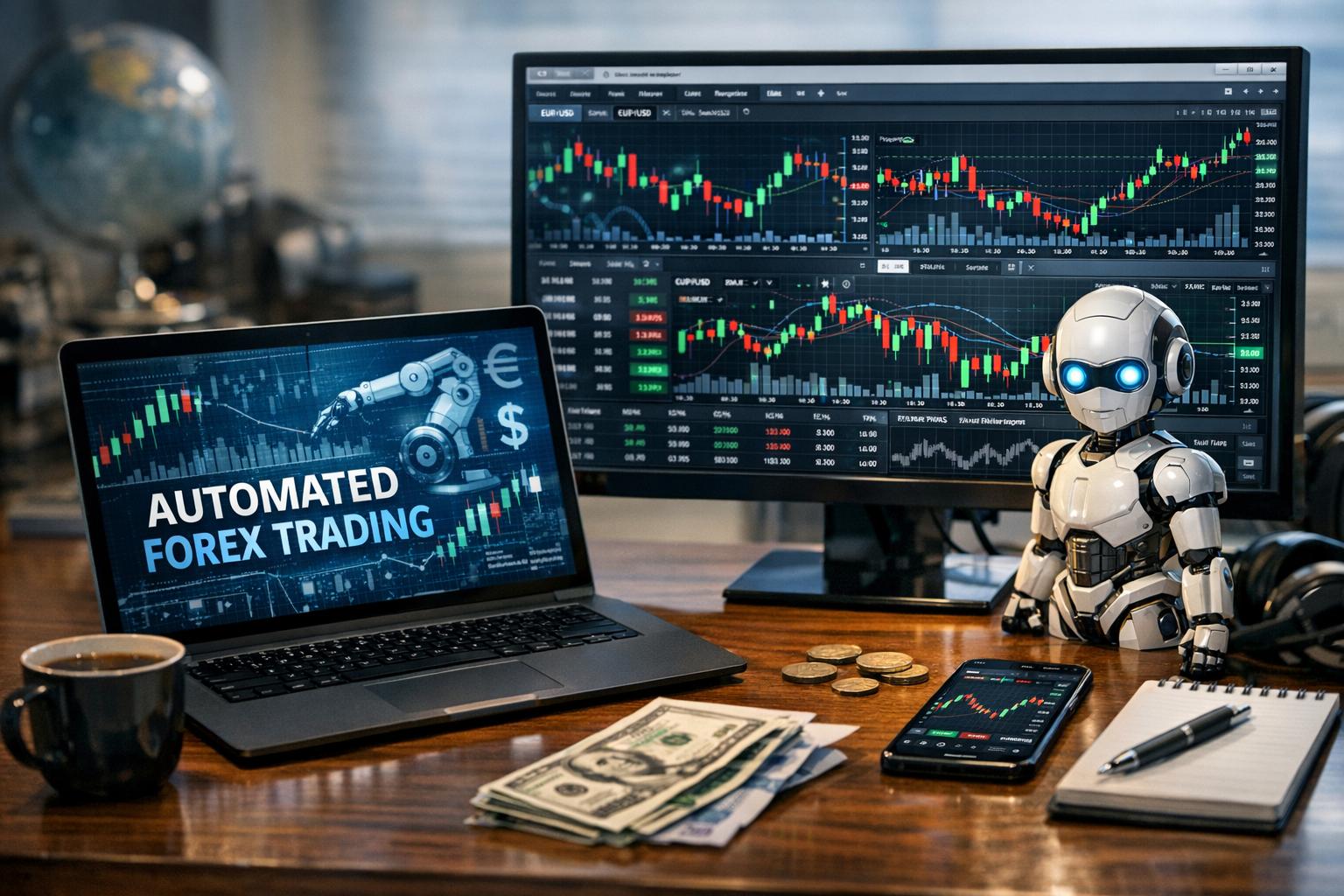
In recent years, automated Forex trading has grown from a niche interest into something many traders bring up within their first few weeks of learning. New traders like the idea because it seems to remove some of the stress (and late-night screen watching). More experienced traders bring it up because automation can enforce discipline when the market starts doing what the market does best: being unpredictable, loud, and occasionally rude.

Automated Forex trading uses software to execute trades based on pre-set rules. Those rules might be simple (like “buy when price crosses a moving average”), or more complex (like combining multiple indicators with filters and risk controls). Once configured, the system can monitor the market, place orders, and manage positions according to your parameters.

That said, automation isn’t magic. It’s closer to a very fast assistant that follows instructions precisely—even when conditions change. So before you plug an automated strategy into a live account, it helps to understand both what it does well and where it can bite. This article breaks down the real advantages and disadvantages, plus the practical considerations traders often discover the hard way.

How automated Forex trading actually works

Most automated Forex setups fall under one of these categories:

Rule-based trading bots: The system checks market data, applies your rules, and opens or closes trades when conditions match. Think of it like a checklist with timestamps.

Algorithmic strategies: Instead of a single condition, the strategy combines multiple data points—price action, indicators, volatility measures, correlation between pairs, or time-based rules. Slight changes in inputs can create very different behavior.

Copy-trading and signal automation: Some systems mirror trades from another account or follow an external signal source. This can be convenient, but you also inherit the signal provider’s risk profile and execution quality.

All of these have one thing in common: they rely on market data and execution instructions. If the system has inaccurate inputs, gets a bad feed, or the broker execution deviates from the expectation, results can drift quickly. In practice, automation is only as reliable as its logic, data quality, and execution environment.

Advantages of automated Forex trading

Efficiency and Speed: Forex markets move quickly, and even decisions that feel instant to people can take too long to execute when you’re trying to react to small changes. Prices can shift between the moment you notice something and the moment your order actually lands. Automated trading systems reduce that gap dramatically.

A good automation setup can monitor price conditions continuously and then place orders exactly when the criteria are met. That matters most for strategies that depend on timing—breakouts, mean reversion with tight thresholds, or any system that needs consistent entry logic. Even if the strategy’s edge is modest, better execution timing can help avoid “almost entered” situations that later become “missed trade.”

Real-world example: imagine a strategy that enters when a currency pair breaks above a defined level and then returns to a specific confirmation candle. If you’re manually checking charts during the break, you might see the level before the confirmation. If you hesitate, you miss the confirmation; if you click too quickly, you enter before confirmation. Automation can be set to wait for the exact confirmation condition, reducing that human timing mismatch.

Elimination of Emotional Bias: There’s a reason traders talk about psychology so often. Emotions don’t just make you feel bad; they change behavior. Fear can lead you to exit early. Greed can keep you in positions past a point where your plan says you should cut risk. Random frustration can also cause “revenge trading,” which is exactly as helpful as it sounds.

Automated systems follow predefined rules with no fear and no ego. If the system’s logic says “close at this level” or “reduce exposure when volatility expands,” it does that consistently. Over time, this can lead to more uniform execution compared to manual trading, where performance can swing based on mood and recent outcomes.

It’s worth noting a small nuance: automation doesn’t erase mistakes. It just turns them into repeatable patterns. If the strategy rules are wrong or poorly designed, the bot will happily repeat the wrong behavior at 2 a.m. with impressive consistency.

Backtesting Capabilities: Backtesting is where many traders start to build confidence—or to realize they should be far more cautious. When you test a strategy on historical data, you can estimate how it might behave under different market conditions: trending periods, ranging periods, higher-than-normal volatility, and so on.

Backtesting can reveal:

– Whether the strategy’s entry and exit logic produces wins and losses in the expected pattern
– How often the system trades (and whether that fits your time horizon)
– The rough drawdown profile, including whether losses cluster

But backtesting is not a crystal ball. Historical results can differ from future behavior because markets change. Also, backtests can be “fooled” by overfitting (more on that soon). Still, without backtesting, you’re mostly guessing.

24/5 Trading: The Forex market runs continuously during the week, and liquidity shifts by session (Asia, London, New York). Human traders struggle to watch everything at all times, especially if they have a job, family, or a life that doesn’t revolve around candlestick charts.

Automated systems can monitor charts and execute orders during any trading session. That matters for strategies that rely on session timing or specific volatility windows. It also helps traders avoid the “I looked away and it happened” problem—because the system is already watching.

One practical detail: many trading bots need a stable connection and a broker account that supports the order types you plan to use. If your automation runs on a server with frequent interruptions, 24/5 trading becomes 24/5 disappointment.

Disadvantages of automated Forex trading

Technical Failures and Glitches: Automation depends on multiple layers: your platform, your software, your data feed, your device or server, and your broker’s execution. Failure at any point can disrupt trading.

Common problems include:

– Power outages or device sleep/hibernation
– Internet connectivity drops
– Software crashes or memory issues
– Incorrect data responses or delayed market feeds
– Broker downtime or order execution delays
– Misconfigured risk settings (for example, if a stop-loss isn’t attached as expected)

The danger with technical issues is not just that a trade might fail to open. It can also be that orders open but protection doesn’t follow—like a stop-loss not being placed correctly. That’s how a “small glitch” becomes a large mistake.

A serious trader’s mindset here is boring but effective: check logs, monitor your bot’s status, and understand how it reacts to connectivity loss. A robust system should fail in a safe way, such as halting new trades if data stops updating.

Over-Optimization: Over-optimization happens when a strategy is tuned too tightly to historical data. The goal becomes to maximize performance on past charts rather than to create logic that can generalize.

A well-known symptom is when the backtest looks almost too good: high win rate, smooth equity curve, minimal drawdowns. In live markets, that performance often breaks down because the strategy was fitted to noise rather than signal.

There are a few common sources of overfitting:

– Too many indicators and parameters with fine-grained values
– Too much emphasis on short time periods (where random movement can mimic a pattern)
– Trading rules that depend on historical quirks that won’t repeat
– Using one dataset for optimization and another for evaluation without properly validating

Over-optimization also interacts with regime changes. A strategy that worked during a particular market environment can become a liability when volatility compresses, liquidity shifts, or central bank expectations move.

Practical warning: if you can’t explain why your strategy’s parameters should work in multiple market conditions, it’s probably tuned rather than tested.

Initial Setup and Maintenance Costs: Automation isn’t just a one-time download. Even if you use existing tools, you still pay in time and attention—plus possibly in money.

Costs can include:

– Developer time if you’re building a custom solution
– Platform fees or hosting (if you run a bot on a VPS)
– Ongoing maintenance when your broker changes execution rules or platform updates
– Time spent monitoring performance and adjusting logic when a market regime shifts
– Risk management costs when the strategy underperforms and you need to pause or retool

Even “cheap” bots can become expensive if you end up spending hours fixing configuration issues and handling drawdowns while waiting for results that never come.

A realistic approach is to treat automation as a long-term operational project, not a quick shortcut. If you invest the effort upfront—clear risk limits, sensible stop-loss logic, and a plan for when to stop—you reduce the chance of spending months chasing your own configuration errors.

Lack of Human Judgment: Human traders use more than charts. They notice news catalysts, economic releases, central bank statements, and geopolitical shocks. They also consider the “feel” of market sentiment, even if they express it through different lenses.

Automated systems generally won’t interpret news unless you build that into the system. Even then, parsing news reliably is difficult. More importantly, humans can sometimes adapt when the market behaves oddly, while bots might keep trading the same rule set because it still technically meets the criteria.

Here’s the catch: automation can be both disciplined and blind. It can execute your plan perfectly inside its boundaries, but it might still do so during periods you would manually avoid, such as:

– High-impact news events that spike volatility and spreads
– Sudden regime shifts that invalidate the strategy assumptions
– Liquidity gaps where execution slippage increases
– Market conditions where the bot’s indicators lag too much

That doesn’t mean automation should never run during these periods. It means you should deliberately decide how it responds—pause trading around news, adjust risk during high volatility, or add spread filters.

Automation vs. manual trading: where the trade-off really sits

A lot of people treat this as either/or: either you automate everything or you stay manual. In reality, the strongest setups often blend approaches.

Manual trading is good for discretion: you can override the plan if new information changes the scenario. Automation is good for repetition: it enforces consistent execution of a strategy.

A practical hybrid approach might look like this:

– You use a bot for the entry logic and risk controls
– You stay involved for higher-level decisions like “turn off for major news” or “reduce risk after a breakout fails”
– You review performance regularly instead of assuming the bot will improve on its own

This matters because automation can’t “learn” in the common sense unless you build learning logic. Most trading bots don’t truly understand why a trade succeeded; they just repeat a rule that previously worked more often than not. That repetition is useful—until it isn’t.

Risk management: the part automation doesn’t do for you

A common misunderstanding is that deploying a robot means risk is automatically handled. In reality, risk controls are configuration choices, not default guarantees.

If you’re setting up an automated strategy, you should consider:

Position sizing: Will the bot trade fixed lot sizes, scale with equity, or risk a percentage per trade? Each approach has consequences for drawdown behavior.

Stop-loss and take-profit behavior: Is the stop always placed? Does it trail? How does it react if the broker requires specific stop distances or if spreads widen?

Order type selection: Market orders can suffer from slippage when volatility spikes. Limit orders may miss the move entirely. The bot needs to be designed around your broker’s execution reality.

Maximum exposure rules: Can it open multiple positions at once? If yes, do those positions collectively exceed your risk tolerance?

Daily or weekly loss limits: A sensible “kill switch” can stop the bot after a drawdown level is hit, preventing one bad week from turning into a bad month.

Even when a strategy is profitable in backtests, risk management is what determines whether you can survive long enough to let the edge play out.

Backtesting: what traders often do wrong

Backtesting sounds straightforward, but it’s the method, not the label, that determines whether results are trustworthy.

1) Using the wrong assumptions
Many backtests assume perfect fills. In real trading, you get spreads, slippage, and execution delays. If your live environment differs from backtest assumptions, results may be exaggerated.

2) Using only one market condition
A strategy tested only on trending years might fail in ranging markets. A strategy tested on volatile periods might underperform when volatility drops.

3) Not validating on unseen data
Ideally, you test a strategy on one dataset, tune parameters, then evaluate on a separate dataset you did not use for tuning. Without this, you’re more likely to be fooled by overfitting.

4) Ignoring costs
Commissions, swaps (overnight financing), and spread changes matter. A strategy that barely beats after costs in backtest might disappear in live trading.

To be fair: backtesting platforms have improved a lot, but results still require sanity checks.

Choosing a trading bot: what to look for

If you’re looking at existing automated systems (rather than building your own), you’ll see marketing claims: high win rates, steady returns, and sometimes suspiciously perfect charts. The trick is to evaluate whether the performance claim is based on something credible and repeatable.

Here are practical criteria worth considering:

Transparency of rules: Can you see the entry and exit logic, risk settings, and how it handles different market conditions?

Risk limits and drawdown control: A bot that can trade unlimited exposure is not “aggressive,” it’s just reckless in robot form.

Backtest methodology: Does it account for spreads and slippage? Does it show results across different time periods?

Update and support: Markets do not freeze. A bot that never changes might still run fine for a while, but it won’t last forever if its assumptions break.

Broker compatibility: Some bots assume a specific broker’s execution behavior or platform settings. A bot that works in one environment might misbehave in another.

If a bot can’t explain how it manages risk and execution, treat that as a red flag, not a mystery to solve. You don’t need to decode a black box to trade; you need rules you can test and control.

Technical and operational requirements you should plan for

Even if your strategy is strong, the “plumbing” can still wreck your day.

Platform and server stability: Running a bot on a personal computer can be risky. Your PC might reboot, sleep, or disconnect. Many traders use a VPS (virtual private server) for stability so the bot can run continuously.

Monitoring: “Automated” doesn’t mean “set and forget.” You want at least basic alerts: when the bot stops, when it fails to place orders, or when trading is paused due to risk limits.

Log review: Logs are where you confirm what the bot actually did. If your results differ from expectations, the logs help identify whether the issue was execution, condition logic, or a connectivity problem.

Version control for strategy changes: If you adjust parameters, you want to track those changes. Otherwise you’ll lose track of which version produced which result, and you’ll start making decisions based on vibes, which trading already punishes enough.

Common real-world scenarios (and how automation can help or hurt)

Scenario 1: Busy schedule, consistent session trading
A trader with a daytime job might want trades during London and overlap sessions but can’t watch the chart constantly. A bot can run during those windows with strict risk limits. The benefit is obvious: no missed signals due to being at work. The cost is also clear: if spread widens around certain events, the bot needs filters or it will keep trading through worse execution.

Scenario 2: Strategy depends on volatility regime
Some strategies perform well in expanding volatility, then break when volatility compresses. Automation can adjust parameters if designed to do so—like tightening or widening stops based on volatility measures. Without those adjustments, a bot may keep trading happily after the regime shifts.

Scenario 3: Surprise news event
If a major economic release hits, Forex can whip around quickly. Humans sometimes pause trading manually. A bot might continue placing orders if its conditions are met. That can either be fine (if the bot is designed for it) or disastrous (if it isn’t). A practical safeguard is pausing during a time window around high-impact releases.

Scenario 4: Backtest looked perfect, live didn’t
This is the classic story. The strategy “worked” historically with low drawdown and consistent gains. Then live results show larger losses, missed entries, or reduced win rate. Usually, the cause is overfitting, incorrect fill assumptions, or changes in spreads and liquidity. Sometimes the strategy simply outlived its usefulness.

When automated Forex trading makes the most sense

Automated trading tends to fit best when you have:

– A strategy with clear, testable logic
– Rules that remain valid across reasonable market variation
– Risk controls you trust more than your emotions at 2 a.m.
– A plan for monitoring and adjustments when behavior changes

It’s also easier to succeed with automation when your strategy is not overly dependent on subjective interpretation. If the strategy requires “feels like trend strength,” a bot won’t get much value from that. If the strategy relies on measurable conditions, automation can do its job.

When you should be cautious (or maybe skip the bot)

It’s wise to be cautious if:

– The strategy depends on inconsistent data or unclear indicators
– You’re buying a bot with vague rules and impressive marketing
– Risk settings are unclear or missing
– The system trades many positions with weak exposure limits
– You can’t spend time reviewing performance and logs

A robot is not a shortcut around learning. It’s a mechanism for executing logic. If you don’t understand the logic and risk behavior, you’re basically investing in automation without ownership of the process.

Conclusion

Automated Forex trading brings real benefits, especially speed and consistency. It can cut down emotional decision-making, trade around the clock, and help you evaluate strategies through backtesting before you risk live money. When implemented properly, automation can make execution more disciplined and predictable, which is honestly more valuable than people realize at first.

At the same time, the downsides are just as real. The system can suffer from technical failures. Over-optimization can make performance look great in tests while falling apart in live markets. Setup and ongoing maintenance costs add up, and the absence of human judgment means a bot might keep following rules during news spikes or changing market regimes.

So the practical goal for traders isn’t to treat automation like a replacement for thinking. It’s to treat it like a tool: one you understand, test, monitor, and deploy with controlled risk. If you do that, automated systems can complement your trading approach in a way that feels less like gambling and more like operating a process—boring, yes, but usually profitable when done right.

For further insights and resources on Forex trading, visit Forex Factory, a platform offering a wealth of information and tools for traders at various levels of proficiency.

How to Use Volume in Forex Trading

How to Use Volume in Forex Trading

Understanding Volume in Forex Trading

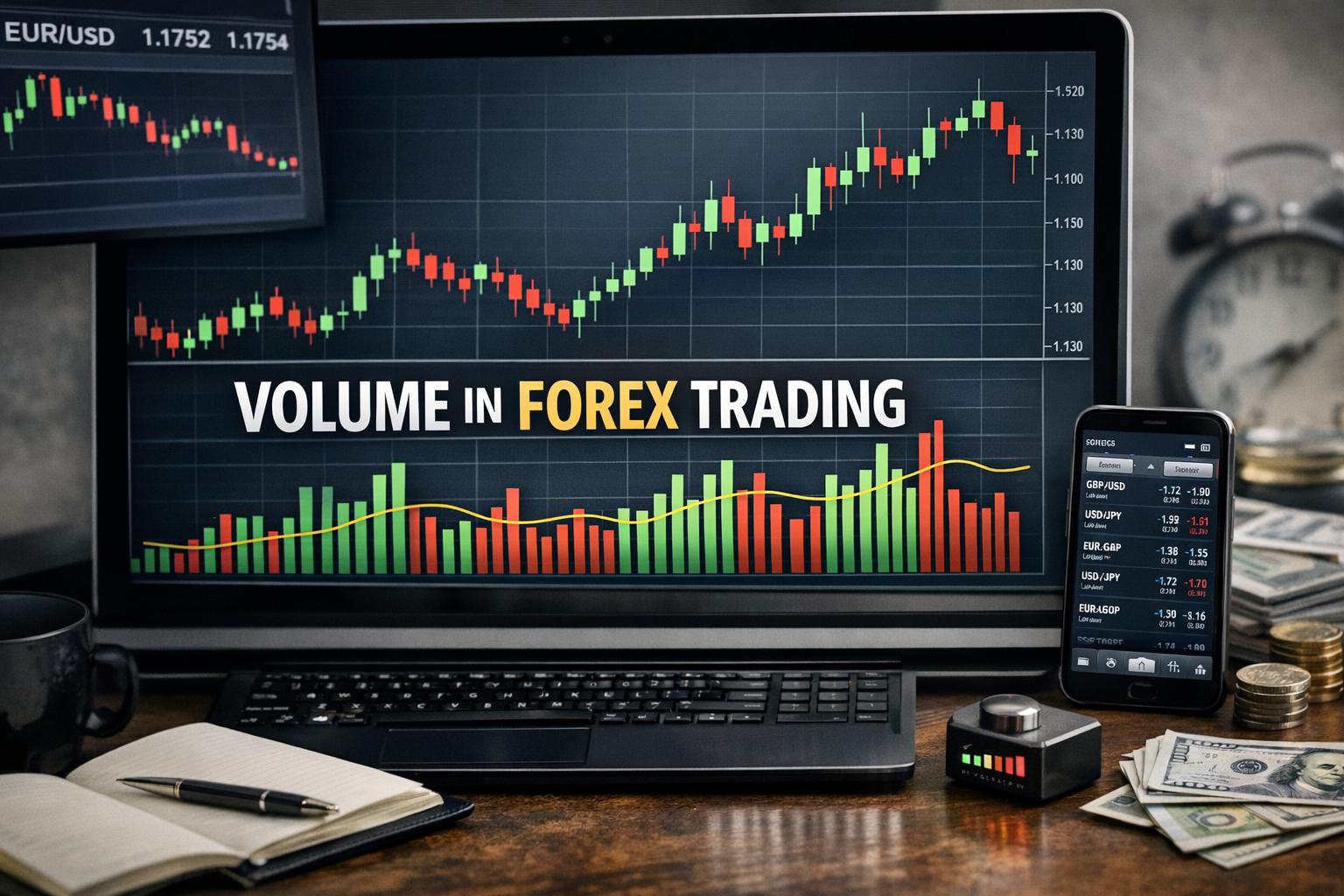
Forex traders talk about “volume” the way stock traders talk about it—like it’s an obvious, measurable thing. In stocks, volume often means the number of shares traded during a given time window, usually coming from a central exchange. In forex, it’s more complicated. There isn’t one central marketplace where all orders meet, so “real” exchange-traded volume data usually isn’t available. What you do get instead is a proxy for participation and activity, and that proxy is still useful when you know what it is (and what it isn’t).

At a practical level, volume in forex helps you answer questions like: Is this move being backed by real participation, or is it just price drifting? Are traders piling in on a breakout, or is the breakout likely to fizzle out? Does momentum look healthy, or does it look thin? Even with imperfect data, traders consistently use volume readings to improve entries, exits, and risk management.

What Traders Mean by Volume in Forex

In forex, volume generally refers to how many trades or price changes are occurring in a chosen time period. Since there’s no single centralized venue, brokers and platforms build volume metrics from their own order flow and execution feeds. That means the exact volume number you see depends on the data source behind your platform.

That said, the concept stays the same for most tools: volume is a measure of activity. Higher activity often means stronger consensus, tighter spreads, and more participation around the current price. Lower activity can mean less buy/sell conviction, wider spreads, and more “thin” trading where price can move without much resistance.

A simple way to think about it: in forex, volume is less about “how many lots exactly changed hands” and more about “how intensely the market is reacting right now.”

Why Volume Data Is Messy (and Still Worth Using)

If you’ve ever stared at charts wondering why your “volume” looks different from a friend’s chart, you’re not imagining things. The main reason is that forex is decentralized. Orders are routed through a network of brokers and liquidity providers rather than one exchange. Since the market doesn’t publish a single master trade count for your pair, most public-facing “volume” is not the same thing as stock market volume.

But don’t throw the whole idea out. Traders aren’t using volume to prove a mathematical truth about the market. They’re using it to spot patterns: shifts in participation, surges during breakouts, and fading momentum after a push.

The trick is to treat forex volume as a behavioral indicator—something you interpret in relation to price action, trend structure, and time of day—rather than as a definitive measure of “real” turnover.

The Role of Volume Indicators

Volume indicators are tools built to show how activity changes as price changes. They don’t “predict” in a vacuum, but they help you judge whether the market is moving with conviction or with noise.

Most volume indicators fall into a couple of categories:
1) raw activity proxies (like tick volume), and
2) derived indicators (like OBV) that try to connect activity to price direction.

Let’s break down the ones you’ll see most often in forex.

Common Forex Volume Proxies and Indicators

Tick Volume

1. Tick Volume: In forex, true volume figures are not available. To circumvent this, platforms use tick volume, which denotes the number of price changes during a specified period. Traders often operate on the presumption that an uptick in tick volume signals increased trading activity, reflecting a stronger market consensus.

Tick volume counts changes in the price feed (ticks), not the number of lots traded across an exchange. That distinction matters. Still, tick volume correlates with activity fairly well, especially during major session overlaps (London and New York, for example).

How traders use it in real life:
– When price breaks above resistance and tick volume rises, traders read it as stronger participation behind the move.
– When price pushes and tick volume doesn’t rise, traders become more skeptical. Thin moves happen, and they can reverse just as quickly.

It’s not magic. But it’s often enough to improve your read on “is this move real?”

On-Balance Volume (OBV)

2. On-Balance Volume (OBV): This tool uses the concept of volume flow to anticipate changes in asset prices. By adding volumes on upward market days and subtracting them on downward days, OBV suggests that shifts in market volume often precede price movements. Large changes in the OBV line can hint at upcoming changes in price trends.

OBV is built on a simple idea: if price rises while volume expands, the buying pressure looks more convincing. If price rises but volume doesn’t confirm, OBV may lag. When OBV starts making higher swings while price stagnates, traders often anticipate a price move toward the direction of OBV.

In forex, OBV is usually computed using tick volume. So again, it’s a proxy. But the relationship between OBV slope and price behavior can still be useful.

A common way traders interpret OBV:
– OBV trending up with price: momentum is likely supported.
– OBV flat while price trends: momentum may be drying up.
– OBV diverging from price: a reversal or correction may be forming.

No single indicator should be worshipped on a pedestal. But OBV plus good chart structure can keep you from chasing weak moves.

Volume as a Market Participation Signal

Volume isn’t only about direction. It’s also about intensity. A strong move typically has:
– recognizable price structure (support/resistance, trend, or breakout level),
– improving volume readings as price commits,
– and reduced volume during consolidation (depending on the strategy and timeframe).

A weak move often has:
– price breaking levels without follow-through,
– volume dropping as price continues (which can mean the move lacks new buyers/sellers),
– or sharp volume spikes that immediately reverse (often signaling distribution or a stop-run).

This is where volume becomes more than an indicator. It becomes an evaluation tool: “How crowded is this idea right now?”

Utilizing Volume for Trend Confirmation

Volume plays a critical role in confirming trends and validating breakout movements in forex trading. When a currency pair decisively moves through established support or resistance levels, increased volume can signal the sustainability of the breakout. Conversely, breakouts occurring on low volume may warn traders of a false breakout, critical insight for making informed trading decisions.

That’s the headline version. Here’s the more useful, trader-friendly version: volume confirmation is strongest when it happens at the moment of decision—the candle or candles where price actually commits beyond the level—not just when price eventually moves away.

For example, if EUR/USD breaks above a resistance level by a tiny amount on low tick volume, then later moves higher slowly, you may still be dealing with a questionable breakout. But if you saw a noticeable volume expansion as that resistance was reclaimed, the odds shift in favor of continuation (all else equal).

What “Good Confirmation” Usually Looks Like

While no two trades are the same, volume confirmation often resembles this pattern:

– Breakout candle(s): price closes beyond the level, and volume is above the recent average.
– Retest phase: volume may cool off, but you often don’t see the same volume “panic” that accompanies failed breakouts.
– Continuation: volume tends to reappear when price re-accelerates, not only at the first break.

If you’re a “chart cleaner,” this can feel tedious. But it’s a straightforward check that can prevent you from trading every scarecrow breakout you see in the wild.

Volume and False Breakouts

False breakouts are common in forex because markets spend a lot of time probing levels, especially during slower hours. Volume helps you detect when probing turns into commitment—or doesn’t.

Low-volume breakouts often fail because there isn’t enough participation to hold the new price area. The first wave of buyers/sellers may run out, and price falls back into the prior range.

In practical terms, traders often look for:
– a breakout without volume expansion,
– followed by a quick return back into the range,
– sometimes with volume increasing on the rejection candle.

That last part is worth noting: rejection candles can show who was really in control.

Integrating Volume with Price Analysis

Volume indicators are most helpful when paired with price analysis. If you only look at volume, you lose context. If you only look at price, you might miss how “real” the move is. Combining both gives you a sturdier decision process.

Let’s go through a couple of common pairings traders use.

Volume and Moving Averages

Volume and Moving Averages: Observing a currency pair that concurrently experiences a price rise and increased volume while surpassing a moving average often signals a strong upward trend. Conversely, if prices decline with rising volume and fall below a moving average, it suggests bearish sentiments within the market.

Moving averages help you frame “trend vs. range,” while volume helps you evaluate whether the trend is being accepted by the market.

A practical example:
– Price closes above a moving average (say the 50-period) and volume rises at the same time.
– That combination often means the market is more than just bumping the average; it’s adopting the new direction.

On the flip side:
– If price crosses below a moving average but volume doesn’t confirm, it can turn into a stop-hunt scenario and price may reclaim the level.

This isn’t a guarantee. But it’s a better filter than a moving average alone.

Volume and Candlestick Patterns

Volume and Candlestick Patterns: Volume indicators can confirm recognized candlestick patterns. For instance, in a bullish engulfing pattern, the presence of high volume when the second candle forms reinforces the potential for a trend reversal, giving traders greater confidence in acting on this signal.

Candlestick patterns tell you about price behavior within a time window. Volume tells you about participation around that behavior. When they align, the signal often becomes cleaner.

Common confirmations:
– Bullish engulfing with higher volume: more convincing reversal potential.
– Bearish engulfing with higher volume: more convincing reversal potential to the downside.
– Breakout candles with strong volume: more convincing commitment.

But remember: candlestick patterns are already somewhat noisy on lower timeframes. Volume confirmation makes them less noisy, not noise-free.

Volume and Divergence (When Price and Volume Disagree)

One of the more interesting ways traders use volume is divergence—when price makes a move but volume indicators suggest the move lacks support.

You’ll often see divergence when:
– price makes a new high, but OBV (or another volume measure) fails to make a similar high,
– or price makes a new low, but volume indicator fails to confirm.

Divergence doesn’t automatically mean a reversal is guaranteed. Sometimes it means price is simply pausing or restarting. Still, it’s a useful warning sign when it shows up near major support/resistance.

A quick reality check: divergences are easier to spot on higher timeframes, where the noise level drops. On very low timeframes, divergences can appear constantly just because tick volume is jumpy.

Volume-Based Trading Tactics Traders Actually Use

Volume analysis can power different styles, depending on what you trade and your timeframe. Here are a few tactics you’ll recognize, described in plain terms rather than trading-bro poetry.

1) Breakout Confirmation Filter

Instead of trading every breakout, you require volume confirmation on the breakout candle.

How it tends to be applied:
– Identify a clear level (range high, previous swing high, or support).
– Wait for a close beyond the level.
– Check whether volume is above the recent baseline (not necessarily “the highest candle ever,” just meaningfully higher than the average for that phase).
– If it isn’t, you either skip or reduce size.

This helps when a lot of traders are watching the same chart level; if nobody is really participating, the breakout is often just a tap, not a takeover.

2) Reversal Checks After Exhaustion

Some traders combine volume with reversal structures. For example, after a strong run up:
– You watch for a candle sequence that suggests exhaustion (long wicks, rejection, engulfing, or a sharp close back inside a level).
– If that reversal candle also shows a volume spike, it suggests traders are aggressively taking the other side.

This is not just about “price went down.” It’s about whether the move down came with enough activity to matter.

3) Managing Trades with Volume Shifts

Volume can also help with trade management. Even if your entry is decent, you still need an exit plan.

Common management cues:
– If price continues in your favor but volume steadily drops, you might tighten risk or plan for a partial exit (depending on your strategy).
– If price goes your way and volume expands, that supports continuation; you might give the trade a bit more room.

The point is not to micromanage every bar. It’s to avoid being stubborn when the market’s participation starts to fade.

Strategic Considerations

Traders should approach the use of volume with a strategic mindset. While volume is a potent tool, it should not be the sole basis for trading decisions. It’s vital to consider the broader market context, incorporating diverse data sources and analytical techniques. This multilayered approach helps prevent misinterpretations that can arise from relying on volume data alone.

Educational resources, such as Investopedia, offer valuable insights into technical analysis methods, broadening one’s trading toolkit.

Since volume is a proxy in forex, context is where your analysis becomes reliable.

Time of Day Matters More Than People Admit

Forex isn’t traded equally at all hours. During major sessions, tick volume tends to be higher and moves tend to have more follow-through. During thin hours, you can see “volume-like” spikes that don’t represent strong conviction—sometimes it’s just a couple of large orders traveling through liquidity pockets.

So if you’re analyzing volume:
– compare volume to what’s normal for that session,
– and avoid anchoring your interpretation just because you saw a big tick volume bar at 2 a.m.

Yes, it’s boring. Yes, it matters.

Volatility and News Impacts

Volume spikes often coincide with scheduled economic releases (CPI, NFP, central bank statements) and unscheduled news. After news hits, volume can drop quickly even if price keeps moving, or volume can remain elevated during a longer repricing.

If you treat every volume spike as “smart money” you’ll get fooled. Sometimes news causes a burst of activity and then the market decides a calmer direction.

A more grounded approach:
– note whether the volume spike happened at the start of a sustained move or just during the initial reaction,
– check whether subsequent candles show follow-through or a snapback.

Broker and Platform Data Differences

Because forex doesn’t offer a universal total volume feed, different brokers (and different chart feeds within the same broker) may show slightly different “volume” behavior. OBV and tick volume indicators might still trend similarly, but exact levels and candle-by-candle comparisons might not match.

If you’re using volume indicators:
– stick to one data source for consistency,
– and avoid switching platforms mid-strategy unless you’re willing to re-test.

Volume in forex is like a watch: the concept is there, but the readings depend on the manufacturer.

Backtesting and Paper Trading: Do the Unsexy Work

Volume-based entries can look impressive in hindsight and disappointing in real time, mainly because traders change their interpretation after they see the outcome. That’s why backtesting matters.

If your plan is:
– “I only enter breakouts when tick volume is above average”
then you should backtest:
– what timeframes you trade,
– what duration your “average” volume uses,
– and whether your results hold during high-news periods.

You don’t need fancy machine learning or a lab coat. Just consistent testing so your brain doesn’t rewrite the rules after a loss.

Common Mistakes When Using Volume in Forex

Even experienced traders occasionally misuse volume metrics. Here are a few errors that show up again and again.

1) Treating tick volume as real traded volume

Tick volume is a count of price changes on your feed. It’s still valuable, but it’s not proof of how many lots traded across the entire market.

2) Ignoring location on the chart

Volume tells you about activity, but it doesn’t tell you whether the activity happened at an important level. A volume spike in the middle of nowhere can mean almost nothing.

3) Chasing after the volume spike

A common problem: price breaks, volume spikes, and then by the time you react, the burst is already fading. If your strategy uses volume, define whether you enter on the breakout candle, after confirmation, or on retest.

4) Overusing volume as a “pass/fail” rule

Volume can support decisions, but strict filters can cause missed opportunities. If your rule is too rigid, you’ll skip good trades and end up trading mostly “safe” setups that might not be the best ones.

Volume and Fundamentals: When the Macro Shows Up

Fundamental drivers can strongly affect volume behavior. For example:
– a currency pair may trend because of interest rate expectations and positioning,
– and volume may rise because traders are adjusting net exposures.

On the other hand, technical setups can still play out even when news is the main driver, especially when the market starts respecting levels after the initial repricing.

So, in practice:
– use fundamentals to understand why the market might act with intensity,
– use volume to gauge whether the intensity is turning into follow-through or fading.

You don’t need a spreadsheet the size of a phone directory, but you do need at least basic awareness of upcoming events if you’re trading news-sensitive pairs.

Practical Workflow: How a Trader Might Use Volume

Here’s a realistic, repeatable workflow that doesn’t depend on fancy gadgets.

1. Mark the levels that matter: recent swing highs/lows, consolidation boundaries, and nearby moving averages.
2. Wait for price to approach and react.
3. When price breaks or signals reversal, check the volume indicator:
– Did activity rise relative to the recent baseline?
– Is the signal happening where the market already “cares”?
4. Confirm with price behavior:
– close beyond the level for breakouts,
– rejection followed by follow-through for reversals.
5. Plan the trade:
– where the invalidation level sits,
– where you’ll take partial profits,
– and what volume behavior would warn you to exit early.

If you’ve ever managed a trade with no invalidation point, you know how that ends. Volume should help you define “what would convince me I’m wrong,” not just “what might be right.”

Bottom Line on Forex Volume

In conclusion, although forex trading does not offer a complete picture through volume analysis alone due to the absence of centralized data, when combined with other technical and fundamental analysis methods, it stands as a potent tool for developing more nuanced and effective trading strategies. Regular analysis, a commitment to continual learning, and a pragmatic approach to signal interpretation will empower traders to utilize volume data more successfully, enhancing their market engagement and trading outcomes.

The Impact of Government Policies on Forex Prices

The Impact of Government Policies on Forex Prices

The Effect of Monetary Policies

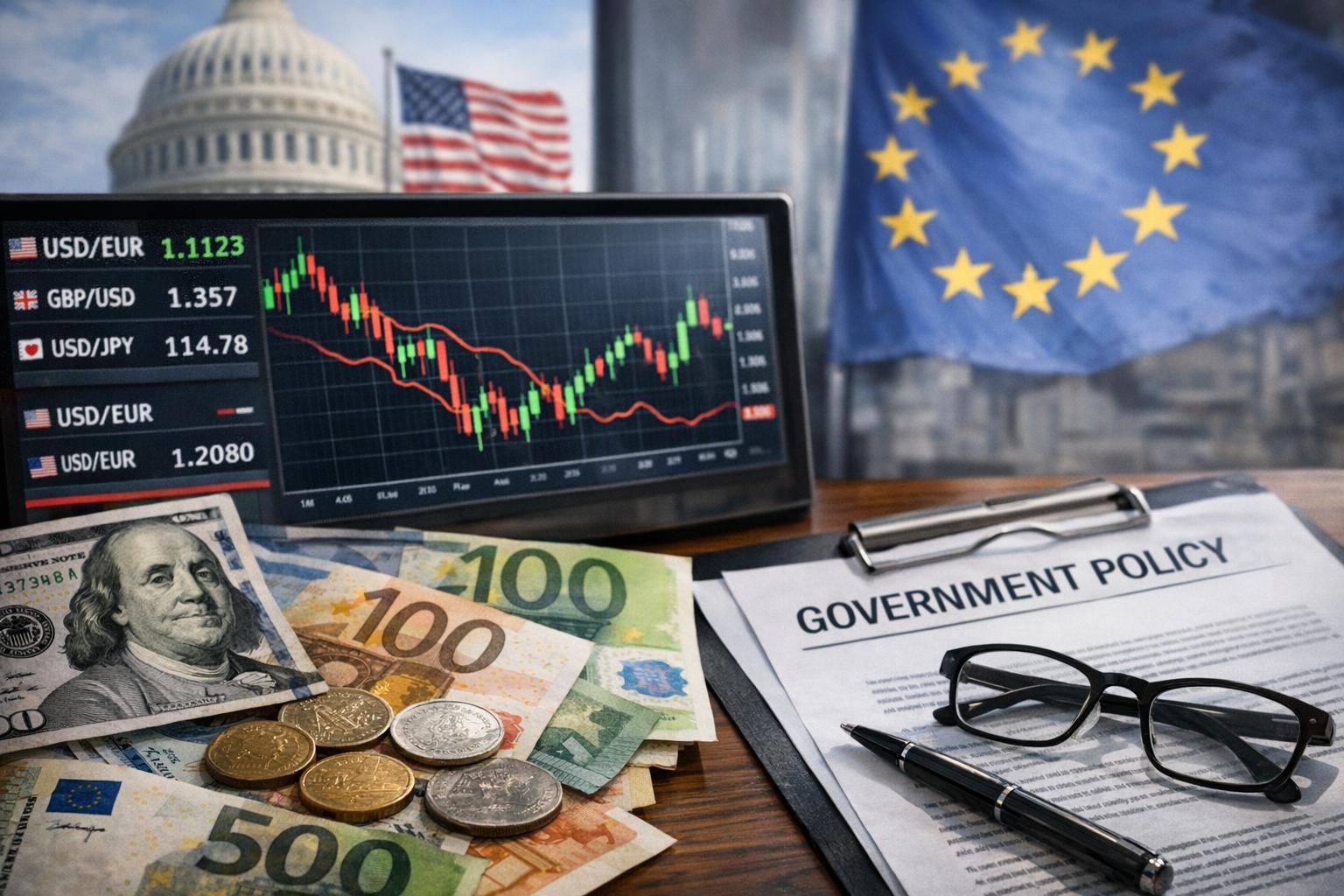
Government monetary policies are powerful tools that significantly influence foreign exchange (forex) prices. Among these tools, central banks, such as the Federal Reserve in the United States, frequently employ interest rate adjustments to steer economic activities in their desired direction. The actions of these institutions are pivotal in maintaining economic stability and influencing investor confidence.

Forex traders usually care about one question: what will happen to interest rates, inflation expectations, and the flow of money across borders? Monetary policy sits right in the middle of that. When markets believe a central bank will tighten or loosen policy, currency values react quickly—sometimes before any official decision is even announced. That’s because FX markets price expectations, not press releases.

This “expectations-first” behavior matters in real life. Imagine a trader who follows central bank communications, not just rate changes. If the central bank signals a higher path for rates over the next year, traders may bid up the currency in advance, even if the current meeting ends with no change. Conversely, if the central bank shifts its tone toward easier policy, the currency can weaken quickly as capital flows adjust.

Interest Rate Adjustments and Capital Flows

When a central bank raises interest rates, it usually attracts foreign capital investors seeking higher returns on their investments. This influx of foreign capital leads to an increase in the demand for that country’s currency, ultimately resulting in the strengthening of the currency’s value within the forex market. In contrast, when a central bank opts to lower interest rates, it can cause a depreciation of the national currency, as the lower rates tend to deter foreign investment, reducing demand for the currency.

There’s a practical way to think about this: currencies often behave like “interest-rate trades.” If one country offers higher yields with stable or improving growth prospects, global investors tend to move capital there. It’s not only banks and hedge funds, either. Pension funds, insurance firms, and multinational corporations that manage cash and hedging exposures also respond to yield differences.

Still, the relationship isn’t always a clean one-to-one mapping. Interest rate hikes can strengthen a currency, but only if markets believe the move is credible and sustainable. If people expect hikes because the economy is in trouble (for example, trying to fight inflation that’s already high), the currency can weaken anyway if growth risks dominate.

Also, the effect depends on what the market expected. Suppose a central bank raises rates by 50 bps, but traders already expected 75 bps. The currency might still fall because the result is “less hawkish than priced.” FX is picky like that—nothing personal, just math.

Real Interest Rates, Inflation, and Risk Premiums

To understand currency reactions, it helps to go one layer deeper than the headline rate. What matters for capital flows is often the combination of:

  • Real interest rates (nominal rates adjusted for inflation expectations)
  • Inflation stability (and whether the central bank has credibility)
  • Country risk (political risk, banking risk, fiscal sustainability)
  • Liquidity (how easy it is for investors to enter and exit positions)

A currency can strengthen if real yields rise and investors feel confident that inflation won’t run away. On the other hand, if higher rates come with rising recession risk or fears of financial stress, the “risk premium” investors demand can offset some of the yield appeal.

So the FX response to rate hikes is often a tug-of-war: yield attraction versus risk fear.

Forward Guidance and Market Expectations

Central banks don’t only change rates; they also provide guidance about the likely path of policy. That’s where a lot of FX price action comes from. Forward guidance can reprice expectations for future rate differentials, which can shift currency values even if the current rate stays the same.

For example, if a central bank says it will keep rates higher for longer, it may raise expected future yields. That can strengthen the currency because investors adjust their expected returns. Alternatively, if guidance suggests policy will turn quickly, the currency may weaken due to reduced expected carry returns.

Traders watch for subtle wording differences. “Data-dependent” can signal caution, while “persistent tightening” can signal determination. Even if the exact meaning isn’t crystal clear, markets interpret it. They trade the interpretation.

Quantitative Easing

Quantitative easing (QE) is another monetary tool implemented by central banks to inject liquidity into the economy. This method involves the purchase of government securities or other financial assets from the market. By doing so, central banks aim to increase the money supply, lower interest rates, and encourage both consumer spending and business investment. Although QE can stimulate economic growth, it often carries a side effect of currency depreciation due to the expanded money supply. As the supply of money increases, the value of the currency tends to decrease, consequently impacting the exchange rate negatively.

Understanding the repercussions of QE on the forex market requires comprehensive analysis. While the immediate effect of increased liquidity is intended to be stimulative, the long-term impact can lead to concerns over inflation and reduced currency value. For traders and investors in the forex market, assessing the balance between these short-term benefits and long-term risks is critical.

QE affects FX through several channels, not just one:

  • Lower domestic yields: when central banks buy bonds, yields can fall, making the currency less attractive for yield-seeking investors.
  • Portfolio rebalancing: when central banks remove safe assets from the market, investors may search for return elsewhere, sometimes in foreign assets.
  • Inflation expectations: if QE raises concerns about future inflation, real yields may fall, pressuring the currency.
  • Liquidity and risk appetite: QE can improve financial conditions, which may increase risk-taking globally. That can either help or hurt depending on relative conditions across countries.

One reason QE can produce mixed results is that it often happens when the economy is under stress. If a central bank launches QE to prevent deflation, the currency might initially weaken, but if global markets decide the policy response reduces systemic risk, it might stabilize later. Again, the market is weighing different storylines at the same time.

Quantitative Tightening as a Mirror Image

It’s worth mentioning the opposite policy—quantitative tightening (QT), where central banks reduce asset holdings or let securities mature without reinvesting. QT can raise yields and tighten financial conditions. In many cases, that supports a currency, at least relative to countries still running QE.

QT isn’t always an “instant strength” event either. If QT signals that demand is weakening or recession risk is rising, the currency impact can be complicated. Forex often reacts more to the relative stance of policy and economic outlook than to the policy label itself.

Fiscal Policies and Forex Prices

Fiscal policies, which include government spending and taxation strategies, are integral to the movement of forex prices. Governments often employ fiscal policies not only to spur economic growth but also to stabilize economic conditions during periods of recession or economic downturns. A government that increases its spending without generating corresponding revenue through taxes may turn to borrowing methods, heightening inflationary pressures.

Where monetary policy affects currency through interest rates and inflation expectations, fiscal policy affects currency through the path of government debt, growth prospects, and credibility. Investors look at whether a country is building a sustainable future or stacking bills for later.

That “credibility” part is where sentiment becomes important. Two countries can run similar deficits, but if one has strong institutions and a credible medium-term plan, investors may treat the risk as manageable. If the other country appears politically unable to adjust spending or taxes, investors may demand a higher risk premium—often pulling money away from the currency.

Spending, Borrowing, and Inflation Risk

Alternatively, when investors observe such fiscal measures as being sustainable and growth-oriented, it can lead to currency appreciation as confidence in the nation’s economic stability increases. However, if fiscal policies are perceived as unsustainable, either due to excessive borrowing or unchecked spending, it could ensue in currency depreciation as confidence wanes.

Consider a simplified example. If a government increases infrastructure spending and also sets out a plan to fund it through tax reforms or spending cuts later, the market may expect medium-term growth and stability. In that scenario, the currency might hold up or strengthen. If spending rises while debt continues to climb with no off-ramp, investors may fear future inflation, higher interest rates, or debt monetization.

Debt monetization is a scary phrase for traders, even when it’s not happening. Markets worry about the possibility. If investors believe a government might eventually rely more on money creation to manage debt, currency confidence can degrade.

Budget Deficits and the Debt Maturity Profile

Forex traders don’t only care about how much debt exists, but also how it’s financed. A government with debt coming due soon may face more rollover risk, especially when global interest rates rise. That can influence currency perception because a sudden refinancing need can pressure local financial markets.

The maturity profile matters. If a country has long-duration debt and stable access to capital markets, its fiscal risks may look less immediate. If most debt is short-term and markets could tighten quickly, the currency can become more sensitive to risk-off periods.

Fiscal Multipliers and How Spend Actually Hits Growth

Not every dollar of spending boosts growth. The effect depends on the type of spending, the economy’s slack, and how quickly the government can deliver projects. In general, spending tends to raise growth more when the economy is below capacity and when supply constraints aren’t too severe.

Forex can respond to those expectations. If investors believe fiscal expansion will meaningfully improve growth and productivity, they may view the currency as supported. If they believe it will mainly increase deficits without improving economic output, the currency may face downward pressure.

Tax Policies

Tax policies, specifically changes in corporate taxes, can exert significant influence over exchange rates. For example, a reduction in corporate taxes can stimulate economic attractiveness by encouraging business investments and growth within the country. This, in turn, can have a favorable impact on the currency value as foreign investors seek to capitalize on the burgeoning opportunities. Conversely, increased taxation can stifle economic growth, business investments, and subsequently have an adverse effect on currency value by reducing its desirability among investors.

The complexity of tax policies extends beyond simple rate alterations. The effectiveness of these policies in influencing forex prices depends on the broader economic context, investor sentiment, and the domestic and international political climate.

Investors usually ask: will the tax changes be stable over time, or are they political promises that could flip after an election? Stability tends to attract long-term capital. Frequent policy reversals, even if they look favorable on paper, can reduce investor trust.

Tax policy can also affect inflation indirectly. For instance, tax changes that raise consumer prices can feed inflation expectations. If those expectations rise faster than wages, real income falls and demand can shift. In turn, central banks may respond with different rate paths, influencing the currency.

Trade Policies and Their Impact

Trade policies have far-reaching effects on a country’s forex market, impacting currency values through mechanisms such as tariffs and trade agreements. When a country imposes tariffs on imports, this can lead to a decrease in the competitiveness of foreign goods, thereby affecting trade balances. Reduced demand for foreign currencies, as a result of such tariffs, can potentially lead to an appreciation of the domestic currency.

But if trade policies were that simple, markets would be boring. In reality, tariffs can also raise input costs for domestic companies that rely on imported parts and materials. Higher costs can feed inflation, spark retaliation from trading partners, and reduce export demand. Those second-order effects can offset any benefit to the currency.

This is why FX reactions to trade policy headlines can be hard to predict without context: what’s the size of the trade exposure, how elastic are imports, and what happens to inflation and growth expectations?

Trade Agreements

Participation in international trade agreements can provide a boost to a nation’s economic opportunities and lead to currency appreciation. Trade agreements often result in increased export volumes and foreign investments. When a country is part of major trade pacts, it frequently benefits from diversified trade and investment opportunities that can stimulate economic growth, thereby bolstering the strength of its currency in the forex market.

The broader implications of these trade policies on forex prices are tied to how they influence the balance of trade over time. Assessment of a country’s participation in international trade, its commodity exports and imports, and broader economic policies is essential for understanding the potential currency impact resulting from varied trade policies.

In practice, trade agreements can also reduce uncertainty. Companies invest when they can plan shipments and pricing. That kind of predictability can support capital inflows, which may strengthen the currency.

There’s also the investment angle: if trade agreements open markets for foreign firms, those firms may put money into factories, logistics, and supply chains. Those investments usually come with currency-related flows—sometimes visible, sometimes hedged, but still influential.

Current Account Effects and Currency Value

A country’s trade balance matters because it feeds into the current account. If exports rise relative to imports, demand for the domestic currency can increase as foreign buyers pay for those goods. If imports rise faster than exports, the country might need to sell domestic currency to pay for foreign purchases.

Forex doesn’t trade “trade balance” directly; it trades how investors expect the current account, growth, and interest rate outlook to evolve. Still, persistent deficits can pressure a currency over time, especially if the financing comes from unstable flows.

A common real-world pattern: a country runs large deficits and funds them with short-term capital. When global risk sentiment shifts and investors reduce exposure to that country, the currency can weaken sharply. In contrast, if deficits are financed by long-term foreign direct investment, the currency might be more stable.

Regulatory Policies

Regulatory policies within financial markets, particularly in the forex market, are crafted to maintain the integrity and stability of currency values. Governments and financial regulatory bodies may implement various measures aimed at stabilizing currencies and preventing excessive volatility that could disrupt economic stability and investor confidence.

Regulation matters because forex is driven by trust. If investors believe markets are fair, liquidity is sufficient, and rules are enforced consistently, they’re more willing to participate. If regulation is unpredictable or enforcement is uneven, investors can stay away—or demand extra compensation for risk.

Market Interventions

One of the direct approaches is market interventions by central banks, where they may opt to buy or sell the domestic currency to achieve certain exchange rate targets. Such interventions are generally intended to provide short-term stability in the forex market, smoothing out abrupt fluctuations. However, it is crucial that these interventions align with underlying market fundamentals; otherwise, these efforts might not sustain long-term trends.

Intervention is often misunderstood as a “control the exchange rate” switch. In most cases, central banks can influence the price only to a point. If intervention runs against factors like interest rate differentials, inflation surprises, or weak fiscal credibility, markets may eventually overwhelm the central bank’s attempts.

That said, interventions can still be meaningful. They can reduce panic, buy time for policy makers, or discourage speculative overshooting. Traders watch for signals such as:

  • Changes in official reserve levels
  • Statements about policy intentions
  • Patterns in spot and forward market behavior

For investors, the practical question is whether the intervention is a one-off smoothing move or part of a broader strategy. A central bank using intervention without changing policy stances might calm the market briefly, but the currency could resume its trend later.

Capital Controls and FX Volatility

Regulatory policies sometimes extend beyond intervention into capital controls—rules that limit how easily investors can move money in and out of a country. These can affect forex demand and supply, often reducing volatility in the short term. But capital controls can also reduce liquidity, limit investment, and complicate hedging strategies.

Capital controls can be politically sensitive. If they are imposed suddenly, they can spook investors and raise risk premiums. If they are designed transparently and paired with credible monetary and fiscal policy, markets may adapt. Still, most investors prefer open markets; restrictions tend to come with a price.

Financial Regulation and Banking Stability

Forex markets are not separate from domestic financial stability. Banking rules, capital adequacy requirements, and supervision can affect money demand, credit growth, and investor confidence—indirectly shaping currency trends.

For example, if regulation strengthens bank balance sheets, reduces the risk of crises, and supports steady credit, investors may treat the currency as safer. If regulation is weak or inconsistent, the risk of funding stress can rise, and that can pressure the currency during global risk-off periods.

Putting It Together: How Policies Interact in Real Forex Trading

In the real world, these policies don’t arrive in neat boxes. Monetary policy, fiscal decisions, trade rules, and regulatory moves interact, and markets react to the combined picture. When you watch FX closely, you’ll notice that price action often tracks the “most dominant story” at the time.

Suppose a central bank signals higher rates (supportive for the currency), but at the same time the government expands spending without a credible funding plan (potentially bearish). Investors may then focus on which story seems more believable. If inflation rises and fiscal credibility declines, the currency may face pressure even if rates are theoretically supportive. If inflation stays controlled and financing looks manageable, the currency may strengthen.

Here’s a real-world style example. Imagine a country facing weaker exports due to tariff threats. Trade conditions worsen, which can reduce growth expectations and widen fiscal strain if revenues drop. The central bank may react with easier policy to support growth, which can weaken the currency. However, if the country also improves financial regulation and stabilizes banking funding, that can reduce stress and limit how far the currency falls. In other words, policy effects are not isolated—they stack.

A Quick Reference Table for Common Policy Signals

Policy Signal Typical FX Direction (Relative) What Traders Watch
Rate hikes or hawkish guidance Often strengthens currency Real yields, inflation credibility, market pricing of future moves
QE / bond purchases Often weakens currency Yield impact, inflation expectations, risk and investment flows
Higher deficits without credible funding Often weakens currency Debt sustainability, rollover risk, fiscal credibility
Growth-oriented fiscal plan with reforms Can support currency Policy durability, impact on productivity and inflation
Tariffs / trade barriers Mixed; depends on inflation and retaliation Trade balance effects, input costs, retaliation risk
Trade agreements Often supports currency Export growth, investment flows, uncertainty reduction
FX intervention to smooth moves Short-term stabilization possible Reserves, policy consistency, underlying fundamentals

How Traders and Investors Use This Information

The point of understanding policy effects isn’t to predict every tick of the market. It’s to form a better odds-based framework for decision-making. Traders build scenarios. Investors update portfolios. Both watch for changes in the policy mix.

In practice, many people approach forex with a simple method: identify the likely policy direction, compare it to peers, then track whether the market is pricing that path. If the market starts disagreeing with policy reality, currency moves can surprise to the upside or downside.

For example, when central banks shift their language, FX often moves first and asks questions later. That “move first” behavior is why traders monitor speeches, minutes, and press conference phrasing. It’s also why investors pay attention to debt auctions and fiscal announcements. Those events can change the narrative quickly.

And yes, it’s not only professionals. If you’re a business owner or a finance manager handling currency exposure, you probably care about practical timing. If you sell abroad, a strengthening currency can reduce your revenue in your home currency. If you buy imported supplies, a weakening currency can raise costs. Understanding policy signals can help you plan hedging and make operational decisions with less guesswork.

In summary, monetary, fiscal, trade, and regulatory policies move forex prices through interest rate expectations, inflation perceptions, growth outlook, capital flows, and risk premiums. The better you understand how these pieces interact, the less the market feels like it’s doing random stuff for fun.

In conclusion, understanding the complex interplay of monetary, fiscal, trade, and regulatory policies is vital for predicting and interpreting movements in the forex markets. For those interested in delving deeper into the intricacies of these policy impacts, resources from institutions like the International Monetary Fund can offer valuable insights into the strategies employed by governments and central banks worldwide. This knowledge is integral for grasping the broader economic landscape and effectively participating in forex trading and investment decision-making.