Understanding the Forex Market
The foreign exchange, or forex, market is the biggest trading arena most people will never physically enter. It’s open around the clock, it’s decentralized, and it runs on a simple idea: one currency is exchanged for another. Because so many governments, businesses, and investors need to buy or sell currencies for real-world reasons, forex stays highly liquid and actively traded.
To put the scale in perspective, daily trading volume is measured in trillions of dollars. That volume matters for traders because it typically means tighter spreads (the difference between the bid and ask) and more order flow. Still, liquidity doesn’t automatically hand you profit. Markets can be liquid and chaotic at the same time, especially when major economic data drops or when geopolitical headlines start doing laps around the news cycle.
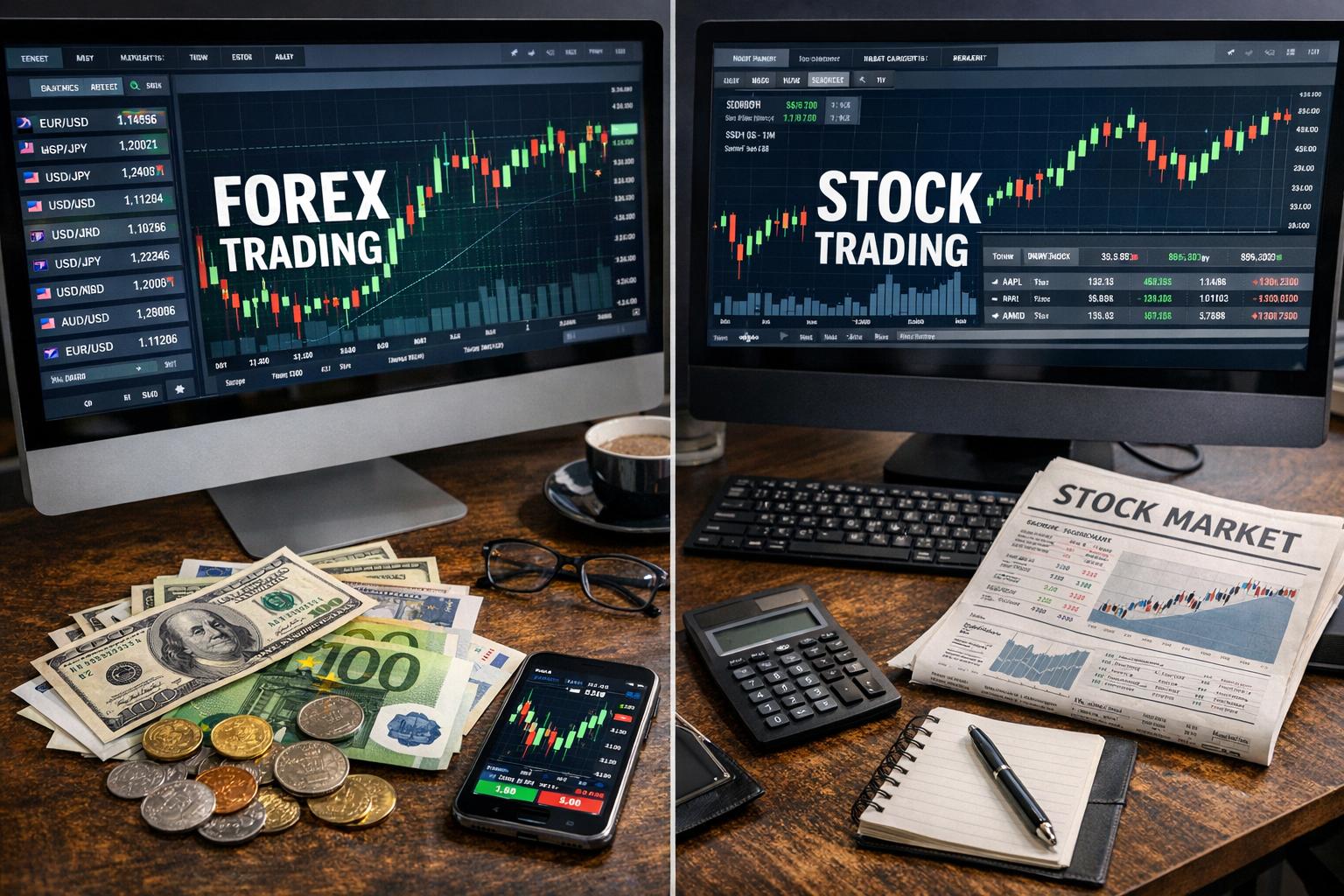
Unlike stock exchanges that run on set trading hours, forex generally trades 24 hours a day, five days a week. That’s not just a convenience feature. It creates a practical advantage: you can choose trading times based on your strategy and the “personality” of the market during different sessions. For example, volatility tends to pick up when major financial centers overlap, such as London and New York. If you’ve ever tried to day trade stocks after work only to find the market is already half asleep, forex can feel like someone turned the lights back on.
Before you design a forex trading strategy, you need a grounded understanding of how prices move and why they move. Forex is influenced by interest rate expectations, economic growth, inflation trends, and risk sentiment. In plain English, currencies don’t swing randomly; they react to information and expectations. Your job is to interpret that reaction with a repeatable process, while also managing risk so one bad week doesn’t erase months of work.
Key Concepts and Tools
Most trading strategies—good or bad—share the same foundation: you need to know what you’re trading, what you think will happen, and how you’ll respond if the market disagrees. In forex, that starts with currency pairs, spread mechanics, and an awareness of the events that can move your chosen pair.
One of the primary approaches for understanding currency movements is fundamental analysis. This isn’t about reading headlines like they’re fortune cookies. It’s about connecting economic indicators and policy decisions to currency valuation. Traders watch inflation prints, GDP releases, employment data, and central bank statements because these can shift expectations about future interest rates. Since many currencies are valued partly on yield differences, interest rate expectations often end up doing heavy lifting.
In addition to economic data, political and policy factors matter. Elections, fiscal policy decisions, and central bank credibility can influence how markets price risk. For instance, if a central bank signals a shift toward higher rates or a more hawkish stance, the currency may strengthen as traders anticipate better returns. On the other hand, dovish language—or uncertainty about policy—can lead to weakness.
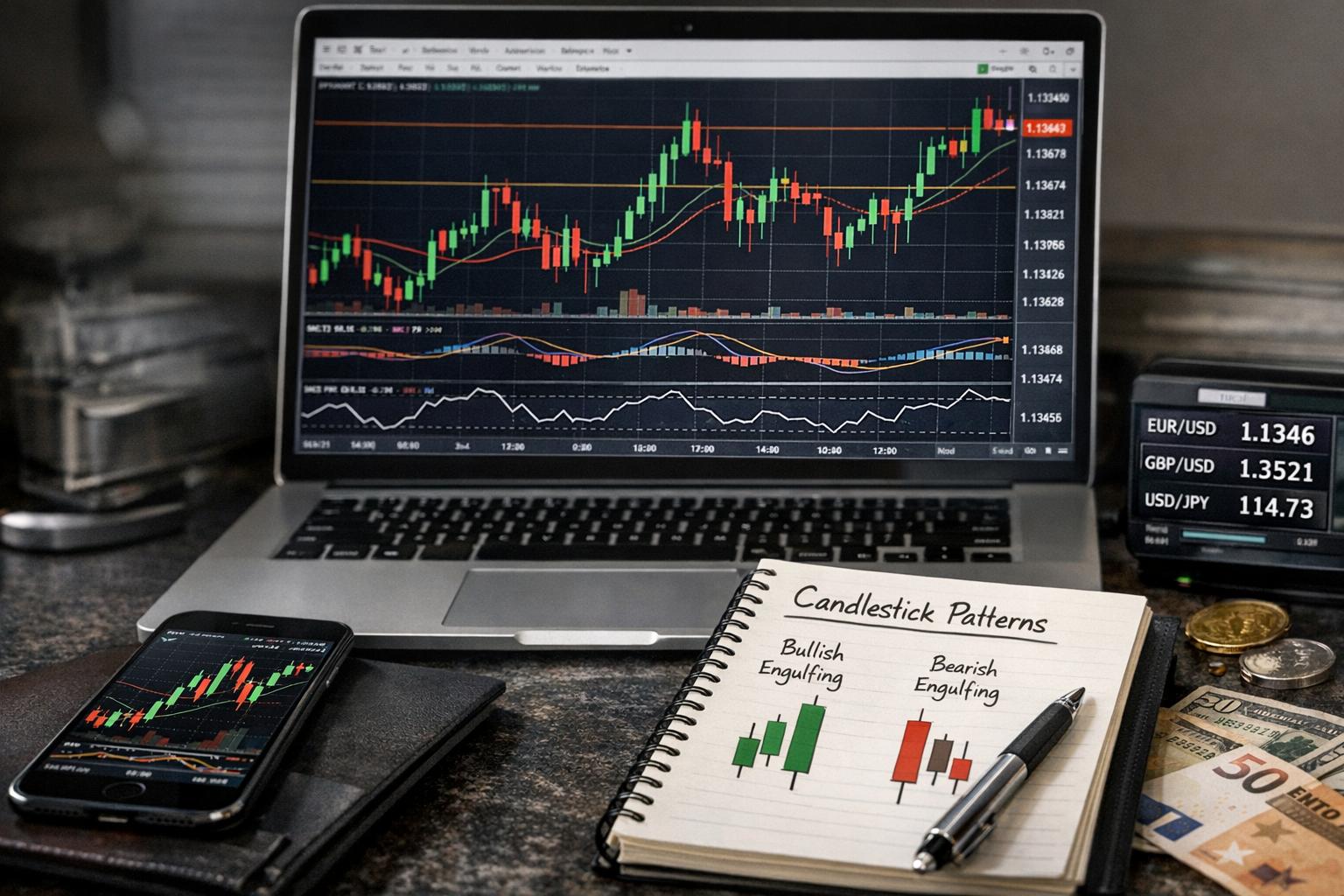
Then there’s technical analysis, which focuses on price and volume patterns. You’ll see traders interpret chart structures—like trends, ranges, and breakouts—using indicators such as moving averages, trend lines, and oscillators. The point isn’t to worship indicators. The point is to turn raw price action into a framework you can apply consistently.
For many people, the best strategies combine both approaches. A simple example: use fundamental analysis to understand the “why” behind a currency’s move, then use technical analysis to decide the “when” to enter and the “where” to set risk controls. Not every trader stacks both tools, but the synergy helps when you’re trying to avoid taking trades on pure vibes.
Creating a Trading Plan
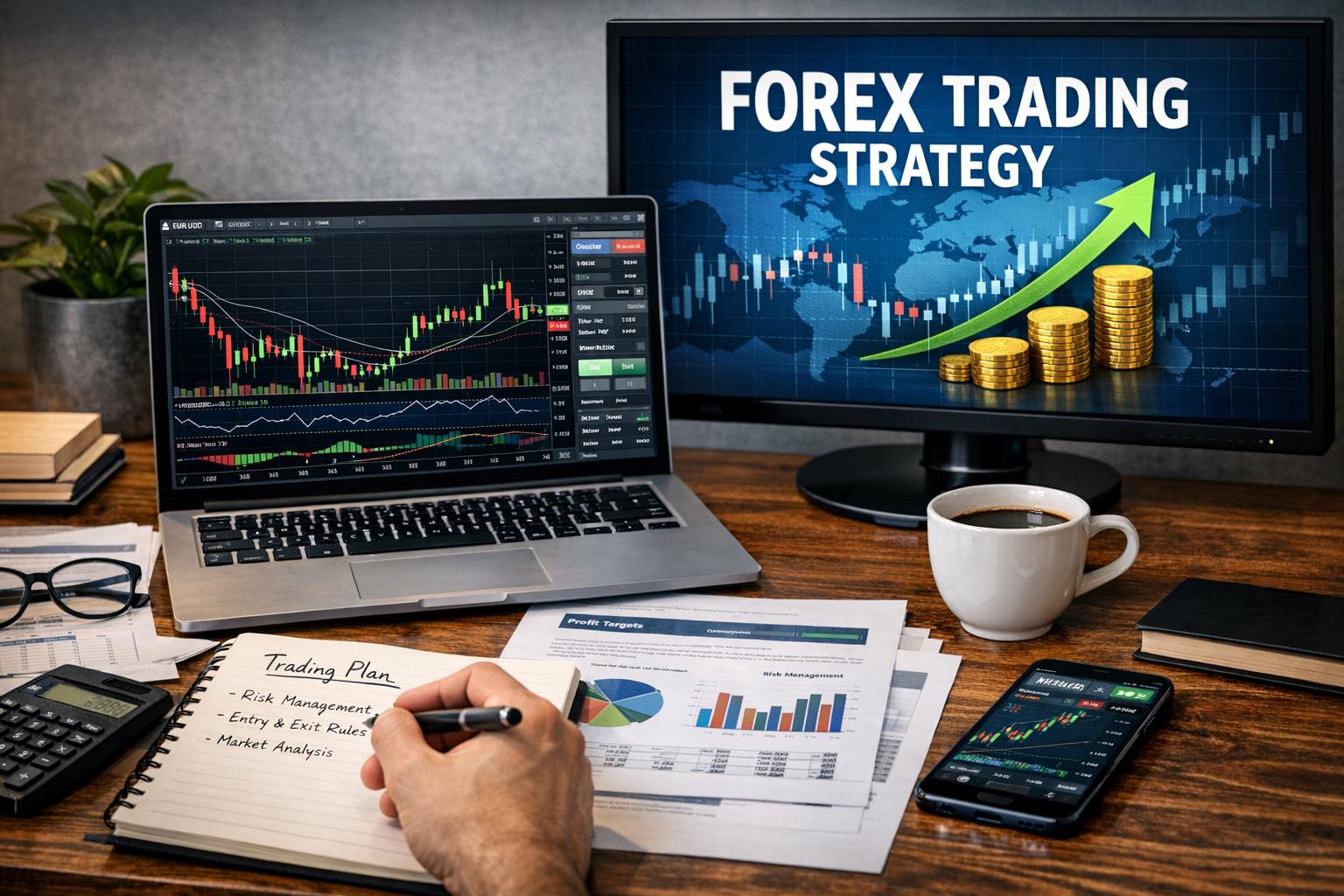
A trading plan is where discipline gets written down, because feelings are unreliable when money is involved. A good plan doesn’t need to be fancy. It needs to be clear. It should spell out what you trade, why you trade it, when you trade it, and what happens if you’re wrong.
Start with trading goals and your risk tolerance. Are you aiming for steady monthly returns, or are you experimenting while learning? The time horizon you choose will shape your style: day trading, swing trading, or position trading each has different expectations for holding time, volatility, and the types of signals that tend to work.
Also, pick the currency pairs you’ll focus on. This choice isn’t just about favorites; different pairs behave differently. Major pairs like EUR/USD or GBP/USD tend to have abundant liquidity and usually tighter spreads. Many traders find them easier to trade. Cross pairs, such as EUR/JPY, can behave differently due to how their underlying economies interact. Exotic pairs can have wider spreads and more erratic moves, which is fine if you’re experienced and have the right risk controls—but it’s not ideal for getting comfortable.
Next, determine the timeframes that fit your approach. A common mistake is strategy drift: a trader builds a setup on the daily chart but watches the five-minute chart like it’s the morning news. That usually leads to overtrading or premature exits. If your plan is built around one timeframe, your signals should come from that timeframe or a tightly related one.
Then define entry and exit rules. This is where you stop “winging it.” Entry criteria might include trend alignment, a breakout level, or a specific indicator condition. Exit criteria might include reaching a target, hitting time-based invalidation, or trading to a technical level such as a support/resistance zone.
An integral part of a trading plan is risk management. Setting stop-loss and take-profit orders gives you structure. Stops prevent one losing position from turning into a forced life update. Take-profits help you avoid the “let it ride forever” problem, where a trade that reached the right level turns into a regret story later.
Testing Your Strategy
Once your plan looks reasonable on paper, test it. This step is the difference between having a strategy and having a trading habit. Backtesting uses historical data to evaluate how a strategy might have performed. Paper trading and demo accounts can also help you practice execution without risking real money.
Backtesting isn’t magic, but it’s useful. It can reveal patterns like: “This setup performs best during certain sessions,” or “Our average loss is too big compared to our average gain.” You should also check how the strategy behaves during different market conditions. A system that works in steady trends may struggle when the market turns into a range-bound mess.
When reviewing results, pay attention to more than final profit. Consider win rate, average payoff, and the size of drawdowns. A strategy with a high win rate but poor risk/reward can still grind your account down. The best systems don’t guarantee wins every time, but they tend to keep losses controlled when the market does its usual business of moving against you.
Execution Matters (Yes, Really)
A trading strategy can look perfect in a spreadsheet and still fail in real trading due to execution issues. Slippage occurs when the price moves between the time you place the order and when it fills. Spread changes can affect how close your real entry price is to your intended level. If your backtest assumed a fixed spread and your broker’s spreads widen during news events, performance can diverge fast.
That’s why it helps to test with realistic assumptions. Use recent data when possible, review trades around major events, and confirm that your order types (stops, limits, market orders) match what you plan to do live. If you’ve ever watched a backtest “perfectly” enter at a level your chart never actually offered, you already know where this is going.
Implementing Risk Management
Risk management is what keeps a trader alive long enough to accumulate skill. Markets can be brutal, and forex is no exception. Your goal isn’t to eliminate risk—that’s not how trading works. Your goal is to control it so that losing trades are survivable and winning trades have a chance to matter.
A common guideline is to risk no more than 1–2% of your trading capital on a single trade. That number isn’t a law of physics—some traders use less when volatility is high, and some use more when the setup is particularly well-defined. Still, the logic holds: when your risk per trade is capped, you reduce the damage that can come from a losing streak.
Over-leveraging is where many traders stumble. Leverage can amplify gains, but it also amplifies losses. If your position size is too large relative to your stop-loss distance, even “small” price movements can create outsized losses. People often underestimate how quickly a forex move can happen during scheduled events like central bank announcements or unexpected inflation surprises.
Diversification is another risk tool, but it should be used carefully. Spreading exposure across multiple currency pairs can reduce dependence on the behavior of a single pair. However, diversification isn’t the same as risk removal. Many currency pairs are still influenced by overlapping factors like the US dollar, global risk sentiment, and interest rate expectations. Two trades can look different but act like twins when the same driver hits the market.
To make diversification practical, traders often map correlation and avoid stacking positions that respond similarly to the same underlying economic shocks. For example, if you hold multiple trades that all rely on a strengthening US dollar thesis, they may all suffer at the same time if that thesis breaks.
Position Sizing: The Part Most People Skip
Traders talk about “risk management” like it’s only about stop-loss orders. Stops are part of it, but position sizing is the engine. Position sizing converts your risk tolerance into a concrete trade volume.
A basic position sizing approach starts with your account size, your chosen risk percentage, your stop-loss distance (in pips), and the pip value for the instrument. From there, you calculate an appropriate trade size so that hitting the stop-loss costs only your planned fraction of the account.
Why so picky? Because if your strategy is built around a 20-pip stop and you suddenly trade a setup that needs a 60-pip stop—but you keep the same lot size—you’ve accidentally tripled risk. This kind of inconsistency is one of the silent killers in trading. You don’t notice it until the account is already limping.
Stop-Loss Placement: Technical Meets Reality
A stop-loss should match the logic of your setup. If your trade is based on a support level, placing the stop randomly 30 pips away is not the same as placing it where the trade idea becomes invalid. A good stop sits beyond the market structure that you’re using for direction.
At the same time, stops must respect market “noise.” If you put stops too tight, you’ll get stopped out before price reaches your target. If you put stops too wide, risk per trade balloons and performance suffers. This balancing act is normal; it’s not a sign you’re doing it wrong. It’s just the reality of trading messy human decisions on messy charts.
Some traders also use time-based invalidation. This means if price doesn’t move toward the target within a certain number of candles, they exit even if the stop hasn’t been hit. This can reduce the damage from trades that stall due to changing market conditions. But it requires discipline and a clear rule, otherwise “time stop” becomes “I’m bored, so I’m out.”
Continual Learning and Adaptation
The forex market doesn’t stand still, even when your calendar does. Strategies that worked during one volatility regime can underperform later. That’s why professional traders keep running notes, reviewing performance, and adjusting rules when the market changes.
Stay informed about market news, scheduled economic events, and geopolitical developments. If you trade major pairs, you’ll likely spend time watching central bank announcements, inflation reports, employment data, and other macro releases. These events can shift expectations quickly and trigger bursts of volatility. If your strategy doesn’t account for news risk, you’ll either need to avoid trading around it or adjust your execution rules.
A key habit is to treat your strategy like software that can be improved. Your job is not to “believe harder.” Your job is to observe what the market is doing relative to your plan. If your backtests indicate one set of conditions works better, track whether those conditions appear in live trading. If not, your edge might be smaller than you assumed.
Many traders also learn by studying how other market participants behave. Trading communities and forums can be helpful—not because everyone has the perfect setup, but because you’ll encounter different perspectives on risk, execution, and market psychology. Just remember that an opinion posted online is not the same thing as evidence. Treat it as input, then verify it against your own results.
A Simple Review Process
If you want adaptation to happen systematically, keep a review routine. After a trading week, look at your trades and classify them. Were wins driven by the planned setup, or were they more like “price did what I hoped”? Were losses connected to specific rule breaks—like entering early, ignoring the timeframe alignment, or moving the stop? This type of review highlights whether your strategy is the problem or your execution is.
For real-world trading, it also helps to record a few non-price notes. For example: What was the liquidity like? Were spreads wider than usual? Did you trade right before a scheduled release? These details can explain why a strategy “worked” in backtesting but not live. Backtesting doesn’t always account for the messiness of live conditions.
Using Technology and Resources
Most trading platforms provide charting tools, indicators, and order management functions. That’s the basic stuff. The more useful part is how you use these tools to reduce decision fatigue. When your system has rules, the platform can help enforce consistency through alerts, order templates, and repeatable workflows.
Technology also matters for monitoring economic events. Economic calendars can help you track when markets may get jumpy. If you know a major data release is coming, you can adjust position sizing, avoid entries, or plan alternative trades that are less sensitive to short-term volatility.
Some traders also rely on financial news sources to understand the context behind market moves. The trick is to avoid letting news headlines override your process. Use news to frame expectations; use your strategy to decide actions. That separation keeps you from chasing price after the move has already happened.
Light-Weight Trading Workflow (So You Don’t Burn Out)
Here’s a realistic workflow many consistent traders use: they check the calendar and broader macro context first, then analyze charts on their chosen timeframe(s), then place trades only when the rules match. After that, they monitor without hovering. You’re not trying to watch every tick like it owes you money. You’re trying to manage risk based on levels you already identified.
This workflow matters because forex can be psychologically demanding. When you’re staring at price constantly, you start second-guessing your plan. If you can reduce unnecessary screen time, you often improve consistency without changing the strategy at all.
Conclusion
Developing a profitable forex trading strategy requires more than picking a chart indicator and hoping for the best. You need a solid grasp of how currencies move, a structured plan for entries and exits, and disciplined risk management that protects your account through losing streaks. If you invest time in backtesting, paper trading, and realistic execution assumptions, you’ll spot weaknesses before they cost you real money.
Forex also demands continual learning. Economic releases, central bank communication, and shifting market sentiment can change the conditions under which your strategy performs. The traders who last tend to treat their approach as something they can refine, not something they’re forced to defend. When the market changes, you adjust the rules, not your emotions.
Trading in forex is a risk business, not a fairness contest. Yes, you can build a process that improves your odds. But you still need to manage position sizing, stop-loss placement, and overall exposure so that risk stays controlled. If you do that, you’re not just chasing profits—you’re also protecting capital, which is the part that keeps you in the game long enough to learn.
Also, pick the currency pairs you’ll focus on. This choice isn’t just about favorites; different pairs behave differently. Major pairs like EUR/USD or GBP/USD tend to have abundant liquidity and usually tighter spreads. Many traders find them easier to trade. Cross pairs, such as EUR/JPY, can behave differently due to how their underlying economies interact. Exotic pairs can have wider spreads and more erratic moves, which is fine if you’re experienced and have the right risk controls—but it’s not ideal for getting comfortable.
Next, determine the timeframes that fit your approach. A common mistake is strategy drift: a trader builds a setup on the daily chart but watches the five-minute chart like it’s the morning news. That usually leads to overtrading or premature exits. If your plan is built around one timeframe, your signals should come from that timeframe or a tightly related one.
Then define entry and exit rules. This is where you stop “winging it.” Entry criteria might include trend alignment, a breakout level, or a specific indicator condition. Exit criteria might include reaching a target, hitting time-based invalidation, or trading to a technical level such as a support/resistance zone.
An integral part of a trading plan is risk management. Setting stop-loss and take-profit orders gives you structure. Stops prevent one losing position from turning into a forced life update. Take-profits help you avoid the “let it ride forever” problem, where a trade that reached the right level turns into a regret story later.
Testing Your Strategy
Once your plan looks reasonable on paper, test it. This step is the difference between having a strategy and having a trading habit. Backtesting uses historical data to evaluate how a strategy might have performed. Paper trading and demo accounts can also help you practice execution without risking real money.
Backtesting isn’t magic, but it’s useful. It can reveal patterns like: “This setup performs best during certain sessions,” or “Our average loss is too big compared to our average gain.” You should also check how the strategy behaves during different market conditions. A system that works in steady trends may struggle when the market turns into a range-bound mess.
When reviewing results, pay attention to more than final profit. Consider win rate, average payoff, and the size of drawdowns. A strategy with a high win rate but poor risk/reward can still grind your account down. The best systems don’t guarantee wins every time, but they tend to keep losses controlled when the market does its usual business of moving against you.
Execution Matters (Yes, Really)
A trading strategy can look perfect in a spreadsheet and still fail in real trading due to execution issues. Slippage occurs when the price moves between the time you place the order and when it fills. Spread changes can affect how close your real entry price is to your intended level. If your backtest assumed a fixed spread and your broker’s spreads widen during news events, performance can diverge fast.
That’s why it helps to test with realistic assumptions. Use recent data when possible, review trades around major events, and confirm that your order types (stops, limits, market orders) match what you plan to do live. If you’ve ever watched a backtest “perfectly” enter at a level your chart never actually offered, you already know where this is going.
Implementing Risk Management
Risk management is what keeps a trader alive long enough to accumulate skill. Markets can be brutal, and forex is no exception. Your goal isn’t to eliminate risk—that’s not how trading works. Your goal is to control it so that losing trades are survivable and winning trades have a chance to matter.
A common guideline is to risk no more than 1–2% of your trading capital on a single trade. That number isn’t a law of physics—some traders use less when volatility is high, and some use more when the setup is particularly well-defined. Still, the logic holds: when your risk per trade is capped, you reduce the damage that can come from a losing streak.
Over-leveraging is where many traders stumble. Leverage can amplify gains, but it also amplifies losses. If your position size is too large relative to your stop-loss distance, even “small” price movements can create outsized losses. People often underestimate how quickly a forex move can happen during scheduled events like central bank announcements or unexpected inflation surprises.
Diversification is another risk tool, but it should be used carefully. Spreading exposure across multiple currency pairs can reduce dependence on the behavior of a single pair. However, diversification isn’t the same as risk removal. Many currency pairs are still influenced by overlapping factors like the US dollar, global risk sentiment, and interest rate expectations. Two trades can look different but act like twins when the same driver hits the market.
To make diversification practical, traders often map correlation and avoid stacking positions that respond similarly to the same underlying economic shocks. For example, if you hold multiple trades that all rely on a strengthening US dollar thesis, they may all suffer at the same time if that thesis breaks.
Position Sizing: The Part Most People Skip
Traders talk about “risk management” like it’s only about stop-loss orders. Stops are part of it, but position sizing is the engine. Position sizing converts your risk tolerance into a concrete trade volume.
A basic position sizing approach starts with your account size, your chosen risk percentage, your stop-loss distance (in pips), and the pip value for the instrument. From there, you calculate an appropriate trade size so that hitting the stop-loss costs only your planned fraction of the account.
Why so picky? Because if your strategy is built around a 20-pip stop and you suddenly trade a setup that needs a 60-pip stop—but you keep the same lot size—you’ve accidentally tripled risk. This kind of inconsistency is one of the silent killers in trading. You don’t notice it until the account is already limping.
Stop-Loss Placement: Technical Meets Reality
A stop-loss should match the logic of your setup. If your trade is based on a support level, placing the stop randomly 30 pips away is not the same as placing it where the trade idea becomes invalid. A good stop sits beyond the market structure that you’re using for direction.
At the same time, stops must respect market “noise.” If you put stops too tight, you’ll get stopped out before price reaches your target. If you put stops too wide, risk per trade balloons and performance suffers. This balancing act is normal; it’s not a sign you’re doing it wrong. It’s just the reality of trading messy human decisions on messy charts.
Some traders also use time-based invalidation. This means if price doesn’t move toward the target within a certain number of candles, they exit even if the stop hasn’t been hit. This can reduce the damage from trades that stall due to changing market conditions. But it requires discipline and a clear rule, otherwise “time stop” becomes “I’m bored, so I’m out.”
Continual Learning and Adaptation
The forex market doesn’t stand still, even when your calendar does. Strategies that worked during one volatility regime can underperform later. That’s why professional traders keep running notes, reviewing performance, and adjusting rules when the market changes.
Stay informed about market news, scheduled economic events, and geopolitical developments. If you trade major pairs, you’ll likely spend time watching central bank announcements, inflation reports, employment data, and other macro releases. These events can shift expectations quickly and trigger bursts of volatility. If your strategy doesn’t account for news risk, you’ll either need to avoid trading around it or adjust your execution rules.
A key habit is to treat your strategy like software that can be improved. Your job is not to “believe harder.” Your job is to observe what the market is doing relative to your plan. If your backtests indicate one set of conditions works better, track whether those conditions appear in live trading. If not, your edge might be smaller than you assumed.
Many traders also learn by studying how other market participants behave. Trading communities and forums can be helpful—not because everyone has the perfect setup, but because you’ll encounter different perspectives on risk, execution, and market psychology. Just remember that an opinion posted online is not the same thing as evidence. Treat it as input, then verify it against your own results.
A Simple Review Process
If you want adaptation to happen systematically, keep a review routine. After a trading week, look at your trades and classify them. Were wins driven by the planned setup, or were they more like “price did what I hoped”? Were losses connected to specific rule breaks—like entering early, ignoring the timeframe alignment, or moving the stop? This type of review highlights whether your strategy is the problem or your execution is.
For real-world trading, it also helps to record a few non-price notes. For example: What was the liquidity like? Were spreads wider than usual? Did you trade right before a scheduled release? These details can explain why a strategy “worked” in backtesting but not live. Backtesting doesn’t always account for the messiness of live conditions.
Using Technology and Resources
Most trading platforms provide charting tools, indicators, and order management functions. That’s the basic stuff. The more useful part is how you use these tools to reduce decision fatigue. When your system has rules, the platform can help enforce consistency through alerts, order templates, and repeatable workflows.
Technology also matters for monitoring economic events. Economic calendars can help you track when markets may get jumpy. If you know a major data release is coming, you can adjust position sizing, avoid entries, or plan alternative trades that are less sensitive to short-term volatility.
Some traders also rely on financial news sources to understand the context behind market moves. The trick is to avoid letting news headlines override your process. Use news to frame expectations; use your strategy to decide actions. That separation keeps you from chasing price after the move has already happened.
Light-Weight Trading Workflow (So You Don’t Burn Out)
Here’s a realistic workflow many consistent traders use: they check the calendar and broader macro context first, then analyze charts on their chosen timeframe(s), then place trades only when the rules match. After that, they monitor without hovering. You’re not trying to watch every tick like it owes you money. You’re trying to manage risk based on levels you already identified.
This workflow matters because forex can be psychologically demanding. When you’re staring at price constantly, you start second-guessing your plan. If you can reduce unnecessary screen time, you often improve consistency without changing the strategy at all.
Conclusion
Developing a profitable forex trading strategy requires more than picking a chart indicator and hoping for the best. You need a solid grasp of how currencies move, a structured plan for entries and exits, and disciplined risk management that protects your account through losing streaks. If you invest time in backtesting, paper trading, and realistic execution assumptions, you’ll spot weaknesses before they cost you real money.
Forex also demands continual learning. Economic releases, central bank communication, and shifting market sentiment can change the conditions under which your strategy performs. The traders who last tend to treat their approach as something they can refine, not something they’re forced to defend. When the market changes, you adjust the rules, not your emotions.
Trading in forex is a risk business, not a fairness contest. Yes, you can build a process that improves your odds. But you still need to manage position sizing, stop-loss placement, and overall exposure so that risk stays controlled. If you do that, you’re not just chasing profits—you’re also protecting capital, which is the part that keeps you in the game long enough to learn.