
Data from 2018 shows the Pound Sterling (GBP) as the fourth most traded currency on the FX market, behind the USD, Euro and Japanese yen. If we take a look at the most frequently traded currency pairs for that year, we find GBP/USD on third place and EUR/GBP on eight place. The pound sterling in very popular among the customers of UK forex brokers.
The pound sterling is the oldest currency still in use which has been in continuous use since its inception.
It is currencly the third-most held currency in national currency reserves, although it make up less than 5% of all the reserve currency.
Official currency
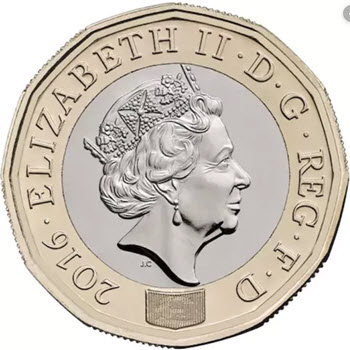
GBP is the official currency of the United Kingdom, The British Antarctic Territory, South Georgia and the South Sandwich Islands, Jersey, Guernsey, Isle of Man (alongside the local Manx pound), Gibraltar (alongside the local Gibraltar pound), the Falkland Islands (alongside the local Falkland Islands pound), and The British Overseas Territory of Saint Helena, Ascension and Tristan da Cunha (alongside the Saint Helena pound).
The Guernsey pound and the Jersey pound are local issues of the pound sterling, not separate currencies. This makes them different than the Manx pound, the Gibraltar pound, the Falkland Islands pound, and the Saint Helena pound, which are not local issues of the pound sterling and not regulated by The Government and Company of the Bank of England.
Short facts about the pound sterling
| ISO 4217 code | GBP |
| Numerical ISO 4217 code | 826 |
| Symbol | £
(less commonly: ₤) |
| Central banking system | The Governor and Company of the Bank of England |
| Main unit and subunits | 1 pound sterling (GBP) = 100 pence sterling (GBp) |
| Nickname | Quid |
In Anglo-Saxon England, 240 standard silver penny coins weighed 1 pound. The symbol £ referes to the Latin word libra, the basic Roman unit of weight. So, back than, one pound actually weighed one pound. Up until 1971, £1 was equal to 240 pence, even though the coins were no longer made from silver. Since 1971, £1 has been equal to 100 pence.
The Governor and Company of the Bank of England
The pound sterling is regulated by The Governor and Company of the Bank of England.
This is the entity that sets and enforce the monetary policy for the currency. However, in extreme economic conditions, the Bank of England is required to follow the orders of Her Majesty’s Treasury (the Exchequer), if it is necessary with regards to the public. Such an order from the Exchequer is valid for 28 days. After that time period, approval from the Parliament is required for the order to remain valid.
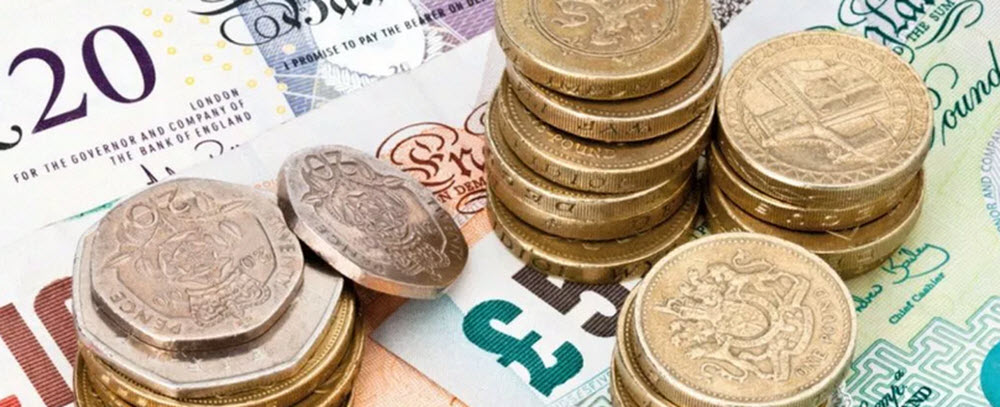
The Monetary Policy Committee (MPC)
The Monetary Policy Committee (MPC) is a committee of the Bank of England which decides the Bank of England Base Rate – the official interest rate in the United Kingdom. The committee, which meets eight times a year, is also responsbible for various other aspects of the government’s monetary policy, such as forward guidance and quantitative easing, and for keeping the Consumer Price Index measure of inflation close to a target set by the government.
The MPC was announced in 1997, and given operational responsibility for setting interest rates in the Bank of England Act 1998. The idea of the MPC is to have a committee that is relatively free from political interference. Each committee member has one vote, and full minutes of each meeting are published so that each member is held to account for their vote.
Currency reserves
As mentioned above, the pound sterling is the fourth most common currency in official foreign exchange reserves.
Pound Sterling (GBP) as a Global Reserve Currency
From 19th-century global hegemony to the modern multi-currency reserve system
Following the Great Recoinage of 1816 and the Resumption of Cash Payments Act 1819, the Bank of England legally anchors Sterling to gold at £3 17s 10½d per standard ounce, establishing unmatched international convertibility.
Sterling becomes the supreme global trade settlement and reserve asset. At its zenith, sterling-denominated bills finance over 60% of international trade and represent the vast majority of official foreign exchange reserves held by global central banks.
Convertibility is suspended during World War I to finance war debts. In 1925, Chancellor Winston Churchill returns the pound to gold at its pre-war parity ($4.86), resulting in severe overvaluation, export slumps, and foreign reserve strain.
A severe run on gold and foreign exchange reserves forces Britain off the gold standard. The British Empire and affiliated trade partners form the Sterling Area, pegging their local currencies and pooling their central bank reserves in London.
The Bretton Woods conference designates the US Dollar as the primary global anchor pegged to gold ($35/oz). Sterling transitions to a secondary reserve role with a fixed peg of $4.03, formalizing the emergence of a US-centric financial architecture.
Persistent trade deficits and dwindling reserves force Harold Wilson and post-war governments into two major devaluations: from $4.03 to $2.80 (1949), and later to $2.40 (1967), prompting central banks worldwide to diversify reserves into dollars.
A stagflation crisis and reserve drain drive the UK to secure an emergency $3.9B loan from the International Monetary Fund (IMF). Exchange controls are subsequently abolished in 1979, officially dissolving the remnants of the Sterling Area.
Speculative pressure (famously led by George Soros) depletes Bank of England foreign currency reserves trying to defend the exchange rate. The UK is forced to exit the European Exchange Rate Mechanism (ERM), floating Sterling permanently.
The Monetary Policy Committee (MPC) is granted operational independence to target inflation. Transparent monetary governance stabilizes the pound as a reliable, floating global reserve asset.
Following the 2016 Brexit referendum and subsequent economic realignments, the pound maintains its position as the world’s 4th largest allocated reserve currency (accounting for ~4.5–5% of global allocated FX reserves, behind USD, EUR, and JPY).
This article was last updated on: August 31, 2026