The Future of Forex Trading: AI, Automation, and Trends

The Future of Forex Trading: AI, Automation, and Trends

The Integration of AI in Forex Trading

The forex market moves in a way that makes humans feel like they’re always a few steps behind. Prices update constantly, headlines hit in real time, and liquidity shifts by the minute. So it’s not surprising that artificial intelligence (AI) has started showing up everywhere—from research desks at financial firms to screen-hungry retail traders. AI systems can process data faster than people, spot patterns that are hard to describe in plain English, and execute trades without pausing to “think about it.”

But the real change isn’t just speed. AI changes how traders form expectations about the market. Instead of relying only on manual chart reading or a fixed set of indicators, many traders now use models that learn from historical behavior and react to new information as it arrives. That means fewer decisions are based purely on gut feel and more are based on calculated probabilities.

In practice, AI-driven systems use historical data, chart patterns, and market signals to estimate likely price paths. Machine learning techniques can adjust those estimates over time as more data comes in. When done well, the result is a trading workflow that is more consistent, more disciplined, and better at dealing with uncertainty—at least more than the “try harder and hope” method most of us have probably used once or twice.

Automation Takes Center Stage

Automation has become the practical doorway that many traders walk through when adopting AI. Automated trading systems—often called “forex robots” or algorithmic trading programs—follow a set of rules for opening and closing trades. When those rules include AI-based signals, the system can react quickly to changing conditions without requiring constant monitoring from the trader.

The appeal is obvious. Automation reduces the influence of emotions like fear and overconfidence. It also cuts down on human mistakes that happen during busy hours, like clicking the wrong button or forgetting that a stop-loss exists. A good automated setup won’t care whether you’re tired after work. It just follows the plan.

Another advantage is the ability to operate 24/7. Forex doesn’t politely stop at the end of the trading day. Automated systems can watch multiple pairs, multiple timeframes, and multiple risk constraints at once, while still placing orders quickly enough to matter.

That said, automation is not “set it and forget it forever.” AI and automated execution systems still need monitoring. Markets change, data quality shifts, brokers change pricing behavior, and the model that worked last year might behave poorly if conditions evolve. The system should be supervised like a junior employee: you can trust it to do the tasks, but you still check whether it’s doing them correctly.

From Manual Rules to Model-Driven Decisions

Traditional trading strategies usually depend on meticulous analysis. Even discretionary traders—people who decide entry and exit points themselves—typically follow a personal logic based on indicators, support and resistance levels, and macro context. The weakness is that human decision-making can be inconsistent, especially when the market chops around and the temptation to “revenge trade” shows up.

Automated systems flip that pattern. They use predefined parameters to decide whether conditions meet a trade trigger. In many setups, the parameters include risk limits such as maximum drawdown, maximum open positions, and rules for managing spread slippage.

Where AI enters the picture, it often helps determine which conditions are most likely to produce favorable outcomes. For example, an AI model may analyze the relationship between news sentiment, volatility, and immediate price action to decide whether the next breakout is genuine or likely to fail.

This shift supports higher-frequency behavior. While most retail traders won’t run true high-frequency trading infrastructure, the broader idea still matters: automated systems can act more rapidly and consistently than manual methods, reducing the time lag between a signal appearing and a trade being placed.

High-frequency trading (HFT) uses automation to make dozens or even hundreds of trades in extremely short time intervals, often targeting small inefficiencies. In theory, small price differences add up. In practice, HFT relies on advanced execution, low-latency environments, and careful risk controls—so don’t assume anyone with a laptop can replicate that. Still, the underlying logic of “faster, more consistent execution” has pushed many less extreme automated systems forward too.

How AI Models Actually Use Market Data

AI in forex isn’t magic; it’s applied pattern recognition plus statistical inference. The market provides inputs, and the model outputs a decision or a forecast. The hard part is choosing the inputs and setting the training process so it generalizes rather than memorizes.

Common data sources include:

  • Price and volume: open, high, low, close data; tick volume; and derived metrics like returns and volatility.
  • Technical indicators: momentum measures, moving averages, oscillators, and volatility bands.
  • Market structure signals: order flow proxies, spread behavior, and short-term liquidity changes.
  • Macro and news signals: interest rate expectations, economic surprises, and sentiment indicators.

Then the model learns relationships between those inputs and outcomes. Outcomes might be future returns over a time horizon, probability of a trend continuing, or likelihood of a stop-loss getting triggered before a take-profit level.

One reason AI is popular here is that forex data is rich enough for experimentation. Traders can test hypotheses quickly across multiple currency pairs and timeframes—without traveling to a lab or building a rocket. The temptation, of course, is to run too many tests and end up with something that works by coincidence. That’s why evaluation methods matter.

Automation vs. AI: They’re Related, Not Identical

It helps to separate automation from AI. Automation describes the “execution engine.” AI describes the “prediction or decision engine.” You can automate without AI by using fixed rules, like “if RSI crosses above 70, short.” You can use AI without full automation by letting it suggest trades while a human decides what to do next.

Most modern systems blend the two: AI generates signals, and automation translates signals into orders with predefined risk management. For example, an AI model might output a probability that EUR/USD will rise by at least a certain amount within the next hour. The automated layer then uses that probability to decide whether to enter, size the position, and set stop-loss and take-profit levels.

Done reasonably well, that workflow reduces some of the operational messiness that humans can introduce—like changing risk rules mid-trade because the market “feels different” today.

Emerging Trends in Forex Trading

The forex market changes in ways that go beyond trading software. Traders also face shifting regulations, evolving infrastructure, and new technologies that affect settlement and verification. Here are a few themes that keep showing up as the market adapts.

Regulatory Scrutiny in Major Trading Hubs

Regulators have become more active in major trading centers, and that affects trading behaviors indirectly. Compliance rules influence broker operations, client protections, reporting requirements, and sometimes even acceptable marketing or leverage practices.

For traders, the impact is practical. If your broker changes reporting or if your account type gets reclassified, your execution environment might change—spreads might widen, order types might behave differently, or margin rules might tighten. That affects performance even if your strategy hasn’t changed.

Because of that, traders who use AI systems still need to track policy updates. A model can be brilliant and still lose money if the execution conditions violate assumptions it was trained on. In other words: the math doesn’t matter much if you can’t trade the way the model expects.

Blockchain Technology for Settlement and Traceability

blockchain technology is making headway in finance, including parts of the FX ecosystem. Its promise is straightforward: improved security, transparency, and efficiency. The main area of interest tends to be settlement processes and reducing counterparty risk through better verification.

Blockchain’s decentralized design means transactions are recorded in a way that’s harder to tamper with later. That can reduce disputes and fraud risk, which matters when multiple parties interact with different internal controls. For traders and brokers, trust in the integrity of recorded trades is not a small thing—it’s basically table stakes.

That said, blockchain implementations aren’t uniform. Different platforms, different rules, and different adoption timelines mean not every claim will apply to every participant. Still, as more infrastructure matures, the likelihood of broader use in trade settlement grows.

The Role of Big Data in Decision Making

AI doesn’t learn from thin air. It needs data, and that’s where big data becomes relevant. Forex trading can involve multiple streams: price history, macro indicators, order book information proxies, and sentiment measures. When combined, these data sources can help generate a more complete picture of market conditions.

Big data analytics helps traders identify patterns that don’t show up easily when you only stare at one chart. For example, volatility can rise without a corresponding directional trend, or sentiment can shift before price visibly reacts. By capturing relationships across multiple variables, analytics tools support more thoughtful scenario testing.

In day-to-day trading terms, big data helps with:

  • Model input enrichment: adding more context about volatility, macro timing, and behavior around events.
  • Risk management logic: estimating how spreads and volatility might impact stop-loss placement.
  • Scenario simulation: running “what if” tests on how the model might behave under stress.

Machine learning methods can then sift through large volumes of data to discover correlations between market variables. The important word here is correlation, not certainty. Models might find patterns that look repeatable, but markets can always break rules—especially around regime changes like major policy shifts or unexpected economic shocks.

Practical Example: Where AI Helps Most

Consider a common situation for many traders: you see a setup on a chart you like, but the market is choppy around the entry. Sometimes the signal works. Sometimes it doesn’t. The difference might not be obvious from a simple indicator reading.

An AI-enhanced approach might add additional context. It could evaluate whether the signal occurs in a high-volatility environment or after a burst of news that often drives short-lived moves. It might also measure whether price action shows a tendency to revert rather than continue.

Instead of saying “buy because the chart looks good,” the system might say “buy only if the probability estimate clears a threshold based on how similar conditions performed historically.” That shift can reduce the number of low-quality trades, even if it doesn’t turn every losing trade into a winner.

Data Quality Matters More Than Most People Admit

AI performance is inseparable from how data is collected and cleaned. In real trading, data comes with quirks: missing ticks, inconsistent timezones, broker-specific spread behavior, and differences between backtest feeds and live execution.

Even a well-trained model can degrade if it meets conditions that didn’t exist in training data. A strategy might look perfect in a backtest because the simulation treated slippage politely. Live trading rarely does that. So traders implementing AI systems should pay close attention to data pipeline quality, not only the algorithm itself.

A practical way to sanity-check a model is to compare signals it produces across periods with different volatility regimes. If the model only behaves well during calm markets, that’s a warning label—not a surprise.

Automation, Risk, and the “Have You Actually Measured It?” Test

AI systems are often marketed as predicting the future. In reality, they better predict the odds of certain outcomes given certain inputs. That distinction matters when you integrate automation into a real trading process. If the model output is probabilistic, your trading rules should also be probabilistic. You should treat risk management as part of the model’s job, not an afterthought you bolt on later.

Position Sizing and Stop-Loss Logic

Many automated systems fail not because their signals are wrong, but because the risk controls are too simple. Over-leveraging is the fastest way to turn a “generally profitable” model into an account deletion event.

In a robust AI-driven setup, position sizing often depends on volatility and model confidence. For example, when volatility rises, the expected movement within the next horizon grows, so the stop-loss might need adjustment. If confidence is low, the system might reduce position size or skip the trade entirely.

Stop-loss and take-profit placement also matters. Fixed pip distances can behave differently across changing spread conditions. A model trained with one spread pattern might struggle if the broker’s spread widens during news events.

Backtesting: Useful, But Not the Whole Story

Backtesting is where many traders pin their hopes. It can show whether a strategy has historical merit, but it can also mislead if executed incorrectly. For AI-driven systems, the risk of overfitting is real. Overfitting happens when a model learns noise instead of signal—so it performs great on historical data, then falls apart in live markets.

To reduce that risk, traders typically use:

  • Out-of-sample testing: training on one period, testing on another.
  • Multiple timeframes and validation across different market regimes.
  • Walk-forward validation: repeating training and testing in rolling windows.

None of these guarantee success, but they prevent the most common self-inflicted wounds.

Monitoring in Live Trading

Even a well-built system should be monitored. AI models can drift when the underlying input distributions change. A different economic calendar, a new broker liquidity profile, or changes in volatility behavior can all shift the environment.

Monitoring also helps identify operational issues. For example, if an automated system starts missing trades due to connectivity problems or order rejection, the backtest performance stops being relevant. A surprising number of “the strategy stopped working” incidents are really “the execution broke” incidents.

So, if you’re using automation, set up logging and alerts. You want to know when signals change, when orders get rejected, and when spreads behave abnormally. Traders who treat the machine like a black box usually learn hard lessons.

Where AI Fits Best: Style of Trading and Use Cases

Not every trading style benefits equally from AI. The fit depends on your time horizons, your tolerance for risk, and your willingness to manage a system rather than simply trade it.

Short-Term and Event-Driven Trading

AI tends to shine when markets respond quickly to changing information—like economic releases, central bank statements, and major geopolitical headlines. Even then, the model must handle the reality of fast-moving spreads and unpredictable execution. A signal that looks correct in slow historical data can fail if the live market whips around during a news spike.

Still, AI can be useful by detecting patterns around event timing. Instead of simply trading whenever news breaks, it can estimate when the market’s reaction is likely to trend versus when it’s likely to fade.

Trend Following and Regime Detection

Some traders prefer trend-following strategies. AI can improve these by identifying which “regime” the market is in—trending, ranging, or transitioning after a volatility expansion.

In a regime-based system, AI doesn’t just predict price direction; it predicts which strategy logic is more likely to work right now. That can reduce whipsaws when markets chop sideways. The benefit isn’t that the model becomes omniscient. It’s that it stops pretending the same strategy works in every condition.

Risk-Focused Strategies

Another practical use case is building strategies where the model primarily predicts downside risk. Instead of maximizing returns at all costs, the system tries to avoid periods where losses are likely larger than expected. Even if that reduces trade frequency, it can improve risk-adjusted performance.

This also fits the reality that traders often care more about drawdown than about the “perfect” entry point. Many people don’t blow up from one bad trade. They blow up from a streak of bad luck paired with oversized risk. Risk-focused AI can help interrupt that pattern.

Common Problems When Using AI and Automation in Forex

AI adoption in forex comes with plenty of optimism, and optimism is great—until it meets accounting and drawdowns. Here are the issues that repeatedly surface.

Overfitting and Performance Illusions

Overfitting is the classic problem. A model might learn very specific patterns that existed in the training period only. When the market changes, those patterns disappear. Two years later, you’re watching a system that used to behave like a philosopher now behave like a drunk poet.

To reduce this, people should validate using multiple time periods and consider simpler models when possible. Simpler doesn’t mean worse—it can mean more stable.

Data Leakage

Data leakage happens when the model unknowingly gets access to information it wouldn’t have in the real world. It can occur through mistakes in feature engineering or incorrect alignment between inputs and outputs. Once leakage is in play, the backtest becomes a misleading story.

In AI-driven trading, even small leakage can create what looks like “prediction skill” that evaporates in live trading. It’s worth checking that all features are available at the time of prediction.

Execution Slippage and Broker Variability

Forex trading happens through brokers, liquidity providers, and execution infrastructure. Two brokers can offer different spreads and different order fill behavior even for the same symbol.

AI models trained with one execution style might need adjustment when moved to another broker. This is why model portability is often limited. Traders who build a strategy and immediately change brokers should take extra care and use realistic assumptions in backtests.

Model Drift and Regime Changes

Markets don’t stay still. When inflation regimes shift or central bank behavior changes, the historical relationships that AI learned can weaken. AI systems can be updated and retrained, but retraining introduces its own risks and costs.

A well-run trading operation includes a plan for updating models when appropriate. That plan should define how much new data to use and what performance gates need to be met before switching the live system.

Putting It All Together: A Responsible AI Trading Approach

The integration of AI in forex is real, and it’s spreading for understandable reasons: faster processing, automated execution, and the ability to analyze large sets of signals. But responsible adoption still means treating AI as a tool, not a promise.

A practical approach looks like this:

  • Use AI where it adds measurable value, like signal filtering, probability estimation, or risk forecasting.
  • Automate execution only with risk controls that reflect how the system will behave live.
  • Test properly with out-of-sample evaluation and realistic assumptions about spreads and slippage.
  • Monitor ongoing performance and operational metrics, not just returns.

This is also where the emerging trends connect. Regulatory scrutiny affects broker conditions and reporting, blockchain efforts aim to improve settlement trust, and big data helps AI models extract signal from noise. Put together, these forces push trading toward more structured, more measurable workflows.

Practical Reading for Ongoing Updates

If you want to keep up with how these developments change the trade environment, specialized finance resources can help with context, terminology, and market timing. For example, market participants often reference financial websites when tracking updates and explanations around forex mechanics, AI adoption, and broader financial technology trends.

Final Thoughts

The future of forex trading increasingly blends AI, automation, big data analysis, and emerging technology like blockchain. The point isn’t to “replace traders” with machines. It’s to reduce guesswork, tighten risk control, and make execution more consistent.

AI-driven systems can analyze market trends, predict likely movements, and execute trades with speed that humans can’t match. Automation turns those signals into action, often with a discipline humans struggle to maintain when the market gets noisy. Big data supports the modeling work by improving the range and quality of information. And blockchain, while still developing in many places, points toward more transparent settlement and verification.

In the end, a trading setup succeeds or fails based on fundamentals: data quality, realistic backtesting, robust risk controls, and honest monitoring. Technology helps, but it won’t carry the trader. If you treat AI as a disciplined assistant rather than a fortune teller, it’s more likely to earn its spot on your workflow than take over your life like an overly confident spreadsheet.
How to Backtest a Forex Trading Strategy for Better Results

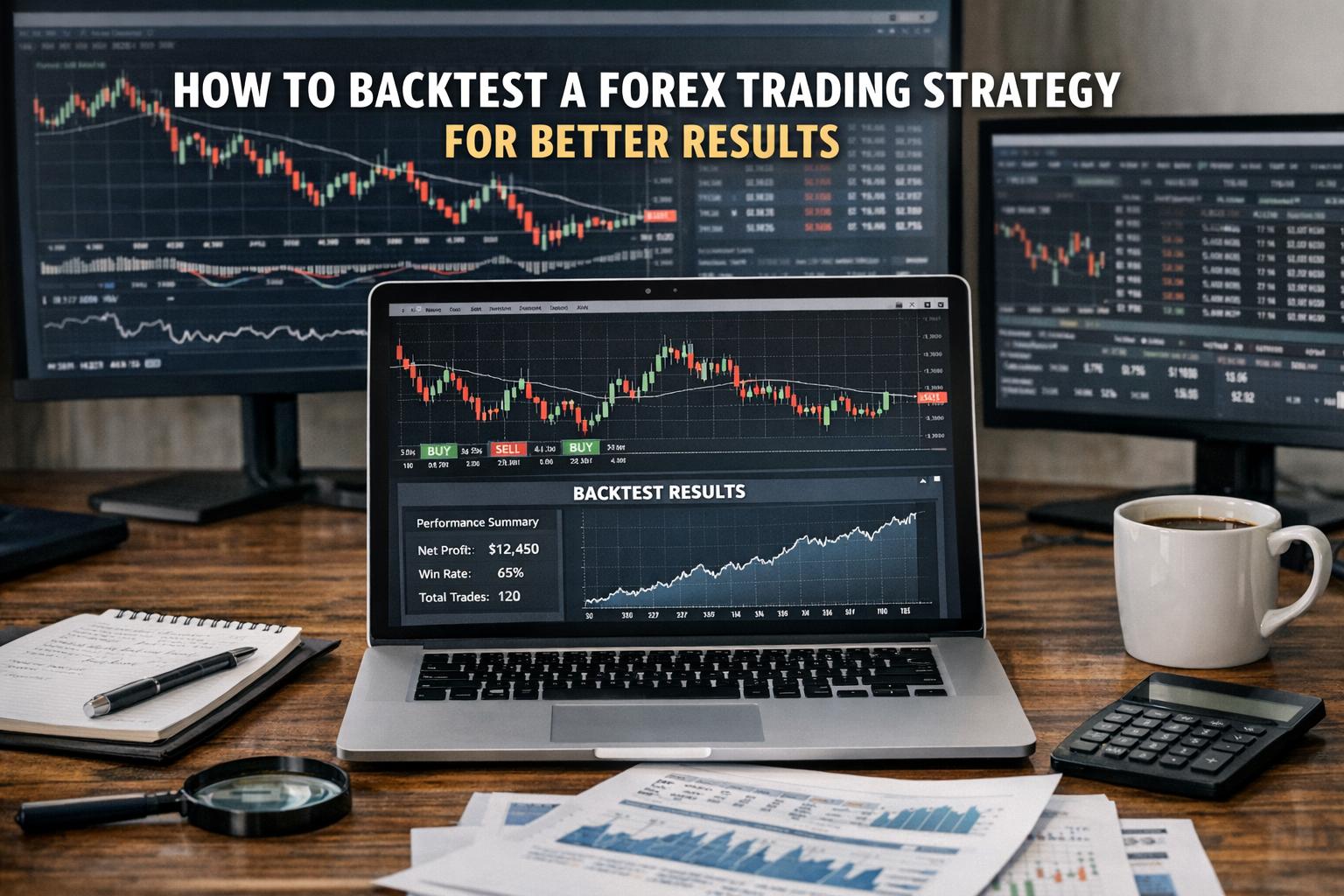
How to Backtest a Forex Trading Strategy for Better Results

Understanding Backtesting in Forex Trading

Backtesting is how many Forex traders sanity-check their ideas before they risk real money. The basic idea is simple: you define a trading strategy, then apply it to historical market data to see how it would have performed. If the results look promising and the risk profile doesn’t look like a car crash, you move closer to live trading. If the results look like random noise (or worse, like a consistently losing pattern), you revise the plan or scrap it.

A quick reality check, because markets don’t care about our feelings: backtesting shows what a strategy might have done in the past, not what it will do tomorrow. Still, it’s one of the few ways to test your logic in a measurable way. Done properly, backtesting can expose flaws in entry rules, stop-loss assumptions, and position sizing long before you pay for them with a live account.

Why Backtesting Matters (Beyond “It Looks Good”)

Forex is noisy. Prices move for reasons ranging from macroeconomic surprises to thin liquidity hours where spreads can behave badly. Without a systematic test, traders tend to fall into pattern-matching. You see a chart and think, “I could trade that.” Then live trading arrives, spreads widen, execution slips, and the trade doesn’t behave like it did in your head.

Backtesting helps by forcing your strategy into a structured test. It answers questions such as:

1) Would the strategy have triggered trades at the times it claims to?
2) Did the expected take-profit and stop-loss logic play out realistically?
3) How often did the strategy hit drawdowns that you can actually survive emotionally and financially?
4) Are profits driven by something repeatable, or by a lucky stretch that won’t likely repeat?

When traders say a strategy has a “statistical edge,” they usually mean it has demonstrated some kind of repeatable performance in historical tests. Backtesting is the process that helps you measure that edge (or admit when you don’t have one).

Backtesting’s Hidden Job: You’re Testing Assumptions

Most people focus on the strategy rules: entries, exits, indicator settings, and filters. That’s fair, but the bigger risk is that backtesting also tests your assumptions about market behavior, trading costs, and execution.

Example: if your backtest ignores spread, commissions, slippage, or uses unrealistic fill rules, it can make a strategy look profitable when it wouldn’t be in real conditions.

So, backtesting isn’t just about “did it win?” It’s also about “did it win after acknowledging the stuff that usually kills fragile edges?”

Data Collection: The Foundation of a Meaningful Backtest

Backtesting lives or dies on the data. If your historical price series is incomplete, adjusted in inconsistent ways, or uses data that doesn’t match the broker’s feed style, you end up testing against an alternate market.

At a minimum, traders need:

– Accurate historical price data for the chosen currency pairs
– Enough history to cover different regimes (trending, ranging, high-volatility, calm periods)
– Price data at the same timeframe you plan to trade, plus possibly lower timeframes for more realistic execution modeling
– Data sourced in a way that is consistent across the years you’ll test

Quality matters because inaccurate data can create false signals and distort indicators. A moving average-based strategy might look stable in one dataset and flaky in another simply because minor price differences can cascade through indicator calculations.

What “Good” Historical Forex Data Looks Like

In practical terms, good data has three traits:

1) It’s consistent with your intended trading setup (time zone, session handling, broker conventions).
2) It’s granular enough for your strategy logic. For example, a strategy that depends on price crossing a level may behave differently if the data is too coarse.
3) It doesn’t silently change underneath you. Some providers assemble and clean data in ways that can differ from session rubrics or candle construction.

This is also where traders get to learn a mild, unpopular lesson: “Same timeframe” doesn’t always mean “same candles.” Time zone conversions, candle boundaries, and data formatting can shift signals.

Timeframes: Align Your Backtest With Reality

A strategy might be built on a higher timeframe (like 1H) but executed with a lower timeframe (like 15M). If you only backtest on the higher timeframe and assume perfect fills, your results can look better than what you’d actually get.

A common real-world workflow looks like this:

– Build signals on the timeframe you use to identify setups
– Evaluate execution using a smaller timeframe, if your entry logic requires it
– Still model spread and slippage assumptions so you’re not pretending trades fill at mid-price every time

The goal isn’t to build a perfect simulator. The goal is to avoid testing something that has no connection to the way you’ll trade.

Handling Forex Costs: Spreads, Commissions, and Slippage

Forex trading isn’t free. Any backtest that ignores costs should be treated as a rough draft, not a verdict. Costs come in at least three forms:

– Spread: the difference between bid and ask at entry/exit
– Commission (if your broker charges it)
– Slippage: when your desired fill price differs from the actual fill, often during fast moves or low liquidity

Slippage can be the silent profitability killer for strategies that rely on tight stop-loss distances or quick scalping entries. If your system aims for small gains, even a few pips of consistent slippage can erase the edge.

Even if your exact slippage is unknowable, you can still test using reasonable assumptions (for example, “average slippage of X pips when volatility is above Y”).

Choosing the Right Software

Software matters because it determines how your strategy is applied, how trades are simulated, and how results are calculated. Many traders use established platforms that provide backtesting and automation.

MetaTrader

MetaTrader (especially MT5) is one of the most common choices because it’s widely documented, supports algorithmic execution, and offers backtesting tools for strategies and trading robots. Beyond convenience, the advantage is that traders can iterate quickly: adjust rules, re-run tests, compare metrics.

However, no platform is perfect. Two traders might run the “same” strategy in two tools and get slightly different results due to differences in:

– how candles are constructed internally
– how order execution is modeled
– how variable timing is handled
– defaults for spread or fill assumptions

That doesn’t mean you should abandon the platform. It just means you should understand what the platform does by default, and adjust the settings so your test resembles your broker’s reality.

Developing a Strategy: Write Rules That Don’t Need Guessing

A strategy needs to be defined with enough precision that it can run without you hovering over it like a nervous parent. Vague rules are the enemy of meaningful backtesting.

To backtest effectively, your strategy typically needs:

– Entry logic (what conditions trigger a buy or sell)
– Exit logic (profit taking and stop-loss placement)
– Risk rules (position sizing method, max risk per trade)
– Trade management rules (trail stops, partial closes, break-even logic)
– Filters (news avoidance, volatility filters, session restrictions, etc.)

If your rules depend on discretion (“enter when it feels right,” “exit when momentum looks weak”), you’ll have to translate that into measurable conditions. Backtests can only run what you can define.

Common Strategy Types in Forex Backtesting

Most Forex strategies fall into recognizable categories:

– Trend-following systems (moving averages, breakout logic, channel logic)
– Mean reversion systems (z-score style logic, bands, oscillators with risk-managed exits)
– Volatility-based systems (ATR logic, breakouts conditioned on volatility)
– Price action systems (support/resistance rules, candle structure filters)
– Event or calendar-based systems (less common, but sometimes tied to macro releases)

Backtesting works for all of these, but the realism you need varies. For example, a mean reversion strategy that relies on exact touches might be more sensitive to spread and candle construction than a trend system that reacts to larger swings.

Executing the Backtest: How Trades Are Simulated

When you run a backtest, your strategy rules get applied to the historical data to generate a sequence of hypothetical trades. The platform then records outcomes based on its execution model.

Your attention should focus on the simulation details. Questions to ask:

– Are trades opened at the candle close, candle open, or at a specific price level?
– How does the system handle stop-loss and take-profit within a candle (especially if both could be touched in the same period)?
– Does the backtest allow multiple positions (or does it only track one at a time)?
– Are margin rules enforced (so the strategy can’t open trades that are impossible due to leverage limits)?

These details affect results more than people expect. A strategy can look profitable simply because the simulator chooses a favorable fill sequence for intrabar movement.

Important Metrics to Record

Most platforms provide a standard set of performance metrics. You should still know what they mean, because “profitable” doesn’t always mean “tradeable.”

Key metrics include:

– Net profit and profit factor (gross profit vs gross loss)
– Win rate (percentage of winning trades)
– Average win and average loss (important for understanding risk-reward)
– Maximum drawdown (how bad the equity dip gets)
– Sharpe ratio or similar risk-adjusted measures (varies by platform)
– Number of trades (low trade counts can make results look deceptively stable)

A strategy with a high win rate but huge losses can be emotionally brutal in live markets. Conversely, a strategy with fewer wins but controlled losses might be more sustainable.

Analyzing Results: Don’t Stop at the Profit Line

After the backtest finishes, you’re not done. You need to inspect what happened and why.

Look for three broad categories of insight:

1) Performance consistency across time
2) Behavior under different market regimes
3) Sensitivity to parameters

Performance Consistency: Break the Test into Chunks

A classic trap is celebrating performance driven by a small portion of the backtest period. For instance, you run a 10-year test and profits show up mostly during the middle years, while the rest is messy.

A quick way to check this is to examine results by year or by rolling time windows. If the strategy is profitable in multiple separate periods, it’s more credible than a strategy whose entire edge comes from one special stretch.

Drawdown Analysis: Can You Actually Survive It?

Maximum drawdown isn’t just a number for bragging rights. It indicates how deep your account equity may dip during losing sequences.

Even if a strategy eventually recovers, you might not have enough capital or emotional stamina to wait out the rough patches. This matters because brokers enforce margin requirements. If your drawdown causes margin calls before recovery, the strategy dies in practice.

So treat drawdown as a real constraint. A profitable strategy that regularly demands far more capital than you can provide is not a practical strategy.

Trade Distribution: Are Gains Concentrated?

Some systems produce steady results; others produce gains in a few large trades. Concentrated profit can be fragile because it depends on occasional conditions aligning perfectly.

If your average trade behavior changes unpredictably when you shift the dataset slightly, that’s not a great sign. You want a strategy that behaves reasonably even when the market doesn’t politely follow your spreadsheet.

Optimization: The Risk of Overfitting

Optimization is what many traders do next: they tweak strategy parameters (indicator period lengths, thresholds, stop-loss sizes) to find combinations that improve metrics.

The problem is over-optimization. When you tune too hard to the historical dataset, you might create something that performs brilliantly in that dataset and poorly in live markets.

A strategy that matches past prices too closely often isn’t capturing a real market behavior. It’s capturing quirks of the data. In other words, it learned to cheat. Markets don’t care about your cheat sheet.

How to Reduce Over-Optimization

You can lower the risk with a few good habits:

– Use out-of-sample testing (train on one period, test on another)
– Limit parameter ranges to realistic areas
– Avoid optimizing for too many variables at once
– Prefer simpler models when performance is similar

If you can get nearly the same performance with fewer tuned parameters, that’s usually healthier.

Watch Out for “Perfect” Performance

When results look almost too clean—near-constant equity growth, tiny drawdowns, and high profit factor across all periods—that can be a sign that the backtest assumptions are too optimistic or the strategy is overfit.

It’s not impossible for strategies to look strong in backtests. But when everything looks perfect in a single run, double-check spreads, slippage, fill rules, and the data you used.

Forward Testing: The Bridge from History to Live Trading

Once your backtest results look reasonable, forward testing asks a simpler question: does it still work when the strategy hasn’t “seen” the future yet?

Forward testing means running the strategy in real-time market conditions, usually on a demo account first. This step matters because backtests can be overly idealized. Live conditions can introduce differences in execution and timing.

Why Demo Forward Tests Still Matter

Demo trading uses live market data but typically doesn’t replicate every part of execution exactly as a live broker account does. Still, it catches common issues:

– Incorrect timeframe syncing
– Indicator calculation differences
– Strategy logic errors that only appear during live streaming data
– Operational mistakes (like order handling or risk settings)

If your strategy can run correctly in forward testing without exploding due to a rule misfire, you’re moving in the right direction.

How Long Should You Forward Test?

There’s no universal number of days or months. But as a rule, forward testing needs enough time to encounter different market behavior. Trading one week only covers a tiny slice of reality.

If your strategy performs mainly in trends, you’ll want to see trend and non-trend conditions. If it relies on volatility expansions, you need those bursts to occur during the test period.

Realistic Expectations: Backtesting Isn’t a Magic Wand

Backtesting isn’t a “guarantee of future profit.” It’s a method of estimating how your strategy might behave under past conditions and then using that estimate to improve your odds.

The biggest mistake traders make is treating the backtest as a verdict rather than a diagnostic tool. The best traders treat it like a lab report: if results look abnormal, they investigate why.

Some strategies that backtest well still fail in live trading. That could be due to spreads changing, slippage increasing, execution differences, or the market simply shifting regime.

On the flip side, strategies that backtest only “okay” sometimes perform better live, especially if the simulator is too conservative or doesn’t model execution accurately. So keep your mind open—up to a sensible point, and not in a “reinvent your rules every day” way.

Common Backtesting Mistakes Traders Keep Making

If you’ve been in trading for more than five minutes, you’ve probably seen at least one of these.

Using Too Short a Test Period

A short sample can miss relevant market regimes. If you only test during a calm phase, your strategy might appear stable while ignoring how it behaves during high volatility.

Ignoring Costs

Backtests without spread and slippage often overstate performance. Even if the strategy is strong, costs determine whether it still makes money after friction.

Look-Ahead Bias

Sometimes traders accidentally incorporate future information into the strategy logic. Examples include using indicators computed with data that would not be available at decision time, or using candle data incorrectly.

Good backtesting tools reduce this risk, but it’s still something to verify, especially when custom code is involved.

Overfitting Through Excessive Parameter Searches

If you keep adjusting until the backtest curve becomes pretty, you’re probably training a strategy to past noise.

Not Stress-Testing the Strategy

Even if the strategy performs well in the exact dataset you used, it should be stress-tested using variations such as:

– different time periods
– slightly different spread assumptions
– different position sizing
– different risk settings

This doesn’t mean you need 50 re-tests every time. It means you need enough variety to avoid fooling yourself.

Practical Example: What a Sensible Backtesting Workflow Looks Like

Here’s a workflow many careful traders end up using, with fewer dramatic leaps and more boring checkpoints (which is good):

– Choose a currency pair and define whether your strategy is meant for that pair specifically or for multiple pairs.
– Gather historical data with consistent candle construction and enough history (ideally covering different volatility regimes).
– Build the strategy with clearly defined entry/exit rules, including stop-loss and take-profit mechanics.
– Use a backtesting platform to run the strategy with realistic spread assumptions and, if possible, slippage modeling.
– Evaluate performance using more than just net profit: check drawdown, win/loss profile, and whether performance is consistent across sub-periods.
– Optimize cautiously if needed, and verify results using out-of-sample data.
– Forward test on demo accounting for execution details and operational correctness.
– Only then consider live trading with small position sizes to validate behavior under real broker conditions.

This approach isn’t glamorous. But it does prevent the kind of “it worked in the backtest, so I went live” moment that ends with a very quiet trading log and a louder bank statement.

Conclusion

Backtesting remains a core part of Forex trading because it gives traders a measurable way to evaluate strategy logic using historical data. It helps you test whether entry and exit rules work together, whether your risk assumptions survive losing sequences, and whether a strategy’s performance holds up across different periods.

That said, backtesting isn’t infallible. The quality of your data, the realism of execution modeling, and the risk of over-optimization all influence what you see in the results. The better you treat backtesting as an investigation—supported by forward testing rather than treated like a final verdict—the more likely you are to build a strategy that can survive contact with live markets.

If you want the short version: backtest what you can prove, forward test what you can validate, and keep adjusting based on evidence, not hope. The Forex market changes, but your process doesn’t have to be random.

What is a Forex Trading Signal and How to Use It?

What is a Forex Trading Signal and How to Use It?

Understanding Forex Trading Signals

Forex trading signals are tools traders use to time their entries and exits in the foreign exchange market. In plain terms, a signal is a message—human-written or algorithm-generated—that tells you when a currency pair may be worth buying or selling. Most signals come with trade parameters so you can act quickly without staring at charts for hours like it’s your full-time job.

Signals typically rely on some mix of technical analysis (price patterns, momentum indicators, trend signals). Some providers add fundamental context (economic data, central bank expectations), but the majority of widely distributed signals are technical-first because it’s easier to standardize and automate.

The important part is not the hype around signals—it’s how they’re created, how you interpret them, and how you manage the risk when the market refuses to cooperate.

What Forex Trading Signals Actually Are

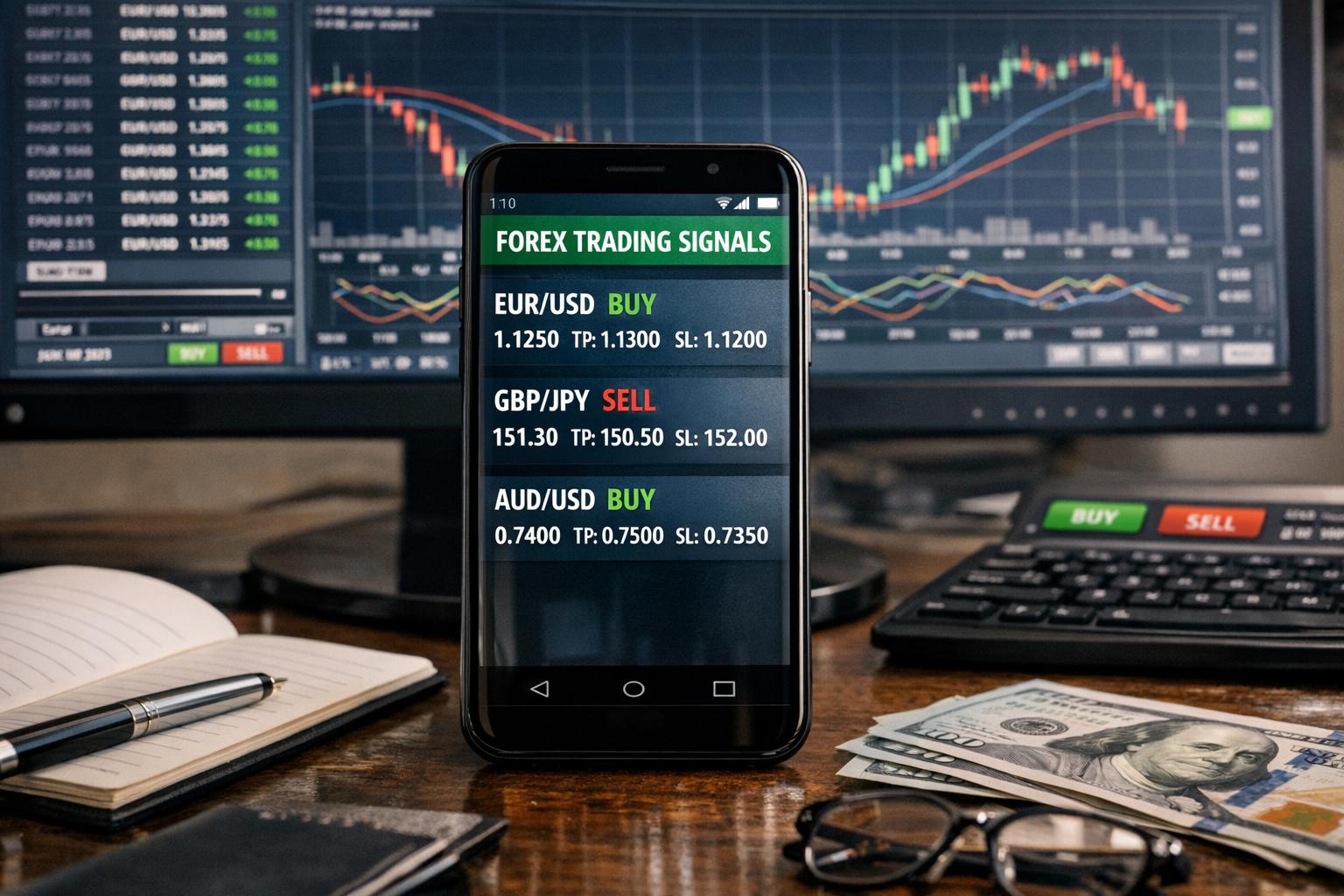
A forex trading signal usually includes:

  • Currency pair: Example: EUR/USD, GBP/JPY, USD/CHF
  • Trade direction: Buy (long) or Sell (short)
  • Entry level: Where you should consider opening or placing a pending order
  • Stop-loss (SL): The price level where you cut the trade if it goes wrong
  • Take-profit (TP) or exit guidance: A target level, sometimes more than one
  • Time horizon: Whether the signal is meant for minutes, hours, or days
  • Rationale: Often includes indicator readings or a short explanation of the setup

If a signal is just “BUY NOW” with no entry, stop-loss, or conditions, it’s basically a guess wrapped in a bow. Signals can be useful, but you should treat them like trading plans rather than magic spells.

Types of Forex Trading Signals

Forex signals differ in how they’re generated and how they’re delivered. Most traders run into two main categories right away. After that, it gets messy in the best possible way—because every provider has their own style.

1) Manual Signals

Manual signals are created by experienced traders or analysts who read the market using charting tools and discretionary judgment. They might spot chart patterns, confirm trends with oscillators, and apply rules learned from years of watching price behavior.

Because manual signals depend on human interpretation, they can reflect nuance. For example, a trader may ignore “almost perfect” indicator alignment if market structure doesn’t confirm the move. On the downside, manual signals can vary in consistency, especially when the trader changes strategies, gets overconfident, or simply has an off day.

Manual signals often come with a brief narrative: “price is bouncing from support, RSI shows momentum shift, wait for confirmation.” That explanation can help you learn something—even if you ultimately trade your own method.

2) Automated Signals

Automated signals are produced by trading algorithms, bots, or rule-based systems. The logic is typically predefined: when certain conditions occur, the system generates a buy or sell instruction.

Automated systems aim to remove emotional bias. They don’t get tired, they don’t “feel” like changing their mind mid-trade, and they can scan multiple pairs quickly. But rules-based systems also have limits: if market conditions shift (like increased volatility or a prolonged sideways range), a strategy that worked before may keep firing signals that don’t fit the new environment.

In other words, automation can be consistent, but consistent doesn’t always mean profitable.

3) Hybrid Signals (Human + Algorithm)

Some providers use a mix: an algorithm suggests setups, then a trader validates and adjusts them. You’ll often see short reasoning attached to the signal, but the “timing” might be driven by code. Hybrid approaches can reduce random mistakes while still adding discretionary judgment.

If you’re evaluating providers, hybrid signals can be appealing—but you should still verify performance and ask how rules are managed, what the system filters, and whether the provider follows risk controls.

Types by Strategy Style

Signals can also be categorized by the trading approach behind them. This matters because it affects the time horizon, the type of targets, and how you should manage price movement.

Common styles include:

  • Trend-following signals: Buy on pullbacks in an uptrend and sell on rallies in a downtrend.
  • Breakout signals: Trade when price moves beyond a support or resistance level with momentum.
  • Range or mean-reversion signals: Trade toward the middle of a range when price stretches too far.
  • Momentum signals: Use indicators like RSI or MACD to spot acceleration and reversals.
  • News-linked signals (less common in public feeds): Trade around events, volatility spikes, or rate expectations.

If your trading method doesn’t match the signal style, you’ll constantly feel like you’re late to the party—or early enough to miss the point. Matching the approach is half the battle.

How Forex Trading Signals Work

Execution of a forex signal typically follows a predictable workflow: gather market data, analyze it, generate a trade plan, then deliver it to the trader. Each step affects reliability.

1) Data Collection

The signal provider starts by collecting data about price action and sometimes rate-related information. Most technical signal providers pull data from:

  • Price candles (open, high, low, close)
  • Volume (not always reliable in FX retail feeds, but sometimes available)
  • Indicator inputs derived from price data

Technical indicators are common. The original article already mentions moving averages, MACD, and RSI, and these show up constantly:

  • Moving averages: Identify trend direction and dynamic support/resistance.
  • MACD: Measures momentum and trend strength using moving average convergence.
  • RSI: Indicates overbought/oversold conditions and momentum shifts.

These indicators aren’t crystal balls, but they’re useful signal tools when paired with proper entry and risk control.

2) Market Analysis

Once data is collected, the provider analyzes the market to forecast potential movement. Manual providers might look for chart structures like higher highs/higher lows, support and resistance zones, or specific candlestick behavior. Automated providers might use rule triggers such as “RSI crosses above 50” plus “MACD histogram increases” plus “price is above the 200 EMA.”

The analysis step determines how often signals are “in sync” with market structure. A trend-following signal fed into a range-bound market can lead to repeated stop-loss hits. Even good indicators can fail when the underlying market regime changes.

3) Signal Generation

After analysis, the provider generates the signal. A well-constructed signal includes trade direction plus levels. Typically, a signal contains:

  • Currency pair
  • Direction
  • Entry
  • Stop-loss
  • Take-profit targets

Some signals provide additional trade management guidance. For example, they may recommend moving stop-loss to break-even after price reaches a certain level, or they may suggest partial exits if TP1 is hit.

You should pay attention to whether the provider gives realistic levels or just guesses. Realistic levels align with recent swing highs/lows, not random numbers that look good on paper.

4) Signal Delivery

Signals reach traders via different channels. Email, SMS, and dedicated apps are common. Some providers offer real-time push notifications, while others post signals to a web platform.

Delivery speed matters most for short time horizon strategies (scalping or intraday). For swing trading signals with a multi-day window, delivery timing matters less, but your execution still needs to be timely enough to respect the entry conditions.

How to Use Forex Trading Signals

Using signals isn’t just about copying the trade. If you treat a signal like a checklist with no context, you’ll eventually get hurt. The market isn’t impressed by your commitment to the signal.

Choose a Reliable Provider

Selecting a provider is the first filter you should apply. Accuracy varies widely, and some providers are better at marketing than at trading. Start with basic verification:

  • Look for consistent historical performance, not cherry-picked results.
  • Check whether trades were taken according to the signal rules and whether slippage was considered.
  • Prefer providers that explain the strategy and show risk management.
  • Be cautious if results are shown only as screenshots without a trading journal or trackable data.

A provider with a long track record is not automatically profitable, but it’s usually a better starting point than a brand-new telegram channel promising 99% win rates. If something sounds too clean, it often is.

Understand the Signal Components

Before you place any order, understand what each parameter means. A signal with missing details is less useful than it appears.

At minimum, you should be able to answer these questions:

  • Where am I entering? Is it a limit order or market entry?
  • Where am I wrong? That’s the stop-loss.
  • Where am I expecting to be right? That’s the take-profit.
  • How long do I give the market? That’s the time horizon and expected duration.

If you don’t understand why stop-loss is where it is, you’re essentially borrowing someone else’s risk thinking. That can work temporarily, but it won’t teach you how to adapt.

Confirm with Personal Analysis

Signals can speed up decision-making, but they shouldn’t replace your trading plan. Even a quick confirmation matters:

  • Does the signal direction match the broader trend on a higher timeframe?
  • Are the entry and stop-loss placed near logical technical levels?
  • Does the setup align with recent market structure (swing points, breakouts, or range boundaries)?

This doesn’t mean you need to overanalyze. A basic check can catch obvious mismatches, like a sell signal issued into strong upward momentum across multiple timeframes.

Practice Risk Management

Risk management is where most retail traders win or lose, not with indicators. Even high-performing signal providers produce losing trades—because no method is correct all the time.

When you use signals, risk management should include:

  • Using stop-loss exactly as specified (unless you have a strong reason and a controlled plan to adjust it).
  • Limiting position size so a stop-loss doesn’t blow up your account.
  • Controlling leverage to match your ability to tolerate volatility.
  • Avoiding revenge trading after a stop-loss—signals aren’t obligated to “fix” your emotions.

It’s useful to treat signals as probabilities, not certainties. A string of losses can happen even in a strong system, especially during shifting market conditions.

Execution Details Matter More Than People Admit

Many traders fail at execution. They see a signal, but they place the order too late or enter at a different price than the one provided. With spreads and slippage, especially during news events, the actual entry can land outside the intended setup.

If a signal provides a specific entry level, consider whether:

  • your broker’s pricing matches the provider’s reference chart
  • spreads widen around the time of the trade
  • your order type (limit vs market) matches the provider’s plan

Small differences in execution can turn a good trade into a mediocre one. And if you’re trading frequently, those “small differences” pile up.

Common Mistakes When Using Forex Trading Signals

Signals are helpful, but traders tend to misuse them in predictable ways. Here are the mistakes that show up again and again.

Copying Without Context

Some traders copy signals blindly even when their own market view contradicts it. A signal can be correct relative to its strategy rules, but still fail if you’re using a different timeframe context or you ignore broader conditions like major support breakdowns.

Ignoring the Time Horizon

A signal meant for a 24–72 hour move can look “wrong” for the first couple of hours. If you panic and exit early, you turn a trade that should be managed into a trade that’s constantly interrupted.

On the other hand, if you hold an intraday signal for days, you’re no longer trading the same plan. Time horizon is part of the contract—whether you signed it or not.

Using Too Much Leverage

Signals may include stop-loss levels, but they can’t control your account risk. If you size trades too aggressively, normal market noise can hit your stop before the setup plays out.

In FX, leverage can be a tool, but it can also be a fast lane to blowing up a small account. Risk sizing is boring. It’s also effective.

Switching Providers Constantly

Changing providers every week is a common habit. Each new provider claims better performance, but your trading record resets every time you move. You end up chasing claims instead of measuring a consistent strategy.

At minimum, give a provider enough sample size. A handful of trades isn’t “proof.” It’s a rumor with receipts.

Evaluating Signal Quality: What to Look For

If you want to be serious about using signals, evaluate them like a trader would evaluate a strategy. Here’s how to do that without getting lost in spreadsheet hell.

1) Performance Consistency, Not Just Win Rate

High win rates can be misleading if losing trades are much bigger than winning trades. Look at the relationship between average win and average loss. A system with lower win rate can still be profitable if it cuts losses tightly and lets winners run.

2) Risk/Reward Fit

Many signals include take-profit levels. Check whether the TP is realistic relative to stop-loss distance. If TP is always far away and stop-loss is always close, you need a strategy that produces large enough follow-through to justify it.

3) Clear Rules and Strategy Notes

Providers that explain their approach tend to be easier to verify. If a provider can’t describe the logic behind their signals, you should assume the strategy is hard to replicate and hard to audit.

4) Trade History Transparency

Even if the provider is good, you should still verify details. Trade journal data, timestamps, and consistent pair naming matter. If the provider uses chart screenshots, ask for additional evidence of performance over time.

5) Drawdown Behavior

Profit is great. Drawdown is what tests your psychology and account survival. Your next trade matters when your previous trade was a loss. A provider that performs well but causes brutal drawdowns might still fail your account constraints.

How to Incorporate Signals Into a Trading Plan

If you use signals, you need a structure so the signal isn’t just “random trade prompts.” One practical approach is to define a rules-based method around the signals.

Step 1: Determine Your Trading Style Match

Check whether the signal provider’s time horizon matches your schedule. If you work a day job and can’t monitor trades, intraday signals with tight windows can be annoying in the most expensive way.

Swing trading signals often suit people who want fewer decisions per day and more time to manage positions (even if the market still finds new ways to surprise you).

Step 2: Use Higher Timeframes for Sanity Checks

You can keep it simple: use a higher timeframe trend filter (for example, daily direction) and allow only signals aligned with that bias. This avoids taking every signal regardless of context.

It also reduces the emotional impact when a signal suggests a trade that feels wrong in your gut.

Step 3: Decide When You Will Override

You don’t have to follow every signal tweak-free. But you should define override conditions ahead of time. For instance:

  • You only take signals if stop-loss location aligns with recent swing structure.
  • You avoid trading around major scheduled news if your market access widens spreads.
  • You reduce size when signals conflict with your higher timeframe bias.

Overriding isn’t wrong. It’s wrong when you override because you “feel like it.” A plan makes it disciplined.

Real-World Use Cases: When Signals Help

Signals aren’t only for beginners. Even experienced traders use them as time-savers or as a way to spot setups they might miss during busy hours.

Use Case 1: The Busy Trader Who Can’t Watch Charts All Day

Imagine someone who has a full work schedule and can’t track every 5-minute move. A swing-signal feed allows them to check trades a few times per day and manage positions with stop-loss and take-profit levels already set. It’s not glamorous, but it fits real life.

Use Case 2: The Learner Who Wants Feedback Loops

A newer trader may use signals to learn how others structure trade plans—especially stop-loss placement and target sizing. By comparing signal entries to their own analysis, they can understand why a setup is considered valid.

Just avoid the “I used a signal so I must be profitable” mindset. Use signals as an educational input, then build your own evaluation system.

Use Case 3: The Team Approach

Some traders run signal reviews in a team setting. One person monitors broader trends, another reviews signal logic, and a third handles execution. Even though this isn’t always possible for retail traders, small-scale version—like having one person sanity-check trade direction—can reduce mistakes.

Risk Management Beyond Stop-Loss

Stop-loss is necessary, but not sufficient. Risk management also includes the things you do before the stop-loss is even touched.

Position Sizing

Position sizing determines how much you lose if the stop-loss triggers. If you don’t size positions properly, even a “correct” signal can still ruin your account.

A typical approach is to risk a fixed percentage of account equity per trade. Keep the percentage small enough that a losing streak doesn’t destroy your momentum.

Correlation and Exposure

Forex signals often involve multiple pairs that are correlated. For example, buying EUR/USD and GBP/USD can expose you to overlapping dollar-related risk. If multiple signals fire in related pairs, your total exposure can exceed what you planned.

This is why it’s worth checking whether signals are effectively part of one bigger bet.

Trading During High-Volatility Periods

Some signals will be issued around times when volatility is expected—like major economic releases. If your broker spreads widen during these events, your execution can slip.

You don’t have to avoid news entirely. But you should know when volatility rises and adjust size or timing accordingly.

Do Forex Trading Signals Guarantee Profit?

No. Signals can reduce the time you spend analyzing. They can also provide structure and risk parameters. But no one can guarantee profit in FX because markets shift, liquidity changes, and price behavior adapts to new information.

A reputable signal provider should not promise certainty. If a provider guarantees gains, treat it as a marketing tactic. The market will collect on bad promises.

How to Spot Red Flags in Signal Providers

Most traders don’t fail because they “didn’t understand indicators.” They fail because they didn’t understand incentives.

Here are warning signs you should be aware of:

  • Claims of extremely high win rates without showing consistent history over time.
  • No risk management details or inconsistent stop-loss usage.
  • Signals missing entry/SL/TP or changing after the fact.
  • Only promotional content with no strategy explanation.
  • Pressure to subscribe quickly or pay for “VIP access” with vague results.

If you’re paying for signals, you’re buying a process. The process should be explainable and verifiable as much as possible.

Building Your Own Judgment Alongside Signals

Signals work best when they reinforce your decision-making rather than replace it. Over time, you can gradually shift from “follow signals” to “use signals for ideas” while you apply your own filter.

A practical way to do this is to keep a simple trading journal with three notes per trade: whether you followed the signal exactly, whether your confirmation matched, and how execution compared to the signal levels. You don’t need fancy analytics. You just need patterns.

After a few weeks, you’ll see what kinds of setups you accept well and which ones you reject even if they look good in hindsight.

Conclusion

Forex trading signals can be a useful resource for traders who want faster decision-making in the FX market. They may indicate potential buy or sell opportunities and often include entry, stop-loss, and target levels derived from technical and sometimes fundamental analysis. But signals are not a substitute for due diligence.

If you want the odds to improve, pick a provider carefully, understand every part of the signal, confirm with your own analysis, and practice risk management that fits your account size and time availability. With that approach, signals become less like guesswork and more like structured input into your trading process.

For those who want further insight into forex trading signals, focusing on reliable educational resources and consistent evaluation habits can improve results over time. When you treat signals as data you can test rather than promises you must trust, trading becomes a little less mysterious—and a little more manageable.

How to Trade News Events in the Forex Market

How to Trade News Events in the Forex Market

Understanding News Events in Forex Trading

Forex trading on news events isn’t some mystical “future sight” trick. It’s closer to how markets actually work in real time: big releases change expectations, expectations change positions, and positions change price. In the foreign exchange market, traders react to economic updates, central bank signals, and geopolitical headlines that can move currency pairs within minutes.

If you’ve traded forex for any length of time, you’ve probably seen it: the chart looks calm, then a release hits, and suddenly candles appear that look like they were drawn with a marker. The difference between traders who profit from those moments and traders who just donate money to spread costs is usually preparation and process. That’s what this guide focuses on—how to understand the news events that matter, what strategies are commonly used, and how to manage the risks when volatility arrives like it has somewhere to be.

Why News Moves Forex So Fast

Currency markets are forward-looking. Interest rates, inflation expectations, growth forecasts, and risk sentiment all shape what traders believe about the relative value of currencies. When new information contradicts (or confirms) those beliefs, pricing adjusts quickly.

There are a few reasons forex reacts fast to news:

1) Expectations matter more than the raw numbers. It’s common to see a “good” number still cause a currency to fall (because it was less good than expected).
2) Leverage amplifies moves. Many traders use margin, so a fast repricing can trigger stop-losses and margin calls across multiple accounts.
3) Liquidity shifts around major releases. Spreads can widen briefly, slippage becomes more likely, and execution quality matters.

So yes, the news itself matters. But how traders interpret it—relative to forecasts and prior communication—matters just as much.

Types of News Events Affecting Forex

Most forex “news trading” revolves around two big categories: economic data releases and geopolitical events. A third category—central bank communication—often overlaps with economic releases but deserves its own mention because speeches, minutes, and guidance can move markets even when no hard data prints.

Economic Data Releases

These are the scheduled releases coming from ministries, statistical agencies, and central banks. They include employment reports, inflation prints, GDP, trade balance data, retail sales, manufacturing surveys, and more.

Economic releases can be divided into “high-impact” and “medium-impact” groups, depending on how often traders and algorithms react. High-impact releases tend to have clear links to interest rates and growth expectations, which directly influence currency valuation.

Common examples include:

Non-Farm Payrolls (NFP) for the US labor market
Inflation reports such as CPI (consumer price index) or PCE (personal consumption expenditures)
Central bank rate decisions and related statements
GDP reports and growth forecasts
Employment and wage data beyond NFP, such as average earnings

When the actual result beats expectations, the currency often benefits because it suggests stronger growth or hotter inflation, which can lead to expectations of higher interest rates or fewer cuts. When the result disappoints, the opposite may occur.

One detail that’s easy to miss: “better than expected” can still be negative for a currency if the prior market positioning assumed an even better outcome.

Non-Farm Payrolls (NFP) as a Case Study

The Non-Farm Payrolls (NFP) report is one of the most influential economic indicators in forex. Released monthly in the US, it measures the number of employed people excluding agriculture (hence “non-farm”). Traders pay attention to:

The headline payrolls figure (jobs created)
Unemployment rate (labor market slack)
Average hourly earnings (wage pressure, inflation link)
Prior month revisions (sometimes the real story is what changes from earlier data)

A stronger-than-expected NFP often increases confidence in the US economy. That can strengthen the US dollar if traders also expect the Federal Reserve to keep policy tighter for longer. But if wage growth is weak even while payrolls are strong, the reaction might be muted or short-lived. Forex traders, like cats, react more to what moves their assumptions than to what “sounds” bullish.

Inflation Reports and Interest Rate Expectations

Inflation is a direct driver of central bank policy. If prices rise faster than expected, central banks may hesitate to cut rates or may even signal a need for further tightening. That interest-rate expectation typically strengthens the currency.

Inflation reports influence forex through several channels:

Short-term policy reaction: “Should the central bank act now?”
Longer-term expectation: “What will the future rate path look like?”
Risk sentiment: persistent inflation can raise uncertainty about growth and market stability

In other words, inflation data doesn’t just tell you prices today. It tells traders what might happen to rates tomorrow, and rates are the heartbeat of currency valuation.

Geopolitical Events

Geopolitical events include elections, political instability, legislative gridlock, sanctions, conflicts, and major diplomatic developments. These events can influence forex through:

Risk sentiment: how comfortable investors feel holding riskier assets
Safe-haven flows: movement to currencies perceived as stable
Trade routes and energy prices: which can affect inflation and growth
Sanctions and capital controls: which can directly impact economies and cross-border flows

Elections are a common example. Before election outcomes, markets may hedge their positions as uncertainty rises. After the result, the currency might move sharply if investors believe policy direction will shift fiscal spending, regulation, or alignment with trade partners.

International conflict can also drive safe-haven demand. Traders often move funds toward perceived safety—commonly currencies like the US dollar or Swiss franc—depending on the specific context and broader market conditions.

Central Bank Communication

Even without a scheduled economic release, central bank communication can move forex. Statements, minutes, speeches, and the wording of policy decisions can change interest rate expectations.

For example, a rate decision may be “as expected,” but the language might shift from neutral to hawkish (more likely to keep rates higher). That change can still create a tradable move.

This is where many traders get burned—because the number printed wasn’t surprising, but the guidance was. In forex, guidance is basically the market’s favorite kind of “what if.”

Strategies for Trading News Events

Trading on news events is mostly about aligning your trade plan with what news typically does to price. You don’t need a crystal ball. You need a framework: which releases matter, what “success” looks like, and how you control risk when the market does what it does best—surprises.

There are two broad styles: short-term strategies that aim to capture immediate volatility, and long-term strategies that aim to position for economic implications.

Short-Term Strategies

Short-term strategies focus on the immediate reaction after a news release. The trade lifespan can be minutes or even seconds, depending on liquidity and how quickly price moves. This style requires fast decision-making and an acceptance that slippage happens. If you can’t handle that, news scalping can feel like trying to shave with a bicycle chain. Messy.

Volatility Breakout Strategy: This strategy aims to profit from sudden price movement following a news event. Traders often plan entry and exit levels using recent volatility, previous highs/lows, or predefined pip distances.

Typical flow looks like this:

– Identify the major release and expected volatility window
– Place conditional orders or plan manual entries once price breaks a level
– Use tight risk controls because the initial move can fade quickly

A breakout trade works best when the news meaningfully changes expectations rather than just nudging them. If the market expected one thing and receives another clearly different result, breakouts are more likely to have follow-through.

Straddle Strategy: A straddle tries to capture the direction of a major move without guessing which way it will go. Traders place buy and sell stop orders on opposite sides of the current price, positioned above and below it. Once price breaks out, one side triggers and the other side typically remains inactive.

This is commonly used ahead of scheduled high-impact releases because the market often “chooses a direction” after the numbers land. If it moves sharply upward, the buy stop triggers; if it drops, the sell stop triggers.

It’s not magic, though. The biggest risks are:

– Spreads and execution slippage during the announcement
– The move triggers, then reverses (whipsaw)
– One side triggers too close to the noise, not the trend

So straddles can be effective, but your order placement and risk settings matter more than optimism.

Long-Term Strategies

Long-term news strategies are less about the first spike on the chart and more about what the news changes in expectations over weeks and months. If short-term trading is reacting to a loud signal, long-term trading is positioning for a policy shift or sustained economic trend.

Fundamental Analysis: In fundamental analysis, traders interpret what news means for future economic conditions and policy rates. For example, if employment and inflation data consistently point toward higher rates, traders may prefer that currency over time.

With central bank policy, the logic is straightforward even if it’s not always pleasant:

– Higher expected interest rates attract capital
– Capital inflows support the currency
– Stronger growth and controlled inflation reinforce that view

However, interpretation matters. A country can post strong growth but still face future rate cuts if inflation is cooling or political pressure increases. So traders often look beyond the headline and compare multiple indicators.

In practice, traders might track:

– Inflation trends versus central bank targets
– Wage growth versus productivity
– Market pricing of interest rate changes (as reflected in futures or implied yield measures)
– Consistency across releases rather than a single print

Position Trading: Position trading takes fewer trades and holds them longer. The objective is to profit from larger shifts in currency valuation tied to economic news, often including:

– sustained interest rate divergence
– persistent inflation or growth trends
– longer-term geopolitical developments affecting risk and investment

For example, if a sequence of releases keeps pushing a central bank toward tighter policy, traders may hold a long position on that currency for weeks or months. The trade plan usually depends on the difference between “policy expectations” and “market expectations” at the time of entry.

Position trading can feel calmer than news scalping, but it still has its own way of humiliating people: if your thesis is wrong, the market doesn’t care that you’re “waiting for it to come back.” So discipline and risk controls still matter.

Managing Risks Associated with News Trading

News trading is popular for a reason: volatility can create opportunity. It’s also popular for a reason that’s less fun: volatility can wipe out inexperienced accounts quickly. Risk management isn’t optional here. It’s the seatbelt.

Setting Stop-Loss Orders

Stop-loss orders limit losses if the market moves against you. In news trading, stops are especially important because price can gap, whip, and overshoot. A well-placed stop can prevent “one bad minute” from becoming “one bad month.”

Key considerations for stop-losses during news:

Use realistic stop distances: stops too tight can be hit by normal volatility. Stops too wide can make the loss too large relative to your account.
Expect spread widening and slippage: your stop may execute at a slightly worse price than the level you set.
Know your invalidation level: your stop should align with when your thesis is wrong, not where you hope price will go.

For example, if you trade an inflation surprise expecting hawkish repricing, your thesis might be invalidated if price moves against you and holds. That’s when you accept the loss rather than arguing with the market.

Using Proper Leverage

Leverage can turn small price moves into outsized gains—but it can also create outsized losses when volatility hits. During major announcements, currency pairs can move far more than your broker’s “normal” assumption for spread and execution quality.

A practical approach is to match leverage to your ability to tolerate swings. Traders often underestimate how much volatility compounds with leverage. If you use high leverage for calmer markets, you’ll likely reduce position size for news trading.

Some traders do the simplest thing: lower the trade size around major releases. Even if your strategy is right, the market can still move through your stop before deciding to reverse.

If you want a rule of thumb (not a guarantee), treat news windows as moments when position size needs discipline more than bravery.

Choosing the Right Trading Window

Not every moment around a news release is equally tradable. Price behavior changes depending on:

– the exact time of release
– the initial reaction versus subsequent repricing
– liquidity conditions
– what other correlated releases hit around the same time

Many traders prefer to avoid placing orders far outside the announcement moment. Others place orders, but only after confirming something—like direction from broader market context—or after the first spike stabilizes.

The wrong approach is “set it and forget it” when your plan depends on execution quality. News can move quickly enough that your “set” becomes just a delayed regret.

Planning for Whipsaws and False Breakouts

Whipsaw is when the market moves sharply in one direction and then reverses. It’s common in news trading because:

– the first move reflects the immediate interpretation
– additional market participants adjust positioning afterwards
– traders react to revisions, not just the initial figure
– implied expectations were different than the one-line forecast

To reduce the damage, traders often:

– take partial profits early
– move stops to reduce risk after a move has proven itself
– avoid entering late once price has already traveled far

Whipsaws don’t mean your strategy is broken. They mean you need better entry timing, clearer risk rules, or both.

Building a News Trading Workflow (What to Do Before the Market Reacts)

Most people don’t lose money because they lack intelligence. They lose it because the process is missing. News trading forces a workflow. Here’s what that workflow usually includes.

1) Identify Which Releases Actually Matter to Your Pairs

You trade currency pairs, so you care about releases tied to those countries’ economies. A US-focused trader naturally prioritizes US data for USD pairs. Similarly, EUR traders focus on eurozone indicators and ECB communications.

This sounds obvious, but many traders keep a generic “economic calendar” habit and react to whatever is trending online. That’s how you end up trading the wrong news for the wrong pair at the worst time.

2) Compare Actual Results to Expectations, Not Headlines

Expectations are embedded in price already. The market often moves when the actual print differs from what traders priced in.

So instead of asking “was it good or bad?” your checklist becomes:

– Did it beat the forecast?
– By how much?
– Did the report include components that matter for inflation or policy?
– Did the revision change the story?

A small beat might not move much. A large divergence can move markets dramatically. And sometimes the “beat” triggers a sell because it implies policy tightening faster than traders anticipated.

3) Check the Market’s Rate Expectations

Even if you don’t trade interest rate products, you can still think in terms of rate expectations. Market pricing often reflects the idea that central banks respond to inflation and growth. So you want to know what traders already believe about the future rate path.

If the news confirms the market expectation, the reaction may fade. If it contradicts it, volatility often persists longer.

4) Decide Your Trade Plan Before the Release

This is where many traders fail: they decide after the candle appears. By then, spreads, emotion, and execution quality have already joined the party.

A real plan usually includes:

– your entry method (conditional orders, breakout level, or manual entry timing)
– your stop-loss logic (where invalidation happens)
– your target approach (fixed, partial exits, or “trend continuation” style)
– your maximum loss per trade

News trading doesn’t forgive improvisation. The market is too fast and your average human reaction time just isn’t.

Common News Trading Mistakes

If you’ve ever watched a news release unfold and thought “I swear I was right,” you’ve probably made at least one of these mistakes.

Mistake 1: Trading Every Headline

Not every headline is market-moving. Some announcements carry low impact or are expected in advance. When you trade too many releases, your risk exposure increases and your hit-rate often drops.

Better approach: trade fewer events, but trade them with preparation.

Mistake 2: Ignoring the Details (Wages, Core Inflation, Revisions)

Headlines can be misleading. A jobs report is more than payroll counts. Wage growth can change the inflation outlook. Inflation reports often have “core” measures that exclude certain components. Revisions can change the narrative to match or contradict earlier prints.

If you ignore these details, you end up responding to noise rather than information.

Mistake 3: Overconfidence After a Big First Move

Many traders enter on the first direction and then panic when the market retraces. But the first move is often the market reacting to the initial interpretation. Sometimes a second wave reprices the trade once more participants digest the full content of the release.

That’s why patience—or at least a flexible exit plan—is valuable. Sometimes the best trade management is “hold for confirmation” rather than “assume the first candle is the final verdict.”

Mistake 4: Unrealistic Stops and Position Size

Stops that are too close during news tend to get hit even if your thesis is correct. Position sizing that is too large creates forced exits due to leverage effects—not because you were wrong, but because you’re overextended for the volatility.

Your goal is survival first. Profit is what happens after survival.

How to Use an Economic Calendar Without Becoming a Full-Time Meteorologist

Economic calendars are essential for news trading. But there’s a difference between using one and living inside it.

A practical use pattern:

– mark the releases that impact your traded currencies
– note the “high-impact” events and expected forecasts
– confirm time zones and your broker server time
– plan what you’ll do in the first minutes after the release

When the market hits, you don’t want to spend your attention figuring out whether the event already passed. You want to execute the plan you wrote while you still had a pulse and free will.

Putting It Together: Example Scenarios

To make this less abstract, here are a few realistic scenarios that explain how news trading often behaves.

Scenario A: NFP Beats Forecast, Wages Also Rise

Assume US NFP comes in stronger than forecast, and average hourly earnings are also higher than expected. That combination tends to push expectations for stronger inflation pressure and tighter policy. Many traders look for USD strength across major pairs.

A short-term breakout trader might place conditional orders around relevant resistance/support levels and trade the first direction if breakouts confirm. A longer-term trader might build a position expecting sustained rate divergence.

Scenario B: Inflation Drops More Than Expected, But Growth Is Still Strong

If inflation surprises lower, central bank pressure to keep rates high may ease. But if growth is still strong, the currency reaction might be mixed. The market might not fully “sell” the currency if growth keeps policy from turning too dovish.

That’s why traders compare multiple components, not just the headline inflation number.

Scenario C: Political Uncertainty Increases Ahead of an Election

In some cases, the market reacts more to uncertainty than to policy details. Risk sentiment can drive investors toward safe-haven currencies. If the election results later reduce uncertainty, the currency might rebound sharply as hedging unwinds.

News traders watch for the difference between “fear pricing” and “new information pricing.” Those aren’t always the same.

Conclusion

Trading forex based on news events offers opportunities for both short-term and long-term gains, but it demands disciplined preparation and risk management. You’ll do better when you treat news as a change in expectations rather than a scoreboard of good and bad numbers. Economic indicators like NFP and inflation reports can reshape central bank expectations. Geopolitical events can shift risk sentiment and safe-haven demand. Central bank communication can move markets even when data seems “fine.”

If you want to keep your situational awareness strong, it helps to use a consistent feed for schedules and analysis such as Forex Factory or DailyFX. Being aware of the economic calendar and anticipating what might move your chosen pairs lets you plan trades ahead of time rather than reacting while the spread is widening.

Effective news trading still comes down to execution, emotional control, and a workflow you can repeat under pressure. When you handle those parts well, volatility stops being a random punch to the face and starts behaving like what it is: tradable market behavior.