The Role of Brokers and Market Makers in Forex

The Role of Brokers and Market Makers in Forex

The Forex Market Structure

The foreign exchange market (“forex”) is where currencies buy and sell hands, 24 hours a day across multiple time zones. Unlike a typical exchange you might associate with stocks, forex operates through an over-the-counter system—meaning trades can flow through many channels rather than a single centralized trading floor. That said, it still has structure, and that structure matters for anyone trying to trade without getting blindsided by costs, execution quality, or pricing behavior.

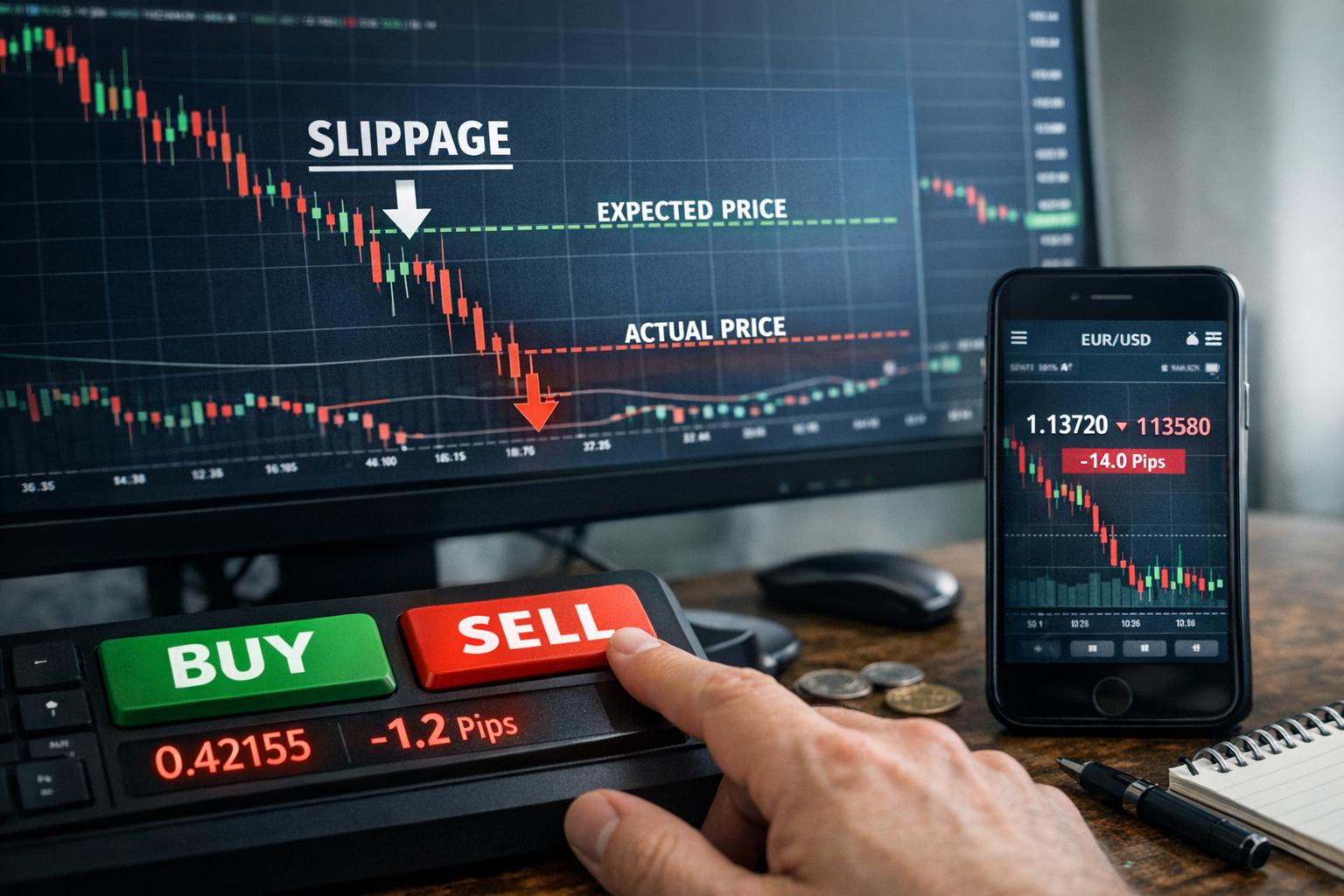
Two of the most important parties in this system are forex brokers and market makers. Traders meet them every time they place an order: the broker routes it, while market makers (directly or indirectly) help keep currency prices moving by providing quotes and liquidity. If you understand what each one does, it gets easier to interpret things like spreads, slippage, and whether your broker is “close” to the market or creating its own version of it. That can save you money and frustration—sometimes in a single trading week.

Brokers in Forex Trading

A forex broker is an intermediary between you and the wider forex market. Most retail traders don’t have direct access to the interbank network—the layer where banks and larger institutions trade currency among themselves. Brokers bridge that gap. They connect your account to trading platforms and then route your orders to the liquidity providers available through their setup.

From a trader’s point of view, the broker’s main job is simple: accept trades, execute them, and reflect prices and fills accurately. In practice, how that job is done can vary a lot. The broker decides whether your order goes straight through to external liquidity sources, whether part of the process involves internal dealing, and what costs you see in the form of spreads and commissions.

How Brokers Make Money: Spreads and Commissions

Forex brokers typically earn revenue through pricing differences (spreads) and/or trade fees (commissions). The mechanics are worth understanding because spreads and commissions directly affect your trading costs and your break-even level.

Spread: the difference between the bid (buy) and ask (sell) price of a currency pair. If EUR/USD shows a bid of 1.08500 and an ask of 1.08512, the spread is 0.00012. In many trading platforms, spreads can widen during news events or low-liquidity hours. Brokers may also offer “fixed” spreads or “variable” spreads depending on how their execution model works.

Commission: a fee charged for executing a trade. Some brokers charge commission and offer tighter spreads; others widen spreads and charge no explicit commission. Either way, the trader ends up paying something. The tricky part is not the fact of paying—it’s how predictable those costs are, especially during volatility.

Types of Forex Brokers

Brokers are often grouped into two broad categories based on how they handle orders and the source of their pricing:

Dealing Desk Brokers:

Also called market makers, these brokers may create the trading environment for their clients. In many setups, they take the opposite side of client trades. That means when you buy, the dealing desk may sell, and when you sell, the dealing desk may buy.

Because they control quotes, dealing desk brokers can set the bid and ask prices they show to you. Those prices can be slightly different from what appears in the interbank market at that moment. The broker’s spread and/or markup helps compensate for the risk of holding a position against clients (even if the broker hedges through other means behind the scenes).

In practical terms, some traders like dealing desk brokers when they value stability of pricing and want a model that emphasizes predictable execution. Other traders prefer to avoid setups where the broker can profit from their losses, regardless of whether the broker hedges operationally. Either way, you should understand what “market maker” means in your broker’s specific context.

No Dealing Desk Brokers:

These brokers route orders through more direct access to liquidity sources. Rather than quoting from an internal dealing process, they provide liquidity using feeds from multiple institutions. When more providers are involved, traders sometimes see tighter spreads, because competing sources compress bid-ask differences.

No dealing desk brokers often charge a commission per trade because the spreads may be narrower. The combined cost (commission plus spread) can be comparable to other models, but the composition differs. Many traders prefer this transparency: you see commission as a separate line item, which helps when you’re calculating your overall trading cost.

Another advantage is execution that may feel closer to “real market” pricing, depending on the broker’s order-routing quality and how it handles partial fills, fast market conditions, and price gaps between quote and fill.

Choosing the Right Broker

Choosing a broker is not a one-week project with a triumphant ending. It’s more like selecting a quiet office for long hours: you want it to be safe, predictable, and not full of surprises. When you evaluate brokers, focus on several categories rather than chasing promotional spreads.

Regulation and licensing: A regulated broker operates within standards set by a financial authority. This doesn’t guarantee perfect service, but it reduces the chances of outright misconduct. When something goes wrong—withdrawals, leverage disputes, platform issues—regulation determines what recourse you have.

Cost structure: Look at spreads, commissions, and whether those costs change during news events. Even “low spread” accounts can become expensive if spreads widen materially during the periods you trade most.

Trading platform and order handling: Your platform is how you communicate with execution. Check whether it supports the order types you need (limit, stop, stop-limit, market orders, and so on) and whether the broker clearly describes execution policies and slippage behavior.

Customer service: You don’t need customer support every day, but when you do, you want real humans who respond quickly. A broker that takes three days to answer a withdrawal question is not your friend, even if their spreads look great on a chart.

Execution quality: Pay attention to user reviews, but also sanity-check them. Execution problems often show up in certain conditions: illiquid hours, high-impact news, or widened spreads. If you trade around those times, prioritize a broker with strong execution reporting and transparent policies.

The Role of Market Makers

Market makers play the part that keeps forex from feeling like a stuck door. Their job is to provide continuous buy and sell quotations for currency pairs and stand ready to trade when others want liquidity. This is especially important in over-the-counter systems where liquidity doesn’t naturally accumulate behind a single exchange mechanism.

Without market makers and liquidity providers, currency prices would be sporadic. You’d likely see wider gaps between quotes, slower execution, and more “gappy” fills when trying to enter or exit quickly. Even if you use a broker, the broker’s ability to execute your order efficiently depends on the availability and behavior of market-making entities and their liquidity connections.

What Market Makers Actually Do

Market makers are not just “actors” in a story. They actively quote and sometimes hold positions to keep markets moving. Their actions influence real-life trading conditions you notice, even if you never meet them.

Key Characteristics of Market Makers:

  • They set bid and ask prices for currency pairs. This helps maintain consistent pricing and reduces the risk that your order waits while someone “looks for a buyer.”
  • They help stabilize market conditions by continuously providing liquidity. When liquidity is healthy, price swings tend to be more orderly.
  • They manage risk through positions. Market makers may hold inventories of currencies and adjust exposure as supply and demand change. This helps them remain ready to quote even when the market gets noisy.

Why Market Makers Matter to Retail Traders

Your orders move through a chain of participants. Even if you never see market makers directly, their behavior shows up as spreads, fill speed, and the likelihood of partial fills. Recognizing this helps you avoid blaming “your broker” for problems that might be rooted in liquidity conditions.

When market makers are active, you benefit from two main things:

  • Liquidity: You can enter and exit positions without waiting forever—especially important if your strategy depends on getting in at a specific time or price level (for example, at a session change or after a specific news release).
  • Speed of execution: A liquid environment usually means faster matching of orders against available quotes.

That said, market making isn’t charity. Their quotes typically include some cost. For traders, this often appears as a markup within the spread. If you’ve ever wondered why spreads aren’t the same everywhere at the same time, this is part of the answer.

Interacting with Market Makers

When you trade, your fill occurs because someone is willing to take the other side under agreed pricing rules. With market makers involved, your profit depends on the bid-ask spread as well as price movement. If a market maker’s pricing includes a markup, that markup becomes part of your trading cost.

Here’s the practical version of that: even if you’re “right” about the direction of price, you still need the move to cover spread and commissions before you can be meaningfully profitable. This is why spread and commission matter more for scalpers and short-term traders than for someone holding positions for weeks.

At the same time, the presence of market makers can reduce execution delays. For traders using technical levels—support and resistance, breakouts from consolidation ranges, or quick mean-reversion trades—timing matters. The better your broker can connect to liquidity, the less you’ll experience order rejection or dealing delays just because someone else grabbed the quote first.

Distinguishing Brokers from Market Makers

Brokers and market makers get lumped together in casual conversation, but they’re not the same function. A broker is the interface and routing provider for your trades. A market maker is one of the liquidity roles that can actively quote and trade against orders to maintain market depth.

A simple way to picture it: brokers act like your trading desk at home. Market makers act like the other party that makes “real trading” possible by providing quotes and willingness to transact. Depending on how your broker is structured, one or both roles can appear inside the same organization or through a chain of partners.

How Their Roles Differ in Execution

In many trading experiences, the difference shows up in the order execution pattern.

Broker as facilitator: In setups that route to external liquidity, the broker typically transmits your order to market participants. Your transaction happens based on the best available quotes from those participants, subject to the broker’s execution policies.

Market maker as pricing provider: In dealing desk setups, the broker can quote from its own inventory or quoting model. It may take the opposite side of your trade. This can affect how spreads behave, how slippage appears during fast markets, and how consistently your orders fill near the requested price.

This difference is important if you’re building a strategy with tight profit targets. If your edge relies on entering at specific prices and exiting quickly, you should care about whether execution tends to match your intended prices, or whether fills wander due to internal dealing practices or liquidity gaps.

What Traders Should Look for to Tell the Difference

You can’t always judge a broker strictly from the name “market maker” or “no dealing desk.” Broker terminology is marketing-friendly, and some setups involve hybrid models. So you have to look at observable behavior and documentation. Common places to check include:

  • Execution policy: Does the broker describe how it handles market orders during fast price changes? Does it mention slippage rules or requotes?
  • Order fill behavior: Are fills generally close to the quoted price, or do they frequently appear worse than what you saw on the screen?
  • Spread behavior: Do spreads remain stable during calm periods and widen reasonably during news? Or do they widen at odd times that don’t match typical market volatility?
  • Commission and spread transparency: Can you clearly calculate total costs per trade? That’s a red flag if the “low spread” account becomes expensive once you account for all fees.

If you’re unsure, run a small test. Many traders do this informally: pick a short list of currency pairs, trade during the same hours you normally trade, record spreads, note slippage, and compare it to your expectations. It’s not glamorous, but it beats guessing.

Real-World Use Case: Trading Around News

Imagine you trade EUR/USD and you participate in short-term moves around U.S. employment data. During those releases, liquidity can be chaotic and spreads can widen sharply. If your broker has strong routing and access to diverse liquidity providers, your orders may still fill near reasonable levels, though volatility remains volatility.

If your broker uses dealing desk behavior, you may still get fills, but execution could reflect internal quoting and risk management rules. The spread might widen in a manner that doesn’t match external expectations. The difference won’t matter if you’re using a wide stop and a strategy built for volatility. But if you’re running tight stops and aiming for quick scalps, those small differences can decide whether the trade works or turns into an expensive learning experience.

Conclusion

Brokers and market makers both shape how forex trading feels in practice, even though they don’t do the same job. Brokers connect you to the market through trading platforms and order routing, and they earn revenue through spreads and commissions. Market makers help provide liquidity and continuous quotations, which reduces stagnation and supports quicker execution.

When you understand the difference between these roles, you’re better positioned to choose a broker that matches your trading style and risk tolerance. More importantly, you stop treating every execution hiccup like a personal attack. Price movement is one thing; fill quality and costs are another. The better you understand the structure behind your platform, the more consistent your trading decisions become.

In the end, successful trading isn’t only about predicting direction. It’s also about knowing what’s sitting between your order and the market. Brokers and market makers account for a big chunk of that path. Once you take that seriously, your trading process tends to get calmer—and yes, calmer usually beats chaotic.

How to Use Multiple Time Frame Analysis in Forex Trading

How to Use Multiple Time Frame Analysis in Forex Trading

Understanding Multiple Time Frame Analysis in Forex Trading

Multiple Time Frame Analysis (MTFA) is a technique traders use when they feel the market is speaking in mixed signals. You look at the same currency pair, but you watch it on different chart timeframes—say, 1-hour, 4-hour, daily, weekly, and monthly. The point isn’t to “time” the market from one magic chart. It’s to build a clearer story so your trade isn’t based on a single snapshot that might be misleading.

If you’ve ever thought, “This looks bullish… until it suddenly doesn’t,” MTFA is designed for exactly that kind of problem. The method helps you separate noise from the more durable movement, and then you trade with that information rather than against it.

The Concept of Multiple Time Frame Analysis

At its core, MTFA is simple: you study price action across more than one timeframe. In Forex, traders care a lot about trend, momentum, and when price is likely to change character. But those things show up differently depending on the timeframe you’re watching.

A 5-minute chart can look chaotic because it’s capturing short bursts of buying and selling. A daily chart, on the other hand, shows the market’s bigger decisions. The trick is to use both views at the same time, so your execution matches the broader structure.

A typical MTFA setup might include:

  • Higher timeframe (HFT): often daily or weekly, used for bias (trend direction)
  • Mid timeframe: commonly 4-hour, used to understand current movement and potential pauses
  • Lower timeframe: such as 1-hour or 15-minute, used for timing entry and defining levels

Even though the method uses multiple charts, you’re still trading one instrument. MTFA is not about switching pairs; it’s about observing the same pair from different angles.

Why Use Multiple Time Frame Analysis?

Many traders start with one timeframe because it’s easier. Unfortunately, easier often means less accurate. MTFA helps because Forex is influenced by different cycles—interest rate expectations, macro news, risk sentiment, and technical flow—all of which can show up at different speeds.

Enhanced Perspective: Markets can give contradictory signals when you only watch one timeframe. With MTFA, a trend that seems weak on the lower chart may actually be a pullback within a larger move. Conversely, what looks like a strong trend on one chart might be an afterthought in a broader correction. Using multiple views reduces the odds that you’re reacting to a temporary distortion.

Improved Entry and Exit Points: Longer timeframes often tell you what is more likely (trend direction). Shorter timeframes often tell you when to act (entry timing). When these line up, trades tend to feel less like guessing and more like execution. Most good trades come from “timing” a move that already has momentum, not from predicting a new direction out of nowhere.

Better Risk Management: Risk control improves when you understand where the market is “supposed” to go versus where it could plausibly invalidate your idea. If you align your trade with the higher timeframe trend, you can often set stops with more logic—placing them beyond structural levels rather than beyond your hope.

MTFA vs. Single Timeframe Trading

A single timeframe approach can work, but it’s more fragile. When you trade only one chart, you’re relying on one type of information.

– A lower timeframe alone tends to overreact to short-lived volatility.
– A higher timeframe alone tends to respond slowly, so your entries may be late or your stop distance may be too wide.

MTFA tries to balance both problems by using the right timeframe for the right job. Think of it like using a map, not just a street view. You still need street detail for turns, but you want the map for direction.

Steps to Conduct Multiple Time Frame Analysis

People use MTFA in slightly different ways, but the workflow is usually consistent. You don’t have to do it in this exact order every time, but the logic holds: determine bias first, then interpret the current phase, then plan execution.

1. Identifying the Long-Term Trend

Start with higher timeframes like the daily or weekly charts. This is where you’re looking for the dominant direction. Common tools include:

– Higher highs / higher lows (for an uptrend)
– Lower highs / lower lows (for a downtrend)
– Price relative to major moving averages (if you use them)
– Notable swing highs and swing lows

The goal here isn’t to pick perfect tops and bottoms. It’s to figure out whether the market is generally moving up, down, or stuck in a range.

In practice, you might mark:

– The most recent weekly swing high and swing low
– Whether price is breaking to new extremes or staying within a range
– Areas where the last reversal happened (support/resistance zones)

Long-term bias example: If weekly structure is bullish—price making higher highs while pullbacks hold—then for MTFA you’re often looking to buy dips, not chase short setups, unless the longer timeframe structure starts breaking.

2. Evaluating the Medium-Term Trend

Next, move to a mid timeframe such as the 4-hour chart. Here you’re not only looking for direction—you’re looking for “phase.”

Is the market trending and pulling back? Is it ranging? Is it attempting a reversal? This matters because the same long-term bias can appear in different forms on the medium timeframe.

On the 4-hour chart, traders often look for:

– Pullbacks within the larger trend
– Breaks in structure (when price moves beyond a key 4-hour swing)
– Consolidation before continuation
– Potential turning points at 4-hour support/resistance

Medium-term mindset: “What is this move right now doing?”
Not “Is it bullish or bearish in general?”—you already have that from the daily or weekly chart.

3. Confirming with the Short-Term Trend

Finally, drop to the lower timeframe (commonly 1-hour, 15-minute, or even 5-minute depending on the style). This is where you prepare the execution plan:

– Entry trigger (breakout, reversal signal, retest, rejection, etc.)
– Exact stop placement near a structural invalidation
– Take-profit levels based on nearby liquidity/swing points or measured risk-reward

Short-term confirmation should support the idea formed on higher timeframes. If your daily chart says bullish but your 1-hour chart is printing consistent rejection in the opposite direction, you have a mismatch. That doesn’t always mean “no trade forever,” but it means the timing may be wrong, or you may need to adjust the plan.

How Many Timeframes Are Enough?

There’s no universal rule like “You must use 3 charts.” Some traders use 2 (HFT + LFT). Others use 4 or 5. In reality, too many charts can create analysis paralysis.

A practical approach is:

– 2–3 timeframes for most decisions
– More timeframes only if they clearly help the same bias and execution logic

If bringing in the monthly chart makes you change your plan every hour, you’ve got too much “watching,” not enough “trading.”

Practical Application of Multiple Time Frame Analysis

Let’s walk through a classic example using EUR/USD. We’ll keep it realistic—no perfect fairy-tale candle patterns that only exist in backtests.

Consider a trader using MTFA:

Long-Term View: The weekly chart projects a sustained uptrend, indicating bullish market conditions.

Medium-Term Perspective: On the 4-hour chart, the trader notices a retracement within that uptrend. Instead of assuming the trend is over, the trader treats the pullback as a normal part of an uptrend—at least until the 4-hour structure suggests reversal.

Short-Term Execution: On the 1-hour chart, the trader finds a bullish reversal pattern near a 4-hour support area. The key point isn’t just that it looks bullish. It’s that it aligns with the direction implied by the weekly trend and the current phase on the 4-hour chart.

When these align, the trader has a better reason to enter long. The higher timeframe says “up has the advantage,” the mid timeframe says “we’re in a pullback phase,” and the lower timeframe says “timing is ready.”

This is basically MTFA in one paragraph: structure first, then timing.

Where Traders Commonly Get It Wrong

MTFA isn’t magic. It’s easy to misuse. Here are a few frequent mistakes.

Mistake 1: Treating confirmation as optional

Some traders say they use MTFA, but then they ignore the lower timeframe when it disagrees. That undermines the entire purpose. If your higher timeframe bias is bullish, you still need a short-term signal that supports a buy plan—or you accept that your entry timing isn’t right.

Mistake 2: Forcing a trade because the higher timeframe looks good

A long-term uptrend doesn’t mean every pullback is buyable. Sometimes the market is simply not offering a clean setup on the lower timeframe. In that case, waiting is part of the method.

Mistake 3: Confusing “trend” with “direction at all times”

Trends include retracements. MTFA should help you interpret those retracements rather than panic about them. If higher timeframe direction is up, lower timeframe down moves within the retracement are expected.

Timeframe Selection: Matching Timeframes to Trading Style

MTFA depends on using timeframes that match your holding period. A scalper doesn’t need a weekly chart for entry timing in the same way a swing trader does, but they might still use daily to avoid trading against the dominant move.

Here’s a practical way to think about it:

– If you hold for minutes to hours: daily for bias, 4-hour or 1-hour for structure, 5–15 minute for execution
– If you hold for days: weekly for bias, daily for structure, 4-hour or 1-hour for entries
– If you hold for weeks: monthly or weekly for bias, daily for structure, 4-hour for timing

The point is to use each timeframe for what it’s best at: bias, phase, and timing.

Choosing the “Right” Chart Sizes

There isn’t a universal correct combination like “always use 1H/4H/1D.” But you want different timeframes to show meaningfully different levels of structure.

Using 1-minute, 2-minute, and 3-minute charts is not MTFA—it’s just the same chart with minor formatting differences.

A good spread might be:

– 1H + 4H + Daily
or
– 15M + 1H + 4H

You’re looking for distinct “grain sizes,” not three variations of the same pixel scale.

MTFA and Indicators: Do You Need Them?

Some traders treat MTFA as purely price action—support and resistance, swing highs and lows, trend structure. Others mix in indicators like moving averages, RSI, or MACD.

This can work, but don’t outsource your thinking to the indicator alone.

A simple guideline:

– Use indicators on the higher timeframe for bias (optional)
– Use price structure for confirmation and entry
– Use risk levels (stops) based on structure rather than indicator readings

For example, if you use RSI:
– RSI on the daily might support whether the market has room to run.
– But the lower-timeframe trade still needs a logical entry near a defined zone, with a stop where the idea breaks.

If your indicator says “buy,” but the price structure doesn’t cooperate, you’ll usually find out the hard way. Forex doesn’t care about oscillator feelings.

A Note on Correlation and “Narrative” Bias

MTFA can also lead to a particular mental trap: traders start building a story and then forcing the chart to match it. This can happen when you watch too many charts and convince yourself a trade must happen if the pattern resembles something “last time.”

Try to keep your rules mechanical:
– Identify bias from the higher timeframe structure
– Identify the phase from mid timeframe structure
– Enter only if the lower timeframe shows a clear trigger near a level

That discipline is boring in a good way.

Building an MTFA Trading Plan

One of the best ways to avoid clutter is to turn MTFA into a repeatable plan. This plan doesn’t need to be long, but it should answer a few questions before you trade.

What does your higher timeframe say today?

Ask:

– Is price above or below major swing levels?
– Are we making higher highs or lower lows?
– Are we breaking out or chopping around?

This is your directional bias.

What is the market doing on the medium timeframe?

Ask:

– Are we in a pullback?
– Are we ranging?
– Is price moving toward a key zone or already leaving it?

This tells you what your entry should “try to join” (continuation vs reversal timing).

What is the entry trigger on the lower timeframe?

Ask:

– Do you wait for a break of micro structure?
– Do you wait for a retest?
– Do you use a reversal signal candle near the zone?

Then define:

– Stop placement level (based on structure)
– Take profit logic (near the next area of likely reaction)

If you can’t explain these steps in one minute, your plan is probably more wish than system.

Example Scenarios (Short, Realistic)

Here are a few scenario templates traders commonly encounter. They aren’t meant as “guaranteed setups,” but they show how MTFA thinking changes your decisions.

Scenario 1: Bull trend, bearish lower timeframe

– Weekly/daily shows bullish structure
– 4-hour is correcting downward
– 1-hour shows bearish movement too, but you want a buy entry only when price rejects support and shows a reversal trigger

In MTFA terms, you don’t chase the first bearish candle. You wait for the correction to exhaust.

Scenario 2: Range on higher timeframe, trend on lower timeframe

– Daily looks like a range (no clear directional edge)
– 4-hour might show a temporary breakout attempt
– 1-hour gives a clean entry signal

Here, MTFA doesn’t magically create a trend. It reminds you the higher timeframe environment is uncertain. The trade can still work, but your risk management should be tighter, and you should consider whether the breakout is likely to get rejected at the range boundary.

Scenario 3: Higher timeframe bearish, lower timeframe “hope trade”

– Weekly/daily trend is down
– 4-hour shows a bounce
– 1-hour prints a bullish pattern

This is where many traders get chopped up. MTFA asks you to be honest: is the bounce a continuation pullback within a bearish move, or is the structure actually changing? If the higher timeframe bearish structure remains intact, most bullish lower-timeframe entries should be treated as countertrend (which means either smaller size, different expectations, or skipping the trade).

Risk Management Improvements with MTFA

Risk management is where MTFA often pays off. Not because it predicts the future, but because it improves your placement logic.

Stops based on invalidation, not emotions

When higher timeframes provide a clear bias, lower timeframes provide a more precise “where the idea breaks.” For example:

– Higher timeframe: “I’m buying because price is in a broader uptrend.”
– Lower timeframe structure: “I’m buying because support holds and I see reversal confirmation.”
– Stop location: “If price breaks that support and invalidates the lower timeframe structure, my trade idea is wrong.”

This approach tends to reduce random stop placement.

Position sizing consistency

MTFA helps you keep consistent with your risk rules. If your higher timeframe bias is aligned, you might be more willing to hold until your target levels (or until structure changes). If it’s counter to the bias, your plan should reflect that through smaller size or tighter limits.

If you ignore this, MTFA becomes just another way to rationalize bigger losses.

Common MTFA Frameworks Traders Use

A framework is just a consistent way to interpret your charts. Below are a few patterns traders use. You can copy the logic even if you use different setups.

Framework A: Bias–Phase–Trigger

– Bias: higher timeframe trend direction
– Phase: mid timeframe pullback or continuation context
– Trigger: lower timeframe entry near a defined level

This is the cleanest, most widely usable structure.

Framework B: Structure Break + Retest

– Higher timeframe: identifies the direction (up or down)
– Medium timeframe: marks the level where price is reacting
– Lower timeframe: you wait for a structure break, then a retest entry

This can be effective when price offers clear “levels” and predictable reactions.

Framework C: Trend Continuation Pullback

– Higher timeframe: establishes trend
– Medium timeframe: shows the pullback forming
– Lower timeframe: identifies the point where pullback ends (often at support/resistance)

This works well when markets move with a rhythm—trend, pullback, continuation—rather than constant random spikes.

Where MTFA Works Best in Forex

MTFA tends to shine in environments where structure matters. That often means:

– Trending markets where higher timeframe direction remains consistent
– Pullback behavior within a trend
– Breakouts that follow identifiable support/resistance levels

It’s not that MTFA can’t work in ranges. It can. But you need to be aware that range trading requires different expectations. Breakouts might fail more often, and false signals are more common.

If your charts look like they’re doing interpretive dance, MTFA won’t stop price from being messy. It just helps you avoid trading every wiggle like it’s the start of a movie finale.

Practical Tips for Using MTFA Without Overcomplicating It

MTFA is powerful, but it can also become a hobby. If you find yourself watching charts like they’re television, here are habits that keep it grounded.

Write down your timeframe roles

Before trading, decide what each chart is for.

– Daily answers bias
– 4H answers phase
– 1H answers entry

If you blur the roles—like using the 1H chart to guess the weekly trend—you’ll lose the method’s value.

Use fewer charts than you think you need

It’s common to open 6 timeframes and still end up confused. A simple rule: start with 3 timeframes. If you need more, add only one at a time, and only if it changes a specific decision.

Keep your levels consistent across timeframes

MTFA works better when your identified support or resistance aligns across charts. For example: a daily support zone that also appears on 4H tends to attract more reaction than a daily line floating in the middle of nowhere.

Backtest the logic, not just the entries

When you test a strategy, don’t just record the final trades. Record the reasoning:

– Was the higher timeframe bias aligned?
– Was the mid timeframe phase consistent with the trade?
– Did the lower timeframe trigger happen near the level?

This makes your results meaningful. Otherwise you’re just proving that the market sometimes does things people predicted.

For Learning and Strategy Practice

If you’re serious about improving how you analyze Forex and build repeatable setups, educational platforms can help. For example, platforms dedicated to Forex education and strategies, such as BabyPips, offer a wealth of resources to enrich your learning journey. The best approach is to study MTFA concepts, then practice them on historical charts before risking real money.

Conclusion

Multiple Time Frame Analysis stands as a practical method for structuring your Forex thinking. It helps you avoid the common mistake of treating every move as the beginning of a new trend. Instead, MTFA encourages you to treat higher timeframes as the direction-setting layer, mid timeframes as the “what’s happening right now” layer, and lower timeframes as the execution layer.

By engaging with MTFA, traders often improve decision quality in two ways: trend identification becomes more reliable, and trade execution becomes more disciplined. Over time, the method also supports better risk management, because your invalidation points tend to be more logically grounded in market structure.

The method isn’t complicated, but it does require practice. Each pair behaves slightly differently, and each trading day brings different conditions. If you keep your timeframe roles clear and your entries tied to structure rather than hope, MTFA can become a steady part of your trading routine—less guessing, more doing.

And yes, it still won’t make Forex “predictable.” But it does make your trades make more sense once you zoom out.

The Effect of GDP and Employment Reports on Forex Markets

The Effect of GDP and Employment Reports on Forex Markets

The Impact of GDP Reports on Forex Markets

Gross Domestic Product (GDP) is one of those economic indicators that seems to show up in almost every serious discussion about currencies. It’s broad enough to capture the overall pace of economic activity, yet detailed enough to hint at where things might be heading. When countries release GDP reports, forex markets often react quickly, because traders are constantly trying to answer a basic question: is this economy strong enough to justify a higher currency value?

Even if you already know the basics of GDP, the part many traders underestimate is how the market moves—not just how the economy is doing. The difference between “good” GDP and “good enough to surprise” GDP can be the difference between a calm session and a messy one with spreads widening and price jumping like it’s late for something.

GDP reports typically arrive with expectations baked in. Traders price in forecasts days or weeks ahead, then adjust when the data lands. A stronger-than-expected GDP growth rate signals an economy with momentum. That often leads to expectations of higher interest rates (or at least fewer cuts). Those interest-rate expectations, in turn, can support the currency.

Conversely, lower-than-expected GDP growth can weaken confidence in the economy’s trajectory. If investors start believing growth is slowing more than anticipated, they may reprice future monetary policy toward easing. From there, currency demand can fade.

Forex traders closely monitor GDP releases to adjust positioning. For example, if the GDP growth rate rises beyond market expectations, traders might be more inclined to buy the currency, anticipating appreciation. If the data disappoints, traders may reduce exposure or even switch to a short position, hoping the currency loses value as rate expectations shift.

This reaction dynamic explains why GDP data releases are typically highly anticipated events. It’s not only about the number itself, but also about how that number compares to the market’s prior beliefs.

What Forex Traders Actually React To

It helps to separate “headline GDP growth” from what traders read between the lines. GDP releases can include revisions to prior quarters, details about consumption, investment, government spending, and sometimes trade-related components. These pieces matter because they can inform whether the growth is sustainable.

A country could post a strong GDP print, but if that growth is driven by temporary factors, markets may not sustain the initial currency spike. Likewise, weaker growth might have limited impact if it’s offset by strong underlying components that hint the slowdown is temporary.

Factors Influencing the Impact of GDP on Forex

Several factors determine the extent to which GDP reports influence forex markets:

Expectations: The impact is often determined by the difference between actual data and market expectations. A GDP report that meets expectations might have a muted impact, while a report that deviates significantly can produce volatility. In practical terms, traders often look at the forecast consensus and then watch intraday price action to confirm whether the market is surprised.

Surprises in revisions: Sometimes the “headline” number is fine, but revisions to prior quarters are larger than expected. That can still move markets because it changes the perceived trend line of economic momentum. Many traders treat revisions as a stealth version of “new information.”

Context: Traders don’t read GDP in isolation. They consider other economic indicators and geopolitical developments. For example, a strong GDP might have limited impact if there’s an ongoing political crisis that threatens investor confidence or future policy stability.

Central Bank Policies: GDP data can influence central bank expectations, including interest-rate decisions. A strong GDP could push a central bank to raise rates or delay easing, which tends to support the currency through interest-rate differentials. Weak GDP might do the opposite.

Risk sentiment: Even strong GDP prints can struggle to lift a currency if global risk sentiment turns sour. If traders are risk-off and rushing into safe havens, the usual “growth supports currency” logic can get messy. Interestingly, during stress periods, currencies can move more on sentiment than on domestic fundamentals.

Positioning and liquidity: If many traders are already positioned for a specific outcome, a different result can trigger stop-loss moves and forced re-pricing. That accelerates volatility—especially around major releases when liquidity can change quickly.

How GDP Type Changes the Market Reaction

Not all GDP releases behave the same. In some cases, the market cares more about year-over-year momentum (especially if the economy is adjusting after shocks). In other cases, quarterly growth data can matter more because it affects short-term policy expectations.

Also, the “quality” of growth plays a role. If GDP growth is accompanied by stronger labor-market data or stable inflation expectations, it can strengthen the currency more than growth that comes without supporting signals.

Employment Reports and Their Forex Impact

If GDP gives you the big picture of economic output, employment data gives you something more personal: who has jobs, how secure those jobs are, and whether household spending power is likely to rise. That’s why employment data—including job creation statistics and unemployment rates—often hits the forex market with a noticeable jolt.

Employment reports frequently matter because labor conditions influence both consumer demand and wage growth. Wage growth then feeds inflation expectations, which shapes central bank policy. In short, employment affects the chain from real-world income to inflation to interest rates to currency value.

A high level of job creation and low unemployment is typically perceived as economic strength, supporting the currency. Weak employment figures can lead traders to expect lower growth, reduced inflation pressure, or faster rate cuts, which can weaken the currency.

For forex traders, the reaction is rarely linear. A report showing improving employment might boost the currency, but if the wages component is soft, markets may temper hawkish expectations. The “total package” matters.

Why Employment Data Matters

Employment reports are key for a few reasons:

Economic Indicator: They provide a snapshot of economic activity and the likely direction of consumer spending. When hiring picks up, households usually have more confidence—and often more income—to spend.

Monetary Policy Influencer: Central banks frequently consider employment data when deciding monetary policy. If jobs are strong, policy makers may feel less pressure to ease. If jobs weaken, easing becomes more plausible.

Market Sentiment: Employment numbers can shift trader sentiment quickly, which can amplify price moves. Markets often interpret labor data as a proxy for broader economic momentum—sometimes correctly, sometimes with overenthusiastic enthusiasm.

High-Impact Employment Reports

Certain employment releases are particularly influential because they are closely watched and widely interpreted across markets.

Non-Farm Payroll (NFP): Released monthly by the United States, the NFP report is one of the most watched indicators impacting USD. An NFP surprise often leads to significant market moves. Traders don’t just look at the headline employment change; they also watch wage growth signals since those can influence inflation expectations.

Unemployment Rate: A declining unemployment rate often correlates with economic strength. It can support the currency by suggesting the economy is absorbing labor effectively. But, like GDP, employment reports can include “hidden messages.” For instance, a falling unemployment rate paired with falling labor force participation can be interpreted in different ways.

Other Employment Components Traders Watch

While the headline matters, it’s usually the details that decide whether the currency rally has legs. Traders often monitor:

Average hourly earnings: Wage trends can shift expectations of inflation. Strong wage growth can push the currency higher if it suggests the central bank will remain hawkish.

Participation rate: If more people enter the labor market, employment numbers can look stronger. But the implications for wage pressure and demand may be nuanced.

Hours worked: More hours can imply stronger labor demand even if hiring looks stable. That can be bullish for growth expectations.

In other words, employment reports are rarely one-dimensional. If you trade around them, you’ll want to understand what each piece implies for policy and risk appetite.

Strategies for Trading on Economic Reports

Forex trading around GDP and employment releases is less like following a recipe and more like timing a train. You can predict the schedule, but if you show up without thinking about delays, you’ll end up sprinting through platforms.

The goal is to avoid treating economic reports as “always bullish” or “always bearish” for a currency. Instead, successful short-term trading typically comes down to expectation management, timing, and risk control.

Some of the more nuanced strategies traders employ include:

Pre-Release Positioning

Before a GDP or employment release, traders often try to anticipate market consensus and position themselves ahead of the actual data. This usually involves analyzing forecasted numbers and how market expectations have shifted in the days leading up to the announcement.

A practical approach is to compare:

1) the official consensus forecast,

2) the range of forecasts (not just the median),

3) recent data trends (are we accelerating or slowing?), and

4) any changes in central bank language.

Then, traders watch positioning signals where available (for example, derivatives pricing and other market indicators that reflect risk expectations). If the market is pricing in a strong result but recent economic signals have weakened, you might expect a negative surprise. If the market is overly pessimistic, a better-than-feared report could trigger a fast rebound.

The “ride the wave” part comes from volatility. Many price moves happen quickly and are driven by repricing of rate expectations. Traders who enter early are usually betting that the immediate reaction will be strong enough to overcome the risk of a snap back.

Post-Release Reaction

Some traders prefer to wait and react after the data hits. The logic is simple: until the report is released, you’re trading against uncertainty. After the numbers appear, the market either confirms or rejects the initial interpretation almost immediately.

In the minutes and hours following GDP or employment figures, markets can experience volatility. If you’re trading this window, speed matters—but so does discipline. A common mistake is to assume the first likely interpretation is the only one. Sometimes the initial reaction is driven by the headline, and then the market rethinks the details after traders update their understanding.

Traders good at interpreting figures in real-time can execute trades quickly to take advantage of the difference between expectations and reality. The tricky part is that “real-time” also includes spreads, slippage, and momentum traders jumping on the same signal. If you’re not careful, you’ll end up buying the second bite at the same apple.

Technical Analysis as a Supporting Tool

Incorporating economic data into technical analysis can make trading more structured. Instead of treating the report as a standalone event, traders overlay it on technical context:

Support and resistance: If price is near a key level, a data surprise might cause a clean breakout—or a rejection if the move has already been expected.

Moving averages and trend structure: GDP and employment releases sometimes act like accelerants. In an established trend, surprises can help extend the move. Against the trend, the same surprise can produce sharp but short-lived moves.

Volatility measures: When volatility is expanding, you can expect wider price swings. Planning entries and stops around that reality can reduce “random walk” losses.

This dual-method approach uses both past price patterns and new economic information. In practice, it often helps you avoid the classic error of trading a fundamental move that technical context warns against.

Prudent Risk Management

Even well-researched trades can go wrong around economic releases. Price can overshoot before settling. Liquidity can thin. Orders can fill at worse prices than expected. If you’re trading around high-impact releases, risk management isn’t optional—it’s the difference between learning from the trade and learning from your broker’s customer support email.

Common risk steps include:

Stop-loss placement: Decide where the trade thesis is invalid before you enter. Around news, that often means using wider stops, but that increases position size discipline so your risk stays consistent.

Percentage-based risk limits: Many traders risk a small, fixed fraction of their account per trade so a losing streak doesn’t damage the account.

Reduced size around the event: Even if you’re confident, reducing size during peak volatility can protect you from execution problems.

Long-Term Outlook, Short-Term Trading

Not everyone trades news in the same way. Some traders focus on the bigger cycle: how GDP and employment data fit into longer-term economic and policy direction.

These traders often use releases to confirm or challenge a broader thesis. For example, if they expect the central bank to tighten because growth and labor are trending stronger, weak employment data might require adjusting expectations. If they expect easing due to weakening GDP, a surprise rebound might shift their stance—but it might not immediately overturn the broader trend.

So you end up with two “time horizons” at once: trading around short-term volatility while using economic releases to guide longer-term positioning decisions over weeks or months.

How Traders Combine GDP and Employment Signals

GDP and employment reports often interact in the market’s mind. Employment can be the “engine” behind consumption, while GDP can reflect whether that engine translates into broader output. When you get both in the same direction, it tends to reinforce the currency trend. When they disagree, volatility becomes more interesting—and more dangerous.

If GDP is stronger and employment is also improving, markets typically interpret the data as supportive of tighter monetary policy or delayed easing. That combination can strengthen the currency more than either report alone, since it increases confidence in a sustained economic pace.

If GDP is strong but employment weakens, traders may suspect the growth isn’t labor-driven. The market may still tolerate strength in the near term, but it can become skeptical about sustainability. In that scenario, the currency might not hold gains as long as traders believe labor conditions will cool.

If GDP is weak but employment holds up, the market may treat the slowdown as temporary or sector-specific. It can also signal that inflation pressure stays supported via wages, limiting how fast the central bank will cut rates. Currency impact can be mixed, which is why price action around these releases can look like it’s late for dinner and then pretends it wasn’t.

Real-World Example of Market Behavior

Consider a trader watching two upcoming releases for a single country: GDP and employment. In the week before the GDP report, economic data might suggest steady growth but not a boom. Analysts might forecast a modest improvement. The trader expects a “meet expectations” outcome.

Employment data later in the month might then surprise on the upside—with hiring stronger and wages firmer. In that case, even if GDP looked merely okay, the employment report can tip the market toward a more hawkish interpretation. The currency may strengthen because the overall narrative shifts from “slow growth” to “better-than-feared demand and labor tightness.”

That’s the real point: markets don’t trade isolated reports. They trade narratives supported by multiple datapoints.

Common Mistakes When Trading GDP and Employment Releases

Plenty of traders lose money around high-impact economic events, not because they don’t understand the data, but because they treat it like a coin flip with a better Excel sheet.

Mistake 1: Predicting direction without measuring surprise versus expectations
A GDP report that is “good” can still produce a bearish reaction if the market expected even stronger growth. The reaction is about the gap between reality and expectations.

Mistake 2: Ignoring revisions
Sometimes revisions matter more than the headline. If prior quarters are revised upward or downward, the trend changes, and so does the policy interpretation.

Mistake 3: Treating the first move as the final move
Initial reactions can be over-simplified. After the market digests details—like wage components, labor force changes, or GDP breakdowns—prices can correct.

Mistake 4: Over-sizing risk
News trading already comes with uncertainty and execution risk. Over-sizing turns bad luck into meaningful damage.

Mistake 5: Forgetting the broader macro picture
Central bank guidance, inflation trends, and geopolitical risks can outweigh domestic growth surprises. A “good” GDP print may not lift the currency if the central bank signals caution or risk sentiment is negative.

What to Watch in the Hours After the Release

Once GDP or employment data drops, the immediate numbers aren’t the only thing to watch. Markets often settle over time as traders digest the report and update models.

Look for:

Price structure: Does price respect key levels, or does it snap back quickly?

Volatility behavior: Does volatility stabilize after the initial spike, or keep expanding?

Follow-through: Does the move persist, or does it fade as traders reposition?

Policy chatter: If central bank officials speak shortly after, their remarks can confirm or contradict the market’s interpretation of the data.

In other words, the report is the match. The price action afterwards tells you whether the room is actually warming up or just reacting to smoke.

Conclusion

In the world of forex trading, GDP and employment reports are more than just numbers; they offer vital insights into an economy’s health and direction. Traders who effectively leverage these economic indicators—combining the surprise factor versus expectations with central bank context and disciplined risk management—tend to make better decisions under pressure.

Understanding and interpreting these releases helps you handle volatility with more intention, whether you trade the immediate reaction or use the data to guide a longer view. For a deeper dive into forex trading fundamentals, continued study and careful analysis of how markets respond to real prints is always a sensible next step in this field.

How to Trade Forex Using Bollinger Bands

How to Trade Forex Using Bollinger Bands

Bollinger Bands are a volatility tool, not a direction oracle. John Bollinger’s own description is that the bands provide relative definitions of high and low around a moving average, which makes them useful for building structured trading approaches, including in forex. They adapt as volatility expands and contracts, which is why traders use them to judge whether price is stretched, compressing, or reverting toward its average.

That said, forex trading is high risk. The CFTC warns that off exchange retail forex is extremely risky for many individual traders, and losses can occur quickly. So the sensible use of Bollinger Bands is as one part of a risk controlled process, not as a stand alone trigger you trust with full size.

What Bollinger Bands show in forex

A standard Bollinger Band setup uses a middle band, usually a moving average, plus an upper and lower band set a number of standard deviations away from that average. In plain terms, the bands widen when volatility rises and narrow when volatility falls. That makes them especially useful in forex, where pairs often rotate between quiet compression and sudden expansion.

In practice, traders read the bands in three broad ways. First, they watch for price reaching or riding an outer band. Second, they watch for band contraction, often called a squeeze. Third, they watch whether price returns toward the middle band after an extended move. None of these tells you direction by itself. They tell you something about relative price position and volatility state.

The three main ways traders use them

Trading mean reversion

Mean reversion is the most common beginner use. The logic is simple enough: if price pushes hard into the upper band and then starts to stall, a trader may look for a move back toward the middle band. The reverse applies at the lower band.

This works best in ranging or choppy forex conditions, where price repeatedly stretches away from the average and then snaps back. It works badly in strong trends. That is the first trap. A lot of traders see price hit the upper band and assume it must fall. In a healthy uptrend, price can keep tagging the upper band for a while. The band is showing strength and expanding volatility, not screaming “short me.” Bollinger’s own material treats the bands as relative measures of high and low, not fixed reversal points.

Trading breakouts from a squeeze

When the bands narrow, volatility has contracted. Traders often call this a squeeze. The theory is that low volatility periods are often followed by expansion. In forex, that can matter around session opens, macro events, or after prolonged consolidation.

The useful point here is not “tight bands mean buy.” It means prepare for movement. Direction still needs confirmation from price structure, trend context, or another signal. A squeeze tells you the market is compressed. It does not tell you which side wins when that compression breaks. Bollinger’s official material highlights the Squeeze as one of the core ideas built around the indicator.

Trading trend continuation

This is where many traders improve their use of the bands. Instead of fading every touch, they use the bands to judge whether a trend is healthy. In an uptrend, repeated contact with or movement near the upper band can reflect strength. In a downtrend, the same applies to the lower band.

The middle band often becomes more useful here than the outer bands. Traders may treat the middle band as a rough trend reference. If price stays above it during a pullback and then resumes higher, the structure is often healthier than a trader who only stares at the outer band would notice. Again, the bands are about context. They are not a magic buy or sell stamp.

A practical way to read forex setups with Bollinger Bands

The clean way to use Bollinger Bands in forex is to ask three questions before acting.

First, is the pair trending or ranging. If it is ranging, outer band touches and failures can support mean reversion ideas. If it is trending, fading band touches is often a good way to donate money to the market.

Second, are the bands expanding or contracting. Expanding bands usually mean volatility is increasing. Contracting bands mean the market is quiet and may be loading up for a stronger move.

Third, where is price relative to the middle band. If price is repeatedly holding above the middle band in an uptrend, that says more than a single touch of the upper band. Same idea in reverse for downtrends.

This turns the indicator from a one line gimmick into a simple framework. Market state first, volatility second, entry trigger third.

How traders usually build entry logic around the bands

A conservative forex trader will rarely enter just because price touched a band. More often, the band observation is paired with some form of confirmation.

For a range trade, that confirmation may be a rejection candle, a failure to close outside the band, or a return back inside the bands after a brief overshoot. The idea is to avoid stepping in front of momentum too early.

For a breakout trade, traders often want to see the squeeze, then a clean expansion with price closing decisively beyond the recent range. Some also watch whether the middle band starts turning in the direction of the move, because that reduces the odds of a false pop that dies in ten minutes.

For a trend continuation trade, the bands often help with pullback timing rather than initial direction. Price extends, pulls back toward the middle band, volatility cools, and the trader looks for the trend to resume. That tends to be cleaner than trying to pick tops and bottoms off the outer bands.

Risk management matters more than the indicator

This part is less exciting, which is exactly why it matters.

The CFTC warns that forex losses can happen rapidly, and NFA rules require clear disclosure of forex risks to retail customers. So even if a Bollinger Band setup looks neat, position size and trade invalidation matter more than the indicator choice.

A trader using Bollinger Bands should decide before entry what would prove the idea wrong. On a mean reversion trade, that may be a continued close and expansion beyond the band instead of a rejection. On a breakout trade, it may be a failed expansion that drops back into the prior range. On a trend continuation trade, it may be a clean loss of the middle band and failure to reclaim it.

The common mistake is using bands for entries but not for logic. People say they trade Bollinger Bands, but their stop placement, target logic, and position sizing come from vibes and caffeine. That is not a method. That is a mood.

What Bollinger Bands do badly

They do badly in isolation.

They can tempt traders into fading strong trends too early. They can generate repeated false reversal ideas during news driven moves. They can also make a quiet market look more meaningful than it is. A tight squeeze before a minor session lull is not the same thing as a high quality breakout setup.

They are also not a substitute for understanding forex structure. Session behaviour still matters. News still matters. Spread widening still matters. A beautiful band setup right before a major central bank release can still go wrong in a hurry.

And because the bands are based on recent price behaviour, they are reactive by design. That is not a flaw. It just means they describe current volatility conditions rather than predicting the future. John Bollinger’s own explanation frames them as relative definitions of high and low, which is useful, but not supernatural.

A sensible way to use them

The most practical use is to let Bollinger Bands answer one question: what kind of environment am I trading right now?

If the bands are flat and price is bouncing between them, think range logic. If the bands are tight after consolidation, think expansion watchlist, not automatic breakout entry. If the bands are widening and price is respecting the middle band in one direction, think trend continuation before you think reversal.

That approach usually produces better forex decisions than the old habit of treating every upper band touch as overbought and every lower band touch as oversold. In forex, strong trends can stay “overbought” or “oversold” much longer than a trader with a small account remains patient.

Final thought

Bollinger Bands are useful because they force a trader to think in terms of volatility, relative price position, and market condition. They are not useful when treated like a button that says buy here, sell there.

In forex, the better use is simple. Decide whether the pair is ranging, compressing, or trending. Use the bands to frame that read. Then layer in price action, risk control, and position sizing. That is not glamorous, but glamorous forex systems have a habit of ending as expensive memories.

How to Use Moving Average Convergence Divergence (MACD) in Forex

How to Use Moving Average Convergence Divergence (MACD) in Forex

Understanding Moving Average Convergence Divergence (MACD)

The Moving Average Convergence Divergence (MACD) is a popular indicator in forex trading because it tries to answer a simple question: “Is momentum building in the direction of the trend, or is it fading?” It’s not a crystal ball. But if you’ve traded long enough, you already know momentum often changes before traders do—usually in the middle of a news announcement or right after you decide you’re done watching the chart.

In practice, MACD acts as a trend-following momentum indicator. It compares two moving averages (one faster, one slower) to gauge whether price action is accelerating or losing steam. When that relationship shifts, MACD can produce signals traders use for entries, exits, and risk management. For most users, trading with MACD is less about memorizing rules and more about learning how its parts behave together.

MACD is made of three main parts: the MACD line, the signal line, and the histogram. Those elements work like a three-piece set. The line movement tells you about trend momentum, the signal line gives you a “smoothing” reference, and the histogram shows the gap between them—usually where the most actionable information hides.

The Components of MACD

Before you trade with MACD, it helps to understand what each component is measuring. Traders sometimes treat MACD like a single line that “goes up = buy, goes down = sell.” That’s a fast route to frustration. MACD is more nuanced than that, because it’s built from moving averages and their differences.

At a high level:

  • MACD line = difference between two EMAs (fast minus slow)
  • Signal line = EMA of the MACD line
  • Histogram = MACD line minus signal line

Those relationships matter. For example, the MACD line can move around zero even when the broader trend hasn’t really changed. The signal line and histogram help you interpret what that movement likely means.

MACD Line (12 EMA − 26 EMA)

Central to the MACD’s function, the MACD line is formulated by the subtraction of the 26-period Exponential Moving Average (EMA) from the 12-period EMA. Because it uses EMAs, it reacts faster than a simple moving average would.

What that means in forex terms: when shorter-term price action starts pushing away from the longer-term trend, the MACD line tends to move away from zero. When that push fades, the MACD line often drifts back toward the signal line, and the histogram shrinks.

Signal Line (9 EMA of MACD)

The signal line typically comprises a 9-period EMA of the MACD line. Think of the signal line as the “smoothed version” of momentum. It’s often less jumpy than the raw MACD line, which helps traders reduce the effect of random wiggles.

If you’re using default MACD settings (12, 26, 9), then the signal line roughly matches a short-to-medium timeframe momentum trend. Traders read crossovers between MACD and signal as possible momentum shifts.

Histogram (MACD − Signal)

The histogram graphically exhibits the divergence between the MACD line and the signal line, highlighting fluctuations between these two lines. When histogram bars grow larger, it usually means the gap between MACD and signal is widening—i.e., momentum is strengthening or weakening rather than just wobbling.

Many traders glance at histogram color and size first, then go back to lines for confirmation. That’s not wrong. But the “why” matters: histogram is essentially measuring how far MACD is from its signal baseline.

Calculating MACD

Grasping the calculation of MACD is useful because it clarifies what’s being measured. You don’t need to compute it by hand for trading, but understanding the sequence prevents misunderstandings like assuming MACD is directly “based on price candles.” It’s based on moving averages applied to price.

This involves several distinct calculations:

  1. Calculate the 12-period EMA: This short-term average is sensitive, responding rapidly to changes in the price.
  2. Calculate the 26-period EMA: In contrast, this long-term average reacts more slowly, providing a more extensive perspective on the price trajectory.
  3. Subtract the 26-period EMA from the 12-period EMA: The result is the MACD line, reflecting short-term momentum in relation to the longer-term trend.
  4. Calculate the 9-period EMA of the MACD line: Functioning as the signal line, this component is pivotal in signal generation.
  5. Generate the histogram: The difference between the MACD line and the signal line sheds light on momentum’s direction and strength.

In real trading platforms, MACD values are calculated automatically. Still, your interpretation should respect the structure. When traders change settings (like 12/26/9), the indicator changes behavior because the EMA relationships change.

How to Use MACD in Forex Trading

To leverage the MACD proficiently in forex trading, an understanding of its signal generation is essential. Traders should watch for crossovers, divergences, and the position and changes of the histogram to guide their trading decisions.

A common approach is to treat MACD signals as probability cues, not mandatory commands. For example, a MACD crossover can align with a support bounce and become a more convincing trade. But if the crossover happens in the middle of nowhere with no price structure to lean on, it’s just noise that happened to draw two lines in a particular order.

Here’s how the indicator is typically read by active traders.

Crossover Signals

One major signal derives from the MACD crossover. When the MACD line crosses above the signal line, a potential buying opportunity arises. Conversely, a crossover below might point to a potential selling opportunity. These crossovers are key in pinpointing shifts in momentum and direction of trends.

In forex, crossovers tend to work better when the market isn’t extremely choppy. During strong trends, MACD usually stays on one side longer, and crossovers show up as momentum transitions rather than rapid flip-flops.

Example of how this plays out: imagine EUR/USD has been creeping upward for days, then starts to consolidate. You might see the MACD line flatten and the histogram shrink. If the MACD line crosses below the signal line while price loses a nearby support area, it can confirm that the push is weakening. If the price later reclaims that support, you might see MACD cross back up, often reflecting the “fight” between bulls and bears.

Interpreting crossovers with context

Crossovers can be interpreted in two broad categories:

  • Trend continuation cues: MACD crossovers that agree with an ongoing trend and occur after a brief pause
  • Reversal cues: crossovers that happen near major support/resistance or when price structure shifts

The trick is to avoid treating every crossover as a reversal. Some crossovers occur simply because volatility spikes, not because the market truly changes mind.

Divergence

Divergence between the MACD line and actual price movement can offer significant clues about potential trend reversals. For instance, if prices climb to new heights but the MACD fails to mirror those highs, it indicates a bearish divergence, which can signal a forthcoming downtrend. Conversely, a bullish divergence is evident when prices reach new lows but the MACD does not follow, suggesting potential for an uptrend.

Divergence often gets attention because it tells you something counterintuitive: price can continue making “better” highs or lows while momentum stops confirming the move. It’s like watching someone sprint toward a finish line while their breathing suggests they’re running out of air.

Bearish divergence example (price up, MACD down)

Let’s say a pair like GBP/JPY makes a higher high on the chart through two separate swings. The second high might be slightly higher on price, but MACD’s peak is lower than the previous MACD peak. That’s bearish divergence.

One practical way traders avoid overreacting is to wait for additional confirmation. Often that confirmation is a MACD crossover or a break of a support level after the divergence forms. Divergence alone can mark “momentum weakening,” but it doesn’t always specify the exact direction or timing of the reversal.

Bullish divergence example (price down, MACD up)

For bullish divergence, the pattern flips. Price makes lower lows, but MACD’s troughs are higher. This suggests that although price got dragged down, selling pressure is less intense than before.

In practice, you may see divergence develop over several candles, especially on higher timeframes. That’s not always bad. Higher timeframe divergences can be more meaningful even if they don’t “happen fast.”

Divergence pitfalls

Divergence is helpful, but it’s not magically accurate. Here are common ways traders get tripped up:

  • Minor divergence that appears during normal pullbacks in a strong trend
  • Multiple false peaks in MACD caused by choppy price movement
  • Forcing divergence by selecting points after the fact (your future self will be tempted to “choose the best ones”)

To reduce these issues, stick to a consistent method for identifying swing highs and lows, and consider using higher timeframe structure as a filter.

The Histogram

Additionally, traders pay close attention to the MACD histogram to gauge momentum trends. An increasing histogram signifies strengthening upward momentum, whereas a decreasing histogram points to declining downward momentum. When the histogram crosses the zero line, it may signal impending shifts in momentum direction.

The histogram has a simple “body language” traders learn quickly. When bars expand in the positive region, momentum is pushing the MACD line farther above the signal line. When bars contract, momentum is weaker—even if price hasn’t fully turned yet.

Some practical interpretations:

  • Histogram values rising toward zero: momentum is losing force (common near trend pauses)
  • Histogram flipping from negative to positive: momentum may be switching directions
  • Histogram staying positive but shrinking: trend may slow rather than reverse immediately

In a busy trading session where spreads widen and candles look like they got into a fight, histogram behavior can help you decide whether a move has “legs” or whether it’s just noise with a confident outfit.

Combining MACD With Price Action (What Actually Improves Results)

If you’ve ever used MACD alone, you’ve probably noticed something annoying: it sometimes gives signals right when you least want them—during sideways chop or around major news. The solution isn’t to abandon MACD. It’s to use it alongside basic price structure.

MACD is best at describing momentum. Price action is best at describing location (where price is relative to past highs/lows). Put them together and your entries usually get cleaner.

A simple workflow traders use

Many forex traders get consistent by using a repeatable checklist:

  • Identify the dominant direction using higher timeframe structure (for example, daily or 4H highs/lows)
  • Wait for MACD behavior that matches the direction (crossovers or histogram confirmation)
  • Enter near a logical price point (support/resistance, previous swing area)
  • Place risk where the idea is wrong (not where you hope it won’t be hit)

This isn’t complicated. It just avoids the classic mistake of trading momentum signals without considering where price is likely to react.

Common real-world use cases

Here are a few scenarios you can map directly to real trades:

  • Range break attempts: MACD crossovers that coincide with a breakout from consolidation are often treated as expansion signals
  • Trend pullbacks: MACD histogram shrinking while price holds a support area can hint that the pullback is losing strength
  • Trend reversals: bullish/bearish divergence near major levels often attracts attention from traders looking for a turn

In each case, the “level” matters. Forex isn’t a laboratory where price respects your indicator. It’s a market where participants react to order flow and liquidity, which means location is half the game.

MACD Settings and Timeframes

Most charting platforms come with standard MACD settings (12, 26, 9). Those defaults are a reasonable starting point, and they’re what most traders learn first. Still, changing timeframes and settings changes MACD’s behavior more than people expect.

There’s a simple rule traders tend to discover the hard way: shorter timeframes will produce more signals (and more false alarms). Longer timeframes will produce fewer signals (and they often move slower, which can feel like watching paint dry if you’re impatient).

Timeframe compatibility

MACD doesn’t inherently “belong” to one timeframe. It can be used on intraday charts for entries, and on swing charts for directional bias. The key is aligning your holding period with the timeframe that produced the signal.

For example, if you trade off the 15-minute MACD but place your stop as if you’re trading off the 4-hour chart, the math usually won’t match reality. Price swings on smaller timeframes are faster and more volatile, so your risk needs to match the timeframe that generated the signal.

Adjusting EMA periods

Traders sometimes adjust EMA periods to fit their strategy. Faster settings may respond sooner, which can help with short-term entries. Slower settings can reduce whipsaws, which can help swing traders.

But any setting change also changes the indicator’s “personality.” It can lead to different crossovers and different divergence patterns. If you modify settings, don’t just optimize them on a single pair. Test across multiple pairs or at least multiple market conditions so you don’t end up with a strategy that only works on one lucky chart.

A practical compromise

If you don’t want to overthink it, you can start with default MACD and only change one element when you have a reason. For example, you might keep 12/26 and adjust the signal period depending on how quickly you want the histogram to respond. Again, not required, just a way to reduce trial-and-error chaos.

Limitations of MACD

Despite its utility, the MACD comes with limitations. A primary challenge includes the proneness to false signals, particularly in markets with high volatility. Furthermore, being a lagging indicator, it operates on historical data and might not always mirror real-time market dynamics accurately. To enhance accuracy, traders often employ MACD in conjunction with other indicators.

It’s worth being blunt here: MACD won’t prevent you from losing trades. No indicator will. What it can do is help you structure decision-making and filter some low-quality setups.

Why false signals happen

False signals usually come from one of these issues:

  • Choppy price action: EMAs cross repeatedly when the market lacks a clear direction
  • Volatility spikes: sudden moves can move the MACD line, then reverse quickly
  • News events: macro releases can cause rapid re-pricing that doesn’t follow the “momentum story” you expected

If you’ve traded around central bank statements or major economic releases, you’ve likely seen MACD cross and re-cross within minutes. It can feel personal. It isn’t. It’s just math reacting to price.

MACD is laggy—so when does it help?

Because MACD depends on EMAs, it doesn’t “predict” the market. It reacts to what has already happened. That doesn’t make it useless; it makes it a momentum confirmation tool.

In practice, MACD tends to be more helpful when a move has already started and you want confirmation that it’s not fading instantly. If you treat MACD like a prediction engine, you’ll keep paying for disappointment. If you treat it like a confirmation system, it becomes more reliable.

When traders should be extra cautious

MACD signals are often weaker during certain conditions:

  • Sideways ranges where MACD oscillates without establishing direction
  • Low-liquidity sessions where spreads and candle noise are worse
  • Late-stage trends when momentum is already stretched and reversals can happen abruptly

Again, this is where combining MACD with price levels and risk management matters. MACD can tell you momentum might be shifting; price structure tells you where that shift could become tradable.

MACD Compared to Other Momentum Tools

MACD isn’t alone. Many traders also use other momentum indicators like RSI, Stochastic, or moving average-based systems. It’s helpful to understand where MACD fits so you don’t stack indicators that all say the same thing.

Broadly:

Indicator What it tends to measure How traders often use it with MACD
RSI Strength/overbought-oversold based on recent gains/losses Confirm divergence or overextension that MACD hints at
Stochastic Where price sits within a recent range Extra confirmation for short-term turn points
Moving averages Trend direction and smoothing Bias filter so MACD counters are taken only at better locations

This doesn’t mean you need multiple indicators on every chart. Sometimes the best “tool” is fewer tools—especially when spreads are wide and your screen is already shouting.

Risk Management: The Part No Indicator Fixes

MACD can help you choose when momentum likely changes, but it cannot manage drawdowns for you. If your stop placement makes no sense relative to the signal and price structure, a good indicator won’t save the trade.

Common risk-management habits when trading MACD-based strategies include:

  • Using structure for stops: place stops beyond the level that would invalidate the idea
  • Avoiding oversized positions: let the strategy breathe because forex moves quickly
  • Scaling out carefully: consider partial exits when momentum weakens (histogram shrinking can be a cue)

If you’re new, start with smaller size and treat early trades like observations. Over time, you’ll learn how MACD behaves in your chosen pairs and timeframes. That hands-on calibration usually matters more than memorizing indicator theory.

Conclusion

The Moving Average Convergence Divergence (MACD) remains a useful tool for forex traders because it focuses on momentum shifts through the relationship between two EMAs. By learning how the MACD line, signal line, and histogram interact, you can interpret crossovers, divergence, and momentum strength changes in a way that’s more grounded than guessing.

Just don’t treat it like magic. MACD can produce false signals in volatile, choppy markets, and it will always lag because it’s built on past pricing. The best results usually come from combining MACD with price structure and a sensible risk plan, so your trades aren’t just “because the indicator said so.”

To augment your understanding, resources used by many traders—such as Investopedia and reputable financial platforms that discuss technical analysis—can provide additional explanations and examples. The real edge still comes from practice: watch how MACD behaves across different sessions, pairs, and volatility regimes, then refine your rules until they match how the market actually acts.

The Importance of Stop-Loss and Take-Profit Orders in Forex

The Importance of Stop-Loss and Take-Profit Orders in Forex

The Role of Stop-Loss and Take-Profit Orders in Forex Trading

In forex trading, you’re not just guessing where a currency pair might go. You’re also deciding what happens if you’re wrong, and what happens if you’re right. That second part is where stop-loss and take-profit orders earn their keep. They turn a trade from a “hope and pray” plan into something more structured—because the market will happily ignore your feelings for extended periods of time.

Both order types are automated exit tools, but they do it in opposite directions. A stop-loss aims to limit losses if price moves against your position. A take-profit aims to lock in gains if price moves in your favor. Together, they help enforce risk boundaries and profit targets, which is especially important in a market that trades nearly 24 hours per day across time zones.

Below is a practical breakdown of what these orders do, how traders typically choose levels, and how to combine them into a strategy that makes sense on a real trading screen—not just on a chart that looks perfect after the fact.

Understanding Stop-Loss Orders

A stop-loss order is a pre-set order to sell (or close) a trade once it reaches a specific price. In plain terms, it’s your “floor” for losses. The goal isn’t to predict the exact point where the market changes direction. The goal is to prevent one bad move from turning into a damaged account.

When you enter a trade in forex, you’re stepping into a moving environment. Prices can shift quickly due to economic releases, central bank headlines, or simple liquidity changes between session hours. A stop-loss gives you a defined exit point if the trade doesn’t work out as expected.

Most traders use stops for one main reason: risk control. If a trade goes against you, the stop-loss helps cap how much you can lose on that position. Without it, losses can widen quickly, and you may end up closing at a much worse level—assuming you can even react fast enough.

There’s also a practical side: the forex market doesn’t “pause” when you’re busy. Since trading runs 24/5, constantly monitoring price movements can be unrealistic. By setting a stop-loss order before you start your day, you reduce the need to stare at ticks like they’re going to reveal hidden messages.

Another benefit is consistency. Stop-loss placement removes a chunk of emotional decision-making from trade management. When the market starts moving against you, panic often shows up right on schedule. A pre-planned stop means you’re not relying on your mood at the moment of truth.

And consistency matters because trading performance often comes down to repeating a process, not “winning” every trade. If you build a strategy that includes specific entry rules and predefined risk exits, you give yourself a better chance to measure whether the strategy actually works.

However, a stop-loss is only as good as the level you set. Set it too close, and normal price noise may trigger it before your trade has room to work. This is commonly referred to as a “whipsaw” effect: the market moves a bit, hits your stop, and then does what you expected all along. Set it too far, and you’re risking more than you intended, sometimes for a trade that still has to prove itself.

Choosing the right stop distance is where many traders either build discipline—or accidentally build frustration. A useful way to think about it is to link stop placement to something observable: recent support/resistance, a chart structure break, or volatility conditions. Pure guesswork tends to be expensive.

Utilizing Take-Profit Orders

A take-profit order automatically closes a trade when it reaches a predetermined profit level. If a stop-loss is your “floor,” a take-profit is your “ceiling.” The take-profit level is where you decide the trade has delivered enough value to exit, rather than hoping price continues forever.

This matters because forex reversals happen. Markets rarely move in a straight line for long. Even when your direction is correct, the timing can be messy. A take-profit order helps ensure you capture profit before a pullback turns a winning trade into a scratch—or worse.

Take-profits are especially useful in volatile conditions. If a currency pair is moving fast—whether because of news or because the market is in a high-range phase—prices can swing through your desired zone quickly. Without a take-profit, you might miss the moment you wanted to exit, then watch the market drift back and take away your gains.

They also reduce the need to constantly monitor price for your exit. In the real world, traders have jobs, lives, and the occasional need to eat something that isn’t just coffee. A take-profit order handles “exit at target” so you can focus on the next decision, not obsess over whether price is one pip away.

Just as importantly, take-profit orders support risk-reward planning. Most traders think in terms of ratios: if the stop is X pips away, how far is the take-profit? That ratio can influence how often you need to win to be profitable. For example, a trade with a 1:2 risk-reward ratio can still be profitable even if you win less than half the time—assuming execution is consistent and costs are reasonable.

Take-profit orders can also help with psychology. A lot of trading mistakes come from “what if” thinking—like letting a winning trade run because you’re worried you’ll miss more upside. A predetermined exit removes part of that urge. You exit because your plan says so, not because you got greedy or fearful.

That said, take-profit placement takes careful thought. Set it too close and you might close early, leaving money on the table. Set it too far and you might never get filled, especially if momentum fades before the market reaches your target. The result is a trade that ties up capital and may eventually hit your stop instead.

To choose a realistic take-profit level, many traders look at areas where price might pause: prior swing highs/lows, resistance zones, support breaks, and measured moves based on the chart’s earlier range. It helps to remember that a take-profit isn’t just a number. It’s a statement about where you expect buyers or sellers to lose interest.

Designing an Effective Strategy

Stop-loss and take-profit orders work best when you treat them as part of a whole plan, not as afterthoughts. When you use both together, you define entry conditions, risk limits, and exit expectations in one coherent framework. That’s how a trade becomes repeatable—even when the market is doing its best impression of chaos.

To design an effective strategy, start with the question: what must be true for the trade to work? If you can identify that in simple terms, it also becomes easier to decide where invalidation occurs. Invalidation is where your stop-loss sits. If price reaches that point, your original idea is no longer the most likely explanation.

Next, decide what “enough profit” looks like. That’s your take-profit level. A common mistake is choosing a target that’s too arbitrary—like setting a take-profit at the same distance every time regardless of volatility or chart behavior. Sometimes the market simply won’t travel that far within your trade’s realistic window.

Traders often use technical analysis to help with both stop and take-profit placement. Moving averages can outline trend bias, while support and resistance levels can suggest where price may react. Many also use chart patterns such as breakouts, pullbacks, and retests. When stop and take-profit orders align with these structures, they look less like random numbers and more like logical risk boundaries.

For example, if you buy a currency pair because price bounced off a known support level, it’s often sensible to place the stop slightly below that support (or below the most recent swing low that formed the bounce). That way, if price breaks the level you relied on, you exit quickly rather than arguing with the chart.

Similarly, if you’re targeting a move toward resistance—say the next obvious swing high—you can place the take-profit near that zone. If price reaches your target, the trade has achieved its main objective, and you put your money where your plan is.

Technical analysis also helps when choosing risk-reward structure. Suppose your stop is placed beyond a swing low and your target is near the prior swing high. The distance between those points provides a natural risk-reward framework. That tends to be more stable than trying to force a perfect ratio with no chart logic under it.

Fundamental analysis can also play a role, especially for traders who hold positions around economic events. Major releases, central bank decisions, and geopolitical headlines can shift forex prices rapidly. If you know a high-impact event is near your trade, it can influence your stop and take-profit placements because volatility may spike. In those moments, the “normal” stop distance might be too tight.

Some traders also adjust their expectations. Instead of aiming for the same take-profit distance during high-news volatility, they may allow for wider moves. Other traders reduce position size during event risk and keep stops consistent. Either way, the trade’s exit logic should reflect the conditions you expect, not an idealized scenario.

If you want a rough decision structure, this is a reasonable model: choose an entry based on your setup, place the stop where the setup fails, and place the take-profit where the market is likely to react. Once those are decided, check whether the risk-reward makes sense for you. If it doesn’t, don’t force it—adjust the setup or skip the trade.

It’s also worth thinking about order execution mechanics. Depending on your broker and account type, stop and take-profit orders can behave slightly differently during fast markets. Basic market orders execute immediately at the best available price, but stop and limit orders can have slippage or partial fills during sharp moves, particularly around news. You can’t fully remove these realities, but you can plan for them by sizing positions responsibly.

For more detailed information on implementing stop-loss and take-profit strategies, traders can refer to specialized financial education platforms.

Practical Examples of Stop-Loss and Take-Profit Use

It helps to see how traders typically think about these orders in everyday scenarios. Below are a few common approaches you’ll run into whether you’re trading major pairs like EUR/USD or more volatile ones like GBP/JPY.

Example 1: Trend continuation. A trader identifies an uptrend using higher highs and higher lows (or a moving average for confirmation). They buy on a pullback toward a support area. The stop-loss sits below the pullback low, because if price breaks that level, the “trend continuation” idea is questionable. The take-profit is placed near the next resistance swing high, where buyers may pause.

Example 2: Breakout trade. Another trader waits for price to break above resistance. They enter after the breakout confirms—often using candle closes or retests. The stop-loss may be placed below the breakout level, since a failed breakout tends to pull price back. The take-profit might be set using the previous range’s measured move, or near the next chart level where price previously reversed.

Example 3: Range trading. In a range-bound market, some traders fade extremes. They might sell near the top of the range and buy near the bottom. Stop-loss placement follows the logic: if price travels beyond the range boundary, the range assumption weakens. Take-profit is often near the opposite side of the range, where the next reaction is expected.

Notice the pattern in all three: stop-loss and take-profit orders aren’t random. They’re anchored to the trader’s reason for entering.

How Traders Choose Stop and Take-Profit Levels

There isn’t one universal “best” stop-loss or take-profit method. What works depends on your trading style, time horizon, and how actively you manage trades. That said, there are some common decision rules traders use that keep them from guessing constantly.

1) Use chart structure. Stops below or above meaningful swing points tend to fit naturally with how price actually moves. Take-profits placed near prior highs/lows or support/resistance zones reflect where market participants have previously shown interest.

2) Consider volatility. During volatile sessions, stops that are too tight can get hit by normal fluctuation. Some traders measure volatility using concepts like average true range (ATR) or simply watch how far price typically moves within a set period. The idea is to give your stop enough breathing room to avoid being triggered by routine noise.

3) Match your holding time. If you’re trading a short-term setup, your take-profit target should reflect what’s realistic in the timeframe you’re trading. A target that might be reachable over days could be unlikely over an hour, even if the overall direction eventually turns in your favor.

4) Keep risk consistent. Instead of changing position size based on whether you feel confident today, many traders set a fixed percentage risk per trade. Then they choose stop distances based on that. It’s boring, but boring is good when you’re trying to stay alive long enough for your strategy to work.

Here’s a simple way to think about the relationship between stop-loss and take-profit: they define how much you can lose and how much you can gain, which then shapes whether you need a high win rate or a reasonable one. If your take-profit distance is always smaller than your stop distance, you’re asking to be right far more often than the market usually allows.

Common Mistakes (And How Traders Usually Fix Them)

Even experienced traders occasionally stumble over basic order logic. The good news is that most of these mistakes are consistent, which makes them easier to spot and correct.

Mistake 1: No stop-loss. This one should be obvious, but it still happens. Some traders believe they can “manage it manually.” In fast markets, manual management often becomes reactive management—closing at worse levels than planned.

Fix: Use a stop-loss as part of the trade setup, not as an emergency lever.

Mistake 2: Stops placed at random round numbers. Round numbers can act as psychological levels, so price sometimes reacts there. But placing a stop directly on a round number without considering structure can increase the odds of being hit by a brief spike.

Fix: Align with structure. If the level is relevant, place the stop beyond the point where that structure truly breaks, not just where the chart label says “100” or “1.1000.”

Mistake 3: Take-profit set too close to the entry. You can end up closing trades early and paying the spread and trading costs repeatedly. You might still be profitable, but your edge is harder to measure.

Fix: Use the chart’s likely reaction points. If the market rarely reaches that first target, adjust the target or improve the entry location.

Mistake 4: Take-profit set too far. This is the “it’ll come back eventually” plan. If price never reaches the target before the trade is invalidated, you end up with many stop-outs.

Fix: Make your target realistic for the timeframe you trade. If you want larger moves, consider whether your strategy and holding period support that goal.

Mistake 5: Ignoring the event calendar. Traders sometimes place stops and targets as if the market is calm all the time. If a major event hits, liquidity can thin and spreads can widen.

Fix: Plan around high-impact events. If you keep the trade open into major announcements, reduce position size and consider wider stop logic based on expected volatility.

Stop-Loss and Take-Profit in Real Trading Workflows

Here’s the part traders often learn the hard way: the orders only matter if they’re set correctly at the time of entry. In real workflows, that means you build them into your trade ticket like it’s non-negotiable.

For many traders, the sequence looks like this:

1) Identify the setup and the direction (the “why”).
2) Mark invalidation on the chart (where your idea stops making sense).
3) Place the stop-loss beyond invalidation.
4) Select the most likely profit area based on chart behavior (not just wishful thinking).
5) Place the take-profit near that profit area.
6) Check that the risk-reward fits your style and that the position sizing keeps risk within your limits.

That’s also why journaling helps. If you log where your stop-loss was placed and where take-profit was set, you can later check pattern performance. Did your stops get hit mainly during normal volatility? Did your take-profits close early because targets were too conservative? Or did price often reach the stop after your strategy’s original logic broke?

When you review your trades, you’re not trying to blame the market for being the market. You’re testing whether your order placement rules match how price actually behaved.

Stop-Loss vs Take-Profit: Same Tool, Different Job

It’s common for traders to describe both tools as “exit settings,” which is true, but they’re not interchangeable. A stop-loss protects against the downside scenario—price moving where your strategy doesn’t want to go. A take-profit aims at harvesting a favorable outcome.

A practical way to remember the difference:

Stop-loss: “If I’m wrong, I leave.”
Take-profit: “If I’m right enough, I also leave.”

That mindset helps prevent two opposite errors: holding losers too long because you “might be right later,” and holding winners too long because you “might be right even more later.” Both errors can show up dressed as confidence. The chart doesn’t care which outfit you’re wearing.

Conclusion

Understanding and utilizing stop-loss and take-profit orders are vital components of a successful forex trading strategy. These orders provide invaluable protection for traders by preserving capital during unfavorable price movement and securing profits when conditions match the trade plan. When used with intent, they bring structure to a market that rarely slows down just because you’re thinking.

Implementing a well-rounded strategy that incorporates these orders lays a practical foundation for long-term performance in forex trading. Risk can’t be eliminated, but prudent stop-loss and take-profit placement gives traders a way to manage exposure. It also encourages disciplined behavior: you enter with a plan, and you exit according to rules you set before the market tests your patience.

In other words, the effective use of stop-loss and take-profit orders translates into a more disciplined, measurable approach. Traders aren’t just reacting to price—they’re acting with predefined boundaries. And if you’ve ever watched a winning trade fade while you debated whether “this time is different,” you already know why that matters.

Ultimately, when you prioritize these order types and set them based on chart logic, volatility awareness, and risk-reward planning, you create a structured framework for consistent decision-making. That doesn’t guarantee profits, but it does stack the odds in your favor by keeping losses controlled and taking gains at sensible levels.

What is the Carry Trade Strategy in Forex?

What is the Carry Trade Strategy in Forex?

Understanding the Carry Trade Strategy in Forex

The carry trade strategy is one of those Forex ideas that shows up again and again, mostly because it sounds simple: borrow in a currency with a low interest rate, then invest in a currency with a higher interest rate. The difference between what you pay and what you earn does the heavy lifting. If exchange rates stay fairly calm, the “carry” can turn into a steady source of returns.

In practice, Forex is rarely calm for long. Carry trades tend to perform best when markets are in “risk-on” mode, and they can get rough when investors panic and unwind positions. Still, understanding how the strategy works—and what actually goes wrong—can help traders decide whether it belongs in their toolkit.

What “Carry” Means in Forex

Forex interest mechanics come from the interest rate environment set by central banks. When traders hold positions through the daily rollover (the broker’s adjustment often shown as swap or rollover), they effectively earn interest from one side of the currency pair and pay interest on the other.

So you’re not just betting on price direction. You’re also betting on two things:
1) The interest rate gap remains favorable (or at least doesn’t shrink).
2) The exchange rate doesn’t move against you enough to erase the interest advantage.

That second part is where things get spicy. A small favorable interest rate difference can be overwhelmed by an adverse move in the exchange rate.

How the Carry Trade Works

Forex is traded in currency pairs. Every currency in the pair has an associated interest rate expectation, shaped by central bank policy and market pricing. For carry traders, the core structure is straightforward:

– Borrow (sell) the low-interest currency
– Buy (go long) the higher-interest currency
– Collect returns from the interest differential, while hoping the price relationship doesn’t flip on you

The profit source is the interest rate differential, commonly called the carry. You can think of it like this: you’re collecting rent in the higher-yield currency and paying mortgage interest in the lower-yield currency. The rent helps, but if the exchange rate changes a lot, your “property value” in terms of the borrowed currency can drop.

Carry trades remain viable when the higher-yield currency stays stable versus the lower-yield currency or appreciates. When the higher-yield currency depreciates or the low-yield currency strengthens, the interest gain may not be enough to offset the loss from currency movement.

Example of a Carry Trade

Consider a scenario where a trader chooses to borrow Japanese yen (JPY), attracted by Japan’s historically low interest rate environment. The trader then invests those funds into Australian dollars (AUD), often associated with higher interest rates relative to JPY.

In simplified terms:
– The trader sells JPY (borrows JPY / receives JPY proceeds)
– Converts into AUD (buys AUD)
– Holds the position to collect the interest differential reflected in swap/rollover

If AUD stays steady against JPY—or rises—the trader benefits both from the interest differential and from the currency price action. If AUD falls against JPY, it may cancel out the carry advantage. The outcome depends on which effect dominates: interest earned vs. exchange rate move.

Even When Rates Change, Carry Can Still Matter

A common misconception is that carry “only works” when interest rates stay exactly the same. In reality, carry trades often survive moderate changes, or they get adjusted when traders re-evaluate yield gaps.

Markets usually price interest rate expectations in advance. That means a carry trade might already embed optimism or fear before a central bank announcement lands. Traders must watch not only the current rate differential, but also what the market thinks will happen next—especially around:
– central bank meetings
– inflation reports
– economic growth data
– risk events that shift how investors value future returns

How Traders Choose Currency Pairs for Carry

Carry is still about interest differentials, but which pairs to trade introduces extra considerations.

Interest rate differentials (the obvious part)

The first filter is yield gap size. Larger differentials can create larger swap income. However, higher yield often comes with higher expectations of volatility and instability. Markets sometimes “overpay” for holding a currency because investors fear it might drop during stress.

Liquidity and spreads

Even strong interest advantages lose meaning if trading costs eat them alive. Carry trades typically involve holding positions for days to months. That means liquidity matters:
– Tight spreads reduce ongoing costs.
– Good execution reduces slippage risk.
– Reliable rollover rates reduce surprise.

In practice, traders often focus on widely traded pairs where spreads are manageable and liquidity is consistent.

Historical behavior during risk-off events

Some currencies act like stress sponges. During global risk aversion, funding currencies (the “borrow” side) may strengthen because investors flee to safety, while higher-yield currencies can weaken sharply.

A trader doesn’t need perfect foresight, but they do need pattern awareness. If a currency consistently drops during risk-off periods, that’s a warning label for carry.

Factors Influencing the Success of Carry Trades

Carry trades are often described as if they depend on a single lever—interest differential—then tossed into the market. The reality is more layered. These are the main drivers.

1) Interest Rate Differentials

The interest rate gap directly affects the rollover benefit. If the differential widens, carry can increase. If it narrows—due to rate hikes in the funding currency, rate cuts in the higher-yield currency, or changes in market expectations—the carry profit can shrink.

There’s also a timing layer. A central bank decision might not be the only factor. Traders usually react to:
– whether policymakers surprise the market
– the guidance language about future rates
– the pace of expected changes

Even if the decision is “as expected,” the market can still re-price future expectations.

2) Currency Valuation and Exchange Rate Direction

Interest income can look great on paper, right up until the exchange rate moves against you. For carry trades, the big enemy is relative currency strength.
– If the higher-yield currency depreciates versus the funding currency, your interest gains get dragged down.
– If the higher-yield currency appreciates, the carry effect works with price, not against it.

This is why carry performance often looks good when volatility is low and exchange rates are stable—and why it can turn into a loss when sudden moves occur.

3) Risk Sentiment

Carry trades tend to be popular when investors feel comfortable taking risk. When markets move toward risk-off, carry trades often get unwound quickly. Why? Because leveraged investors and systematic strategies may reduce exposure as currency volatility rises.

A sudden spike in volatility can trigger:
– margin pressure
– forced liquidation
– rapid position reduction
– broader “funding stress” dynamics

This is the part traders remember after a drawdown—carry can be profitable for a while, then exit in a hurry when the market decides it doesn’t like that trade anymore.

4) Leverage and Position Sizing

Many Forex traders use leverage. That can make carry income look impressive, particularly when the move is slow. But leverage also amplifies losses. A trade doesn’t need a catastrophic exchange rate move to hurt when leverage is high; it only needs enough movement to force margin issues or stop-loss triggers.

In carry strategies, position sizing and risk limits often matter as much as the chosen pair.

Risks Associated with Carry Trades

Carry trades offer a rational way to seek income, but they’re still speculative. The risks are not just theoretical; they’re the usual reasons real traders get burned.

Exchange rate risk (the big one)

The most direct risk is that the exchange rate moves against you. Even if you earn the carry each day, currency depreciation can offset those gains. In worse cases, the loss from the exchange rate move can exceed the interest you’ve collected.

This is why carry traders watch:
– long-run trends in the currencies involved
– relative economic expectations
– changes in central bank policy direction
– volatility forecasts and credit conditions

Leverage can magnify problems

If a carry trade includes leverage, then a move that would be manageable with a small position becomes painful. Leverage also affects how quickly you can react. If your margin level drops, you may have to exit at a bad price, not at a thoughtful time.

Macro events and central bank surprises

Carry trades are sensitive to macro news. Events that can change interest rate expectations, risk appetite, or currency sentiment include:
– unexpected central bank decisions
– sudden shifts in inflation or employment data
– major geopolitical events affecting risk and funding markets
– growth surprises that re-price expected policy paths

Sometimes the trade loses not because rates changed immediately, but because the market revised expectations.

Volatility spikes and “carry unwind” behavior

Even if your chosen pair remains reasonable under normal conditions, volatility can jump fast during market stress. Traders often unwind carry in waves. When many participants are on the same side of the trade, exits can become correlated and sharp.

This tends to show up when:
– there’s a sudden risk-off move
– spreads widen and liquidation accelerates
– momentum shifts away from high-yield currencies

Rollover and broker mechanics

Swap rates can vary by broker and account type. Some brokers may adjust swap calculations based on internal policy or market conditions. That can change the effective carry you receive.

Also, some carry trades depend on holding positions across rollovers. If you close before rollovers, you might not realize the interest advantage the way you expected.

Common Risk Management Practices

A carry trade without risk controls is like leaving the front door open and calling it “income.” Traders often use a combination of position controls and hedging tools.

Stop-loss orders and exit rules

Stop-loss placement is tricky in carry trades because traders want room for normal noise. Too tight and you get stopped repeatedly; too wide and you risk larger drawdowns. Many traders use:
– technical levels (support/resistance)
– volatility-based distance
– rules tied to the thesis (for example, if the currency loses momentum beyond a threshold)

Regardless of the method, the point is to predefine what would make the trade thesis invalid.

Hedging with options (when feasible)

Some traders hedge carry trades using options. Options can help protect against large adverse moves, though they come with premium costs. Hedging is often more common for traders who:
– have the capital to pay option premiums
– can structure hedges efficiently
– trade in a way that still preserves expected carry after hedging costs

Reducing size during volatility increases

If implied volatility rises, carry trades often become less attractive because the chance of a sharp move increases. Traders may reduce exposure when:
– volatility spikes
– risk sentiment deteriorates
– major announcements approach

In practice, that means carry strategies are sometimes managed as “state-based” rather than “set-and-forget.”

Diversifying carry exposures

Instead of betting all capital on one currency pair, some traders spread risk across multiple pairs with similar characteristics. That can reduce the impact of a single currency’s idiosyncratic event.

Diversification doesn’t remove exchange rate risk, but it can reduce the chance that one shock wipes out the whole plan.

When Carry Trades Usually Perform Best

Carry is not a constant stream of wins. But it historically performs best under certain market conditions.

Stable or orderly markets

When volatility is low and investors are comfortable, funding markets run smoothly and high-yield currencies tend to hold value. In those environments, carry gains often show up more reliably.

Gradual interest rate shifts rather than sudden reversals

Carry thrives when interest rate expectations adjust slowly. If markets gradually re-price yields, the trade may still remain favorable even if not act exactly as first expected.

Risk sentiment stays “friendly”

In risk-on environments, traders can maintain leveraged positions longer. That keeps funding pressure low and reduces the likelihood of carry unwinds.

If you’ve ever watched a chart where a currency suddenly drops like it fell down a staircase, you already have the picture of what “unfriendly risk sentiment” looks like.

Real-World Use Cases (How People Actually Trade It)

Carry trades can appear in different styles depending on the trader’s timeline and constraints.

Short-to-medium horizon income attempts

Some traders use carry as a way to generate incremental returns while waiting for a modest currency move. Their focus is:
– selecting pairs with a healthy rate differential
– monitoring upcoming events
– keeping losses controlled

This doesn’t mean they ignore price. It means price is treated like a risk factor as much as a profit driver.

Longer-horizon positioning

Other traders treat carry as part of a broader macro view. They might hold positions because they believe central bank policy paths will remain favorable for the higher-yield currency. For longer horizons, risk management typically becomes more about:
– exposure sizing
– rolling strategies
– adapting when the market regime changes

Systematic or rule-based strategies

Some hedge funds and systematic strategies use carry because it can be measured and implemented consistently. These strategies might:
– choose currencies based on rate differentials and ranking models
– adjust exposure when volatility increases
– unwind positions according to risk signals and drawdown limits

The “system” doesn’t eliminate risk, but it changes how risk gets handled.

How to Evaluate a Carry Trade Before Entering

Before placing a carry trade, a sensible process looks less like a gut feeling and more like a checklist you actually follow.

Step 1: Confirm the expected interest differential

Don’t assume the highest yield today will stay the highest yield soon. Look at:
– current rates
– market expectations
– upcoming central bank schedules

Step 2: Check what would invalidate the thesis

Ask: what combination of exchange rate movement and policy shifts would make me stop being interested? If you can’t answer that, you’re trading blind. Carry trades are easy to start and hard to manage without an invalidation point.

Step 3: Measure risk relative to leverage

Even if you expect carry income, calculate how much movement would hurt the account given your leverage. This is where many traders discover that “small losses” aren’t necessarily small when leverage is high.

Step 4: Plan the exit, not just the entry

Decide how you will close:
– at a profit target
– when your thesis turns
– based on time (holding period)
– if a risk trigger happens (volatility or event risk)

A plan prevents emotional decision-making at the worst possible time, which is when the market starts doing the unexpected.

Does Carry Always Mean “Low Risk”? No.

Carry can mislead people. The trade often generates positive accrual (swap income), so traders assume the position has some built-in safety. It doesn’t.

Carry trades depend on a balance between:
– interest rate income and
– currency moves that can erase that income quickly

If you treat swap income as “free money,” you’ll eventually pay for the lesson. Markets don’t care about your schedule or your plan, only about price and risk.

Conclusion

The carry trade strategy in Forex works by exploiting the interest rate differential between two currencies—borrowing or selling the low-interest currency and investing in the higher-interest currency. It can generate returns through swap income, especially when exchange rates remain stable and risk sentiment stays supportive.

At the same time, carry trades are not risk-free. Exchange rate moves, leverage effects, central bank surprises, and sudden volatility spikes can lead to sharp drawdowns, particularly during risk-off periods. If you’re considering a carry trade approach, the smart move is to treat carry as a thesis you actively manage, not a passive income stream.

For additional education and market context, you can review resources such as Investopedia and DailyFX.

How to Identify Market Trends in Forex

How to Identify Market Trends in Forex

Understanding Market Trends in Forex

Market trends in Forex aren’t just a chart hobby for people who stare at candles all day. They’re the practical difference between trading with momentum and trading against it. When you understand trend behavior, you get a clearer picture of what the market expects next, where risk tends to show up, and which signals are more likely to matter.

In Forex, a “trend” basically means a consistent direction in price movement. But consistency doesn’t mean straight lines. Trends often pause, wobble, fake out, and then continue. The skill is learning how to interpret those changes without panicking every time price takes a scenic detour.

What “a Trend” Means in Currency Markets

Forex trends show up when traders collectively agree—temporarily or longer—that a currency should be priced higher or lower. Those expectations come from interest rate expectations, economic growth views, risk sentiment (risk-on vs risk-off), and positioning. Even when fundamentals haven’t changed dramatically, markets still need a reason to reprice. Often that reason comes from data releases or central bank messaging.

So when people say “the trend is up,” they mean the market structure is building higher prices over time. When they say “trend is down,” it means the opposite: lower prices are being accepted by the market more often than higher ones.

Types of Market Trends

In the Forex market, there are generally three types of trends:

1. Uptrend: Characterized by consistent upward price movements, where each successive peak and trough are higher than the previous ones. This trend suggests a strong market with increasing demand for a currency pair. In practice, you’ll usually see buyers step in after pullbacks, and sellers get less traction when price climbs.

2. Downtrend: Indicated by a series of lower highs and lower lows, showing a decline in currency value. In this trend, the supply for the currency pair exceeds demand. On the chart, rallies tend to stall at levels where sellers previously took control.

3. Sideways Trend: Occurs when prices move within a range without significant upward or downward momentum. This period of consolidation often precedes a breakout either upward or downward. In ranges, the market is basically negotiating prices rather than committing to a direction.

Most traders learn quickly that Forex isn’t always trending. A lot of the time, it’s either ranging or transitioning between regimes. That transition matters because the indicators and signals that work well in a trending market can mislead you in a range.

Why Trends Form (And Why They Disappear)

Trends form when there’s a persistent imbalance in demand and supply. In Forex, common drivers include:

  • Interest rate expectations (changes in central bank views can reprice currencies)
  • Economic surprises (data beating or missing expectations)
  • Risk sentiment (risk-on usually supports certain currencies less, and risk-off supports safe havens more)
  • Positioning (when traders are crowded, price can move quickly in either direction)
  • Technical levels (markets often react to previous highs/lows where liquidity sits)

Trends disappear when the market no longer gets paid to continue believing in the direction. That can happen when expectations shift, when the “easy” move is finished, or when price reaches areas where liquidity encourages profit-taking. If you’ve ever thought “it should break already,” you’re not alone. Markets frequently take their time before they settle on a new decision.

Tools for Trend Identification

There are several tools and techniques traders can use to identify trends in the Forex market:

Technical Analysis

Technical analysis involves studying price charts and using various indicators to predict future movements. Some common indicators include moving averages, relative strength index (RSI), and Bollinger Bands. These tools help traders identify the direction and strength of a market trend. For traders looking to delve into technical analysis, platforms like TradingView offer comprehensive charting tools.

Technical analysis doesn’t “predict the future” in a crystal-ball way. It estimates probabilities by looking at price behavior. When price and indicator signals align, you get a better sense that the market is moving with real momentum rather than drifting.

Moving averages are particularly useful as they smooth out price data to identify the direction of a trend over specified periods. When price stays above a moving average and that moving average slopes upward, it suggests buyers are in control. When price stays below and the average angles downward, sellers are likely steering.

The relative strength index helps traders identify potential reversal points by indicating overbought or oversold conditions. RSI is also helpful for spotting divergence—when price makes a new high but RSI fails to follow through. That mismatch often hints that momentum is fading.

Bollinger Bands, on the other hand, provide a visual cue to volatility and potential entry and exit points for trades. In trend conditions, price may ride one band for a while. In ranges, price often mean-reverts back toward the middle band. Those differences can save you from treating every move like a breakout.

Other Price-Based Methods Traders Use

Indicators help, but understanding price structure is still the backbone. For trend identification, many traders focus on:

  • Higher highs and higher lows (for uptrends)
  • Lower highs and lower lows (for downtrends)
  • Break of structure (when a market shifts from forming one pattern to another)
  • Support and resistance behavior (whether levels hold or get broken)

One practical tip: don’t just measure what happened. Measure how price behaved around levels. A “break” that immediately reverses is different from a break followed by a pullback that holds.

Fundamental Analysis

Unlike technical analysis, fundamental analysis focuses on the economic forces affecting currency values. This involves assessing macroeconomic factors like GDP growth, interest rates, and employment data. Traders can stay updated on these economic indicators through reliable financial news outlets such as Reuters Finance.

Fundamental analysis requires traders to understand how different economic events and policies can influence currency values. For example, an interest rate hike by a central bank can lead to a strengthened currency as it signals a robust economy. Conversely, weak employment data might indicate economic slowdown, thereby reducing the currency’s value. It is crucial for traders to comprehend these dynamics to make informed trading decisions.

If you trade major pairs like EUR/USD or GBP/USD, you’ll often find that trend direction aligns with rate differentials—what one country pays compared to the other. When expectations change (say, one central bank becomes more hawkish), trend behavior often shifts before the average person feels the impact. Markets usually move on “what comes next,” not just “what just happened.”

When Fundamentals and Charts Disagree

It’s common for traders to feel torn between what the data implies and what the price action shows. Here’s the usual reality: Forex moves on expectations, and expectations take time to reprice.

A chart might still show an uptrend while fundamentals start turning. That doesn’t mean your fundamental read is wrong. It might mean the market hasn’t completed the transition yet. The cleaner approach is to use fundamentals to anticipate possible regime shifts, then use technicals to confirm when the market actually changes behavior.

Sentiment Analysis

Sentiment analysis is a method used to gauge the mood of traders and investors in the market. By understanding the overall sentiment—whether bullish or bearish—traders can make more informed predictions about potential trend reversals or continuations. Sentiment is often driven by news, economic reports, and geopolitical events, all of which can sway market perceptions significantly.

Various tools are available to measure market sentiment, including surveys and speculative positioning in the market. For instance, the Commitment of Traders report provides insight into the positions of commercial and non-commercial traders, giving an indication of market expectations. Social media platforms and discussion forums can also offer valuable cues regarding trader sentiment.

Sentiment is especially useful for spotting when a trend might be getting tired. When everyone is on one side, price can become fragile. A small shift in news or data can trigger a fast reversal because the market is crowded.

Steps to Identify Trends

Identifying market trends is a systematic process that involves several steps:

  1. Choose Appropriate Time Frames: Traders should select time frames that align with their trading strategy. Short-term traders might focus on hourly or daily charts, while long-term investors prefer weekly or monthly time frames. The chosen time frame significantly impacts the perception of the trend, as a minor upward movement on an hourly chart might be inconsequential on a monthly chart.
  2. Analyze Historical Data: By reviewing historical price data, traders can identify past trends and potential patterns that might recur. This historical analysis is crucial for making educated predictions. Recognizing recurring patterns such as double tops or bottoms, head and shoulders, or triangles can indicate impending market movements. A pattern isn’t a guarantee, but it’s information about how traders previously reacted.
  3. Use Multiple Indicators: Relying on more than one tool or indicator can help confirm trends and reduce the risk of false signals. A combination of technical indicators, such as moving averages alongside RSI or MACD (Moving Average Convergence Divergence), can offer stronger evidence of trend direction and strength. If all signals point the same way, chances are you’re not fighting the market.
  4. Monitor Economic Events: Keeping an eye on economic calendars, like the one available on Forex Factory, helps traders anticipate market movements triggered by major economic announcements. Events like central bank meetings, GDP reports, and non-farm payroll data releases can cause significant market volatility, thus influencing trend formations.

How to Confirm a Trend (Without Overcomplicating It)

Many traders make trend identification harder than it needs to be. You don’t need five indicators and a spreadsheet that looks like a small tax form. You need confirmation that price structure and momentum agree, and you need to know what might change the narrative.

A simple approach looks like this:

  • Check price structure on your chart (higher highs/lows, or lower highs/lows).
  • Confirm with one or two indicators (for example, price relative to moving averages, plus RSI behavior).
  • Look at recent support/resistance (does price respect them, or do levels keep getting steamrolled?).
  • Scan the calendar for upcoming releases that could disrupt the move.

If you do those four things consistently, you’ll usually know whether you’re trading with the current trend or just reacting to noise.

Trend Strength vs Trend Direction

Direction is what way price is moving. Strength is how “committed” the move looks. A trend can be up but weak—meaning price crawls higher with frequent reversals. Weak trends often lead to choppy entries because you get pullbacks without much follow-through.

Indicators can help measure strength, but the simplest method is observational: in a strong trend, pullbacks tend to be shallower and recover faster, and breakouts/retests are more likely to succeed. In a weak trend, support/resistance gets broken more frequently, and price may spend long periods moving sideways.

One way to think about it: a strong trend has emotional consistency. A weak trend sounds like a group chat where everyone is arguing about the plan.

Common Mistakes When Identifying Forex Trends

Trend identification is where many otherwise smart traders stumble—usually due to a few predictable errors.

Confusing a Breakout with a Trend

A breakout can be the start of a trend, but it can also be a one-off event driven by a surprise news catalyst. If you enter immediately and the price snaps back into the range, you’ve effectively bought a rumor.

Better approach: watch for follow-through. A real trend typically shows repeated behavior: pullbacks that hold, then continuation.

Trading Against the Prevailing Trend Without a Setup

Counter-trend trades can work, but they require a clear reason and risk plan. Many traders skip that part and end up “hoping” the market returns to their favorite level.

If you want to trade against the trend, define in advance what would prove your idea wrong. Without that, it’s not a strategy; it’s a mood.

Ignoring the Higher Time Frame

A common scenario: you see an uptrend on the 1-hour chart, line up an entry, and then the 4-hour chart is trending down. Price isn’t chaotic for fun—it’s usually telling you where it wants to go relative to the larger structure.

That doesn’t mean smaller time frames can’t move within larger ones. It means you should respect the bigger direction unless you have a reason not to.

Overusing Indicators

More indicators don’t mean more truth. If your chart has five oscillators and three moving averages, most of them probably disagree at some point. When they do, you end up with decision fatigue.

Try fewer tools, and make them count. One indicator for trend direction, one for momentum or volatility, and one for context (support/resistance, or upcoming news).

Practical Use Cases: How Trend Identification Shows Up in Real Trading

Trend identification isn’t theoretical. It shows up in the daily trade decisions people actually make.

Use Case 1: Trading a Rate-Differential Trend

Imagine you’re watching a pair where the central bank in one country is signaling tighter policy than the other. Over days, you start to see structure on the chart evolve: higher highs, higher lows, and pullbacks that don’t break prior support.

You’re not trading “because the news exists.” You’re trading because the news changed expectations, and price began responding with a consistent pattern. You still use your entry technique, but trend identification tells you what side of the market has the odds.

Use Case 2: Handling a Range That Looks Like a Trend

Sometimes the chart looks directional at first. Price moves up for a while, then stops making progress and keeps bouncing around the same region.

In this case, moving averages might still appear to slope upward, but the structure is no longer clean. RSI may keep bouncing without clear continuation. That’s your cue that you’re probably in a sideways regime, and breakouts need confirmation rather than assumption.

Use Case 3: Sentiment Pressures a Break

Consider a scenario where news has people split: some are positioned long, others are positioned short, and market commentary is loud in both directions. If the next data point surprises, the side that was wrong can unwind quickly.

Trend identification helps you avoid buying into euphoria prematurely. You can wait for price to show real structure change rather than trusting sentiment noise.

Trend Identification Across Major Forex Pairs

Different pairs behave differently. Majors like EUR/USD, GBP/USD, USD/JPY usually respond more efficiently to major economic releases and central bank decisions. Cross pairs sometimes react differently because they combine multiple economic narratives.

That matters because what “normal volatility” looks like can vary. A trend that is smooth on one pair can be choppier on another. So it’s worth building a habit of checking how price behaves on your specific market before assuming a trend signal will work the same way everywhere.

Managing Risk When You Trade Trends

Identifying a trend is only half the job. The other half is dealing with uncertainty, because Forex can always surprise you—especially around scheduled data and central bank events.

A practical trend trade risk approach often includes:

  • Placing stops beyond the structure level that invalidates your trade idea.
  • Reducing position size during high-risk news windows if your style requires it.
  • Deciding before entry what trend failure looks like (break and hold, or break and reverse?).

Stops placed “because it feels right” are a great way to donate money to the market. Stops placed based on structure and your plan make the outcome measurable.

How to Build a Personal Trend-Spotting Routine

After enough chart time, you’ll notice you develop preferences. That’s normal. It’s also useful—if your routine stays consistent.

A routine that works for many traders looks like this:

  • Mark the obvious support and resistance areas from recent weeks/days.
  • Check the higher time frame for structure direction.
  • Check the lower time frame for entry timing (setup, retest, momentum).
  • Scan the calendar for events that could disrupt your timing.
  • Only then, decide whether you’re trading with the trend or waiting.

You’ll still get losing trades. That’s Forex. The goal is to make losses smaller and fewer, and let winners run when the market clearly commits.

Conclusion

Identifying market trends in Forex requires a combination of technical, fundamental, and sentiment analyses. By employing various tools and staying informed about global economic conditions, traders can enhance their ability to recognize profitable opportunities. While no method guarantees success, a thorough understanding of market trends is an essential component of a robust trading strategy.

Successful traders continuously adapt to changing market conditions and refine their methods to improve accuracy in trend identification. Education and practice play a crucial role in mastering the art of trend analysis. By staying disciplined and vigilant, traders can leverage their insights to make more informed decisions, ultimately seeking to improve their trading performance over time.

The Best Currency Pairs for Beginners to Trade

The Best Currency Pairs for Beginners to Trade

Understanding Currency Pairs

When someone first opens a forex trading app, the screen can feel like it’s speaking in abbreviations. Symbols everywhere. Charts moving like they’ve got places to be. And right in the middle of it all is the repeating idea of currency pairs.

A currency pair is simply the comparison of one currency’s value against another. It tells you how much of the second currency (the quote currency) you need to buy one unit of the first currency (the base currency). That’s it. The rest is detail, timing, and whether you’re reading the quote correctly (a surprisingly common early mistake).

Currency pairs are the basic language of the foreign exchange market. If you understand how to read them, you’re already ahead of the crowd that treats forex quotes like astrology.

How Currency Pairs Work (Without the Headache)

Every currency pair has two parts:

  • Base currency: The first currency listed in the pair (for example, EUR in EUR/USD).
  • Quote currency: The second currency listed (for example, USD in EUR/USD).

The price shown is the amount of the quote currency per one unit of the base currency. So if EUR/USD is at 1.1000, that means 1 euro costs 1.10 U.S. dollars.

Now, the direction matters. When EUR/USD rises, EUR is strengthening relative to USD. When it falls, EUR is weakening relative to USD. This “who is getting stronger?” question is the simplest way to avoid confusion when you’re scanning charts quickly.

Why Currency Pairs Matter for Traders

Currency pairs aren’t just labels. They influence:

  • How much the price moves (volatility)
  • How frequently moves happen (market session behavior)
  • How it costs to trade (spreads/fees)
  • What information tends to drive price (economic releases, central bank decisions)

Some pairs behave calmly and reward patience. Others jump around like they’ve had too much coffee. Most trading mistakes come from treating all pairs the same. They aren’t. They’re just cousins with different temperaments.

Major Currency Pairs

Major currency pairs are the most commonly traded currency combinations in the forex market. These pairs typically feature the U.S. Dollar (USD) and are known for high liquidity and relatively steady pricing during normal market conditions. For beginners, they often feel like the “cleanest” place to start because the spreads tend to be tighter and execution tends to be smoother.

  • EUR/USD: Perhaps the most watched and traded currency pair globally, the Euro against the U.S. Dollar provides a broad spectrum of trading opportunities due to its popularity. Traders appreciate the tight spreads and extensive liquidity associated with this pair.
  • USD/JPY: The exchange rate of the U.S. Dollar and the Japanese Yen is a staple in the forex market. Known for its stability, it attracts beginners who seek consistency and predictability in their trades.
  • GBP/USD: Known colloquially as “Cable,” this pair combines the British Pound and the U.S. Dollar. Given the economic prominence of both the UK and the USA, this pair commands significant trading activity.
  • USD/CHF: This combination represents the U.S. Dollar against the Swiss Franc. It offers a degree of safety due to Switzerland’s stable economy and trusted financial systems.

What “Liquidity” Really Means

Liquidity is what helps you get in and out without your order turning into a slow-motion drama. For major currency pairs, many participants trade them every day—banks, funds, market makers, and retail traders. More participants usually means:

  • Lower average bid-ask spreads (the built-in cost)
  • Fewer moments where price “jumps” to find your order
  • More consistent trade execution, especially around major session overlap times

You don’t need to memorize market microstructure to benefit from it. Just note that major pairs tend to trade efficiently, which makes them practical for most strategies, especially ones that depend on clean entry and exit levels.

Characteristics of Major Currency Pairs

The major currency pairs share distinctive features that often appeal to those entering the forex market.

  • High Liquidity: These pairs benefit from substantial market participation, enabling traders to enter and exit positions with ease, thereby minimizing the risk of slippage.
  • Lower Transaction Costs: Due to their popularity, major pairs often have tighter spreads compared to less traded pairs, which translates to reduced costs for traders.
  • Wide Availability of Information: Extensive data, forecasts, and analytical resources are readily available for major pairs. This abundance assists traders in making informed decisions and planning strategies.

What Typically Moves Majors

If you’re trading major pairs, you’ll quickly notice that the drivers often repeat:

  • Interest rate expectations: Central banks influence yields and expectations. Traders react to changes in the probable future path of rates.
  • Inflation and employment data: Economic strength can push certain currencies higher relative to others.
  • Risk sentiment: When markets feel calmer, “risk-on” behavior often changes how investors allocate capital across currencies.
  • Geopolitical and global macro events: Major pairs are sensitive because they’re used as reference points worldwide.

Practical example: Many traders who follow USD pairs watch the big U.S. releases like inflation reports or jobs data because those often change expectations quickly. When those expectations change, EUR/USD or USD/JPY can move enough to matter, fast.

Cross Currency Pairs

Cross currency pairs, also known as crosses, do not involve the U.S. Dollar. They provide traders with opportunities to trade direct relationships between non-USD currencies. Cross pairs often show movements that can feel different from USD-based pairs because the market is focused on two economies directly rather than through a USD reference.

  • EUR/GBP: The Euro against the British Pound is a common cross pair symbolizing the close-knit economic ties between the European Union and the United Kingdom.
  • AUD/JPY: A pair formed by the Australian Dollar and the Japanese Yen. Known for its volatility, it attracts traders who are comfortable with rapid market shifts.
  • EUR/CHF: Trading the Euro against the Swiss Franc can offer insights into the economic dynamics of both the Eurozone and Switzerland, making it a pair watched by many regional analysts.

Why Cross Pairs Can Feel Trickier

The difference between majors and crosses is not just “USD vs no USD.” Cross pairs can react to different combinations of risk, rates, and regional events.

A trader switching from EUR/USD to EUR/GBP might notice that the pair responds to European sentiment and British data in a more direct way. The logic is still the same—prices reflect relative strength—but the “inputs” to price movement multiply. You’re effectively trading the relationship between two sets of assumptions, not one set and a reference currency.

Considerations for Cross Currency Pairs

Aspiring traders should take into account specific factors when contemplating trading cross currency pairs due to the unique challenges these can present.

  • Volatility: Crosses can display more abrupt and unpredictable price fluctuations compared to major pairs. This volatility can provide lucrative opportunities, but it also heightens risk exposure.
  • Economic Indicators: Successfully trading crosses often requires diligence in tracking numerous economic indicators from multiple countries, necessitating a broader scope of analysis.

How to Read Cross Pair Price Changes

Reading crosses works the same way as majors. The base currency is first. That said, interpreting why it’s moving may involve a bit more legwork.

Example scenario: If AUD/JPY is rising, it usually means:

  • AUD is strengthening against JPY, or
  • JPY is weakening against AUD, or both.

Then you ask what’s driving that shift. Is it Australian rate expectations? Is it changes in Japanese economic releases? Or is it broader risk sentiment affecting JPY as a “funding currency” in certain trading conditions? The pair might be “saying” one thing, while the market story might be something else.

Common Pair Naming Conventions

Most currency pair symbols follow an ISO-style naming pattern, but traders often stop paying attention after a while. That’s when mistakes happen.

Here are the basics:

  • EUR = Euro
  • GBP = British Pound (sometimes called sterling)
  • JPY = Japanese Yen
  • CHF = Swiss Franc
  • AUD = Australian Dollar
  • USD = U.S. Dollar

If your platform lists pairs with slashes (like BTC/…), ignore that. Forex uses the slash format consistently. Keep your mental model simple: first currency / second currency.

Major vs Cross: A Practical Comparison

It’s helpful to compare the usual differences without turning it into a textbook.

Pair Type Typically Includes USD? Liquidity Common Trading Feel
Major Yes High Cleaner execution, steadier behavior
Cross No Often Lower More responsive to two local economies

Again, this isn’t a hard rule. During certain news events, even majors can go wild. But as a starting point for choosing instruments, it’s a decent way to think.

How Economic Events Affect Currency Pairs

If you want meaningful results, you can’t treat forex charts like standalone art. Currency pairs respond to real-world events. The more you trade, the more you notice that certain release types have repeat patterns.

Central bank policy and speeches

Interest rates and expectations matter more than most headlines. When a central bank signals a change in policy direction, markets often re-price the future quickly. That re-pricing shows up as currency movements.

In EUR/USD, for example, a shift in expectations for U.S. rates vs Eurozone rates can move the pair even if the day’s economic data wasn’t dramatic. The market often trades the “expected next step,” not the present step.

Inflation, jobs, and growth data

Strong inflation and growth can strengthen a currency by increasing expected yields. Weak data can do the opposite.

But there’s a second layer: the interpretation. Sometimes markets dislike “too hot” inflation, because it can lead to aggressive tightening and recession fears. That’s why you might see pairs move in unexpected directions around the same release. The release matters, but the market’s prior expectations matter too.

Risk sentiment and global flows

Some pairs respond strongly to risk-on/risk-off sentiment. When investors feel confident, they may favor higher-yielding or higher-risk currencies. When uncertainty rises, capital frequently seeks safety—depending on the currency and broader conditions.

Cross pairs can be especially sensitive because they remove the USD as an intermediary reference currency, so the pair can reflect more direct “risk vs safety” flows between the two currencies.

Choosing the Right Currency Pairs to Trade

Beginners often ask which currency pair is “best.” That’s like asking which tool is best without saying what you’re fixing. The better question is what matches your style, your schedule, and your risk tolerance.

If you’re short on time, start with majors

Majors often have tight spreads and lots of consistent liquidity. That helps if you trade fewer sessions or prefer a simple routine. It’s also easier to find educational material—because a lot of traders use majors to test strategies.

A common use case: someone working a daytime job may do a short session around session overlap. During these overlaps, majors may offer cleaner movement simply because more participants are active.

If you like fast movement, consider crosses

Cross pairs can move quickly, especially around regional news. If you enjoy watching charts and you have a clear plan for entries and exits, crosses can offer opportunities. Just don’t confuse quick movement with good movement. You still need a rule-based approach.

A realistic example: a trader who builds a strategy around momentum might prefer AUD/JPY, because it can show sharp changes. But they’ll also need controls for volatility—wider stops, smaller position sizes, or stricter confirmation rules.

Match pairs to your data routine

Trading crosses means tracking more information. If you already follow U.S. releases closely, adding European and Asian releases may be manageable. But if you can’t keep up, you’ll end up trading “vibes” rather than facts. The market doesn’t care how busy you are, unfortunately.

A practical way to decide: check how often your timezone lines up with the release times that matter for the pairs you’re considering. If you can’t observe or plan around those releases, choose pairs that are less dependent on your ability to react instantly.

Risk and Position Sizing by Pair Type

Currency pair selection affects risk. It isn’t only about volatility. It’s also about spread costs and how price behaves after entry.

Spreads and costs

Even when pairs look similar on a chart, trading costs can differ. A strategy that barely survives costs on EUR/USD might struggle on a less liquid cross if spreads widen during certain hours.

Volatility and stop placement

Volatility changes how far price might travel before your stop gets hit. Stops placed too close can get triggered by normal fluctuations rather than by real trend failure.

This brings up a less glamorous topic: appropriate stop distance and position sizing. If a pair tends to swing a lot, you typically reduce position size so you can survive the noise. Otherwise, the account becomes a daily confessional booth for “I thought it would bounce.”

Common Mistakes Traders Make with Currency Pairs

After you remove the jargon, most mistakes are still human mistakes.

Confusing base and quote

If you misread which currency is being bought and sold, you can end up hedging yourself by accident. Some platforms make this easy to correct, but early on it’s worth double-checking your understanding.

A simple test: if EUR/USD is rising, you should have a clear internal story about EUR relative to USD. If you can’t explain it in one sentence, pause and re-check.

Trading multiple pairs without realizing the overlap

Traders sometimes open positions in several pairs assuming they’re unrelated. In reality, many pairs share the same currency, which creates correlation.

Example: Long EUR/USD and long GBP/USD both depend on USD weakness relative to two currencies. In a strong USD scenario, you might lose on both positions. That’s not inherently “bad,” but it’s not diversification either. It’s just concentrated exposure.

Ignoring session timing

Major pairs often move more reliably during certain hours because liquidity concentrates then. Cross pairs might shift differently depending on regional news and trading activity.

If you trade the same strategy at all hours without adjusting for liquidity and spreads, you’ll get inconsistent results. Not because you’re cursed. Because markets love context.

How to Build a Simple Pair Watchlist

A watchlist helps you avoid the “try everything” phase. You don’t need twenty pairs on your screen; you need a few pairs you understand well and can monitor around your schedule.

A workable approach:

  • Choose 1–2 majors you trade regularly (for example EUR/USD and USD/JPY).
  • Add 1 cross only if you have time to follow relevant regional data.
  • Track how each pair reacts to the same types of events (rates, inflation, risk sentiment).

After a few weeks, you’ll notice differences in how trends form, how reversals show up, and how often price sweeps before it moves. That’s the part that matters. Your strategy doesn’t operate in a vacuum; it operates in a specific instrument’s “habits.”

Major and Cross Pairs: The Bottom Line for Beginners

In short, understanding currency pairs is vital for anyone planning to trade in the forex market. Start with major pairs if you want liquidity, tighter spreads, and enough market attention to keep execution practical. In many cases, that helps you focus on your process: entries, exits, and risk control instead of dealing with friction.

Cross pairs bring variety and, often, more noticeable swings. They can be a good next step once you’re comfortable reading markets and tracking the economic drivers for two currencies at once. If you’re the kind of trader who enjoys building a broader macro routine, crosses can fit nicely. If you prefer simplicity, majors may be the calmer bed you return to when things heat up.

Finally, remember this part honestly: trading currency pairs isn’t “learn it once and you’re done.” The macro picture changes, central bank expectations shift, and market attention moves. The traders who do best tend to keep reviewing what makes their chosen pairs move and what makes their strategy fail.

Understanding currency pairs is a continuous process, and the payoff is simple: you make fewer avoidable mistakes, react more logically to market events, and build decisions you can explain without making up stories.

How to Develop a Profitable Forex Trading Strategy

How to Develop a Profitable Forex Trading Strategy

Understanding the Forex Market

The foreign exchange, or forex, market is the biggest trading arena most people will never physically enter. It’s open around the clock, it’s decentralized, and it runs on a simple idea: one currency is exchanged for another. Because so many governments, businesses, and investors need to buy or sell currencies for real-world reasons, forex stays highly liquid and actively traded.

To put the scale in perspective, daily trading volume is measured in trillions of dollars. That volume matters for traders because it typically means tighter spreads (the difference between the bid and ask) and more order flow. Still, liquidity doesn’t automatically hand you profit. Markets can be liquid and chaotic at the same time, especially when major economic data drops or when geopolitical headlines start doing laps around the news cycle.

Unlike stock exchanges that run on set trading hours, forex generally trades 24 hours a day, five days a week. That’s not just a convenience feature. It creates a practical advantage: you can choose trading times based on your strategy and the “personality” of the market during different sessions. For example, volatility tends to pick up when major financial centers overlap, such as London and New York. If you’ve ever tried to day trade stocks after work only to find the market is already half asleep, forex can feel like someone turned the lights back on.

Before you design a forex trading strategy, you need a grounded understanding of how prices move and why they move. Forex is influenced by interest rate expectations, economic growth, inflation trends, and risk sentiment. In plain English, currencies don’t swing randomly; they react to information and expectations. Your job is to interpret that reaction with a repeatable process, while also managing risk so one bad week doesn’t erase months of work.

Key Concepts and Tools

Most trading strategies—good or bad—share the same foundation: you need to know what you’re trading, what you think will happen, and how you’ll respond if the market disagrees. In forex, that starts with currency pairs, spread mechanics, and an awareness of the events that can move your chosen pair.

One of the primary approaches for understanding currency movements is fundamental analysis. This isn’t about reading headlines like they’re fortune cookies. It’s about connecting economic indicators and policy decisions to currency valuation. Traders watch inflation prints, GDP releases, employment data, and central bank statements because these can shift expectations about future interest rates. Since many currencies are valued partly on yield differences, interest rate expectations often end up doing heavy lifting.

In addition to economic data, political and policy factors matter. Elections, fiscal policy decisions, and central bank credibility can influence how markets price risk. For instance, if a central bank signals a shift toward higher rates or a more hawkish stance, the currency may strengthen as traders anticipate better returns. On the other hand, dovish language—or uncertainty about policy—can lead to weakness.

Then there’s technical analysis, which focuses on price and volume patterns. You’ll see traders interpret chart structures—like trends, ranges, and breakouts—using indicators such as moving averages, trend lines, and oscillators. The point isn’t to worship indicators. The point is to turn raw price action into a framework you can apply consistently.

For many people, the best strategies combine both approaches. A simple example: use fundamental analysis to understand the “why” behind a currency’s move, then use technical analysis to decide the “when” to enter and the “where” to set risk controls. Not every trader stacks both tools, but the synergy helps when you’re trying to avoid taking trades on pure vibes.

Creating a Trading Plan

A trading plan is where discipline gets written down, because feelings are unreliable when money is involved. A good plan doesn’t need to be fancy. It needs to be clear. It should spell out what you trade, why you trade it, when you trade it, and what happens if you’re wrong.

Start with trading goals and your risk tolerance. Are you aiming for steady monthly returns, or are you experimenting while learning? The time horizon you choose will shape your style: day trading, swing trading, or position trading each has different expectations for holding time, volatility, and the types of signals that tend to work.

Also, pick the currency pairs you’ll focus on. This choice isn’t just about favorites; different pairs behave differently. Major pairs like EUR/USD or GBP/USD tend to have abundant liquidity and usually tighter spreads. Many traders find them easier to trade. Cross pairs, such as EUR/JPY, can behave differently due to how their underlying economies interact. Exotic pairs can have wider spreads and more erratic moves, which is fine if you’re experienced and have the right risk controls—but it’s not ideal for getting comfortable.

Next, determine the timeframes that fit your approach. A common mistake is strategy drift: a trader builds a setup on the daily chart but watches the five-minute chart like it’s the morning news. That usually leads to overtrading or premature exits. If your plan is built around one timeframe, your signals should come from that timeframe or a tightly related one.

Then define entry and exit rules. This is where you stop “winging it.” Entry criteria might include trend alignment, a breakout level, or a specific indicator condition. Exit criteria might include reaching a target, hitting time-based invalidation, or trading to a technical level such as a support/resistance zone.

An integral part of a trading plan is risk management. Setting stop-loss and take-profit orders gives you structure. Stops prevent one losing position from turning into a forced life update. Take-profits help you avoid the “let it ride forever” problem, where a trade that reached the right level turns into a regret story later.

Testing Your Strategy

Once your plan looks reasonable on paper, test it. This step is the difference between having a strategy and having a trading habit. Backtesting uses historical data to evaluate how a strategy might have performed. Paper trading and demo accounts can also help you practice execution without risking real money.

Backtesting isn’t magic, but it’s useful. It can reveal patterns like: “This setup performs best during certain sessions,” or “Our average loss is too big compared to our average gain.” You should also check how the strategy behaves during different market conditions. A system that works in steady trends may struggle when the market turns into a range-bound mess.

When reviewing results, pay attention to more than final profit. Consider win rate, average payoff, and the size of drawdowns. A strategy with a high win rate but poor risk/reward can still grind your account down. The best systems don’t guarantee wins every time, but they tend to keep losses controlled when the market does its usual business of moving against you.

Execution Matters (Yes, Really)

A trading strategy can look perfect in a spreadsheet and still fail in real trading due to execution issues. Slippage occurs when the price moves between the time you place the order and when it fills. Spread changes can affect how close your real entry price is to your intended level. If your backtest assumed a fixed spread and your broker’s spreads widen during news events, performance can diverge fast.

That’s why it helps to test with realistic assumptions. Use recent data when possible, review trades around major events, and confirm that your order types (stops, limits, market orders) match what you plan to do live. If you’ve ever watched a backtest “perfectly” enter at a level your chart never actually offered, you already know where this is going.

Implementing Risk Management

Risk management is what keeps a trader alive long enough to accumulate skill. Markets can be brutal, and forex is no exception. Your goal isn’t to eliminate risk—that’s not how trading works. Your goal is to control it so that losing trades are survivable and winning trades have a chance to matter.

A common guideline is to risk no more than 1–2% of your trading capital on a single trade. That number isn’t a law of physics—some traders use less when volatility is high, and some use more when the setup is particularly well-defined. Still, the logic holds: when your risk per trade is capped, you reduce the damage that can come from a losing streak.

Over-leveraging is where many traders stumble. Leverage can amplify gains, but it also amplifies losses. If your position size is too large relative to your stop-loss distance, even “small” price movements can create outsized losses. People often underestimate how quickly a forex move can happen during scheduled events like central bank announcements or unexpected inflation surprises.

Diversification is another risk tool, but it should be used carefully. Spreading exposure across multiple currency pairs can reduce dependence on the behavior of a single pair. However, diversification isn’t the same as risk removal. Many currency pairs are still influenced by overlapping factors like the US dollar, global risk sentiment, and interest rate expectations. Two trades can look different but act like twins when the same driver hits the market.

To make diversification practical, traders often map correlation and avoid stacking positions that respond similarly to the same underlying economic shocks. For example, if you hold multiple trades that all rely on a strengthening US dollar thesis, they may all suffer at the same time if that thesis breaks.

Position Sizing: The Part Most People Skip

Traders talk about “risk management” like it’s only about stop-loss orders. Stops are part of it, but position sizing is the engine. Position sizing converts your risk tolerance into a concrete trade volume.

A basic position sizing approach starts with your account size, your chosen risk percentage, your stop-loss distance (in pips), and the pip value for the instrument. From there, you calculate an appropriate trade size so that hitting the stop-loss costs only your planned fraction of the account.

Why so picky? Because if your strategy is built around a 20-pip stop and you suddenly trade a setup that needs a 60-pip stop—but you keep the same lot size—you’ve accidentally tripled risk. This kind of inconsistency is one of the silent killers in trading. You don’t notice it until the account is already limping.

Stop-Loss Placement: Technical Meets Reality

A stop-loss should match the logic of your setup. If your trade is based on a support level, placing the stop randomly 30 pips away is not the same as placing it where the trade idea becomes invalid. A good stop sits beyond the market structure that you’re using for direction.

At the same time, stops must respect market “noise.” If you put stops too tight, you’ll get stopped out before price reaches your target. If you put stops too wide, risk per trade balloons and performance suffers. This balancing act is normal; it’s not a sign you’re doing it wrong. It’s just the reality of trading messy human decisions on messy charts.

Some traders also use time-based invalidation. This means if price doesn’t move toward the target within a certain number of candles, they exit even if the stop hasn’t been hit. This can reduce the damage from trades that stall due to changing market conditions. But it requires discipline and a clear rule, otherwise “time stop” becomes “I’m bored, so I’m out.”

Continual Learning and Adaptation

The forex market doesn’t stand still, even when your calendar does. Strategies that worked during one volatility regime can underperform later. That’s why professional traders keep running notes, reviewing performance, and adjusting rules when the market changes.

Stay informed about market news, scheduled economic events, and geopolitical developments. If you trade major pairs, you’ll likely spend time watching central bank announcements, inflation reports, employment data, and other macro releases. These events can shift expectations quickly and trigger bursts of volatility. If your strategy doesn’t account for news risk, you’ll either need to avoid trading around it or adjust your execution rules.

A key habit is to treat your strategy like software that can be improved. Your job is not to “believe harder.” Your job is to observe what the market is doing relative to your plan. If your backtests indicate one set of conditions works better, track whether those conditions appear in live trading. If not, your edge might be smaller than you assumed.

Many traders also learn by studying how other market participants behave. Trading communities and forums can be helpful—not because everyone has the perfect setup, but because you’ll encounter different perspectives on risk, execution, and market psychology. Just remember that an opinion posted online is not the same thing as evidence. Treat it as input, then verify it against your own results.

A Simple Review Process

If you want adaptation to happen systematically, keep a review routine. After a trading week, look at your trades and classify them. Were wins driven by the planned setup, or were they more like “price did what I hoped”? Were losses connected to specific rule breaks—like entering early, ignoring the timeframe alignment, or moving the stop? This type of review highlights whether your strategy is the problem or your execution is.

For real-world trading, it also helps to record a few non-price notes. For example: What was the liquidity like? Were spreads wider than usual? Did you trade right before a scheduled release? These details can explain why a strategy “worked” in backtesting but not live. Backtesting doesn’t always account for the messiness of live conditions.

Using Technology and Resources

Most trading platforms provide charting tools, indicators, and order management functions. That’s the basic stuff. The more useful part is how you use these tools to reduce decision fatigue. When your system has rules, the platform can help enforce consistency through alerts, order templates, and repeatable workflows.

Technology also matters for monitoring economic events. Economic calendars can help you track when markets may get jumpy. If you know a major data release is coming, you can adjust position sizing, avoid entries, or plan alternative trades that are less sensitive to short-term volatility.

Some traders also rely on financial news sources to understand the context behind market moves. The trick is to avoid letting news headlines override your process. Use news to frame expectations; use your strategy to decide actions. That separation keeps you from chasing price after the move has already happened.

Light-Weight Trading Workflow (So You Don’t Burn Out)

Here’s a realistic workflow many consistent traders use: they check the calendar and broader macro context first, then analyze charts on their chosen timeframe(s), then place trades only when the rules match. After that, they monitor without hovering. You’re not trying to watch every tick like it owes you money. You’re trying to manage risk based on levels you already identified.

This workflow matters because forex can be psychologically demanding. When you’re staring at price constantly, you start second-guessing your plan. If you can reduce unnecessary screen time, you often improve consistency without changing the strategy at all.

Conclusion

Developing a profitable forex trading strategy requires more than picking a chart indicator and hoping for the best. You need a solid grasp of how currencies move, a structured plan for entries and exits, and disciplined risk management that protects your account through losing streaks. If you invest time in backtesting, paper trading, and realistic execution assumptions, you’ll spot weaknesses before they cost you real money.

Forex also demands continual learning. Economic releases, central bank communication, and shifting market sentiment can change the conditions under which your strategy performs. The traders who last tend to treat their approach as something they can refine, not something they’re forced to defend. When the market changes, you adjust the rules, not your emotions.

Trading in forex is a risk business, not a fairness contest. Yes, you can build a process that improves your odds. But you still need to manage position sizing, stop-loss placement, and overall exposure so that risk stays controlled. If you do that, you’re not just chasing profits—you’re also protecting capital, which is the part that keeps you in the game long enough to learn.

Also, pick the currency pairs you’ll focus on. This choice isn’t just about favorites; different pairs behave differently. Major pairs like EUR/USD or GBP/USD tend to have abundant liquidity and usually tighter spreads. Many traders find them easier to trade. Cross pairs, such as EUR/JPY, can behave differently due to how their underlying economies interact. Exotic pairs can have wider spreads and more erratic moves, which is fine if you’re experienced and have the right risk controls—but it’s not ideal for getting comfortable.

Next, determine the timeframes that fit your approach. A common mistake is strategy drift: a trader builds a setup on the daily chart but watches the five-minute chart like it’s the morning news. That usually leads to overtrading or premature exits. If your plan is built around one timeframe, your signals should come from that timeframe or a tightly related one.

Then define entry and exit rules. This is where you stop “winging it.” Entry criteria might include trend alignment, a breakout level, or a specific indicator condition. Exit criteria might include reaching a target, hitting time-based invalidation, or trading to a technical level such as a support/resistance zone.

An integral part of a trading plan is risk management. Setting stop-loss and take-profit orders gives you structure. Stops prevent one losing position from turning into a forced life update. Take-profits help you avoid the “let it ride forever” problem, where a trade that reached the right level turns into a regret story later.

Testing Your Strategy

Once your plan looks reasonable on paper, test it. This step is the difference between having a strategy and having a trading habit. Backtesting uses historical data to evaluate how a strategy might have performed. Paper trading and demo accounts can also help you practice execution without risking real money.

Backtesting isn’t magic, but it’s useful. It can reveal patterns like: “This setup performs best during certain sessions,” or “Our average loss is too big compared to our average gain.” You should also check how the strategy behaves during different market conditions. A system that works in steady trends may struggle when the market turns into a range-bound mess.

When reviewing results, pay attention to more than final profit. Consider win rate, average payoff, and the size of drawdowns. A strategy with a high win rate but poor risk/reward can still grind your account down. The best systems don’t guarantee wins every time, but they tend to keep losses controlled when the market does its usual business of moving against you.

Execution Matters (Yes, Really)

A trading strategy can look perfect in a spreadsheet and still fail in real trading due to execution issues. Slippage occurs when the price moves between the time you place the order and when it fills. Spread changes can affect how close your real entry price is to your intended level. If your backtest assumed a fixed spread and your broker’s spreads widen during news events, performance can diverge fast.

That’s why it helps to test with realistic assumptions. Use recent data when possible, review trades around major events, and confirm that your order types (stops, limits, market orders) match what you plan to do live. If you’ve ever watched a backtest “perfectly” enter at a level your chart never actually offered, you already know where this is going.

Implementing Risk Management

Risk management is what keeps a trader alive long enough to accumulate skill. Markets can be brutal, and forex is no exception. Your goal isn’t to eliminate risk—that’s not how trading works. Your goal is to control it so that losing trades are survivable and winning trades have a chance to matter.

A common guideline is to risk no more than 1–2% of your trading capital on a single trade. That number isn’t a law of physics—some traders use less when volatility is high, and some use more when the setup is particularly well-defined. Still, the logic holds: when your risk per trade is capped, you reduce the damage that can come from a losing streak.

Over-leveraging is where many traders stumble. Leverage can amplify gains, but it also amplifies losses. If your position size is too large relative to your stop-loss distance, even “small” price movements can create outsized losses. People often underestimate how quickly a forex move can happen during scheduled events like central bank announcements or unexpected inflation surprises.

Diversification is another risk tool, but it should be used carefully. Spreading exposure across multiple currency pairs can reduce dependence on the behavior of a single pair. However, diversification isn’t the same as risk removal. Many currency pairs are still influenced by overlapping factors like the US dollar, global risk sentiment, and interest rate expectations. Two trades can look different but act like twins when the same driver hits the market.

To make diversification practical, traders often map correlation and avoid stacking positions that respond similarly to the same underlying economic shocks. For example, if you hold multiple trades that all rely on a strengthening US dollar thesis, they may all suffer at the same time if that thesis breaks.

Position Sizing: The Part Most People Skip

Traders talk about “risk management” like it’s only about stop-loss orders. Stops are part of it, but position sizing is the engine. Position sizing converts your risk tolerance into a concrete trade volume.

A basic position sizing approach starts with your account size, your chosen risk percentage, your stop-loss distance (in pips), and the pip value for the instrument. From there, you calculate an appropriate trade size so that hitting the stop-loss costs only your planned fraction of the account.

Why so picky? Because if your strategy is built around a 20-pip stop and you suddenly trade a setup that needs a 60-pip stop—but you keep the same lot size—you’ve accidentally tripled risk. This kind of inconsistency is one of the silent killers in trading. You don’t notice it until the account is already limping.

Stop-Loss Placement: Technical Meets Reality

A stop-loss should match the logic of your setup. If your trade is based on a support level, placing the stop randomly 30 pips away is not the same as placing it where the trade idea becomes invalid. A good stop sits beyond the market structure that you’re using for direction.

At the same time, stops must respect market “noise.” If you put stops too tight, you’ll get stopped out before price reaches your target. If you put stops too wide, risk per trade balloons and performance suffers. This balancing act is normal; it’s not a sign you’re doing it wrong. It’s just the reality of trading messy human decisions on messy charts.

Some traders also use time-based invalidation. This means if price doesn’t move toward the target within a certain number of candles, they exit even if the stop hasn’t been hit. This can reduce the damage from trades that stall due to changing market conditions. But it requires discipline and a clear rule, otherwise “time stop” becomes “I’m bored, so I’m out.”

Continual Learning and Adaptation

The forex market doesn’t stand still, even when your calendar does. Strategies that worked during one volatility regime can underperform later. That’s why professional traders keep running notes, reviewing performance, and adjusting rules when the market changes.

Stay informed about market news, scheduled economic events, and geopolitical developments. If you trade major pairs, you’ll likely spend time watching central bank announcements, inflation reports, employment data, and other macro releases. These events can shift expectations quickly and trigger bursts of volatility. If your strategy doesn’t account for news risk, you’ll either need to avoid trading around it or adjust your execution rules.

A key habit is to treat your strategy like software that can be improved. Your job is not to “believe harder.” Your job is to observe what the market is doing relative to your plan. If your backtests indicate one set of conditions works better, track whether those conditions appear in live trading. If not, your edge might be smaller than you assumed.

Many traders also learn by studying how other market participants behave. Trading communities and forums can be helpful—not because everyone has the perfect setup, but because you’ll encounter different perspectives on risk, execution, and market psychology. Just remember that an opinion posted online is not the same thing as evidence. Treat it as input, then verify it against your own results.

A Simple Review Process

If you want adaptation to happen systematically, keep a review routine. After a trading week, look at your trades and classify them. Were wins driven by the planned setup, or were they more like “price did what I hoped”? Were losses connected to specific rule breaks—like entering early, ignoring the timeframe alignment, or moving the stop? This type of review highlights whether your strategy is the problem or your execution is.

For real-world trading, it also helps to record a few non-price notes. For example: What was the liquidity like? Were spreads wider than usual? Did you trade right before a scheduled release? These details can explain why a strategy “worked” in backtesting but not live. Backtesting doesn’t always account for the messiness of live conditions.

Using Technology and Resources

Most trading platforms provide charting tools, indicators, and order management functions. That’s the basic stuff. The more useful part is how you use these tools to reduce decision fatigue. When your system has rules, the platform can help enforce consistency through alerts, order templates, and repeatable workflows.

Technology also matters for monitoring economic events. Economic calendars can help you track when markets may get jumpy. If you know a major data release is coming, you can adjust position sizing, avoid entries, or plan alternative trades that are less sensitive to short-term volatility.

Some traders also rely on financial news sources to understand the context behind market moves. The trick is to avoid letting news headlines override your process. Use news to frame expectations; use your strategy to decide actions. That separation keeps you from chasing price after the move has already happened.

Light-Weight Trading Workflow (So You Don’t Burn Out)

Here’s a realistic workflow many consistent traders use: they check the calendar and broader macro context first, then analyze charts on their chosen timeframe(s), then place trades only when the rules match. After that, they monitor without hovering. You’re not trying to watch every tick like it owes you money. You’re trying to manage risk based on levels you already identified.

This workflow matters because forex can be psychologically demanding. When you’re staring at price constantly, you start second-guessing your plan. If you can reduce unnecessary screen time, you often improve consistency without changing the strategy at all.

Conclusion

Developing a profitable forex trading strategy requires more than picking a chart indicator and hoping for the best. You need a solid grasp of how currencies move, a structured plan for entries and exits, and disciplined risk management that protects your account through losing streaks. If you invest time in backtesting, paper trading, and realistic execution assumptions, you’ll spot weaknesses before they cost you real money.

Forex also demands continual learning. Economic releases, central bank communication, and shifting market sentiment can change the conditions under which your strategy performs. The traders who last tend to treat their approach as something they can refine, not something they’re forced to defend. When the market changes, you adjust the rules, not your emotions.

Trading in forex is a risk business, not a fairness contest. Yes, you can build a process that improves your odds. But you still need to manage position sizing, stop-loss placement, and overall exposure so that risk stays controlled. If you do that, you’re not just chasing profits—you’re also protecting capital, which is the part that keeps you in the game long enough to learn.