
Why win rate can fool forex traders

Why win rate can fool forex traders

Understanding Win Rate in Forex Trading

In the intricate world of forex trading, many traders are inclined to place significant emphasis on their win rate, given that it denotes the percentage of trades that culminate in a profit. On the surface, a higher win rate might appear to be an unambiguous indicator of success. However, the reality is that the win rate can sometimes present a deceptive portrayal of a trader’s genuine performance, requiring a deeper analysis to truly ascertain its implications.

The Misinterpretation of Win Rate

A prevalent misbelief among traders is that a high win rate is a direct reflection of a profitable trading strategy. While a high win rate might initially point to successful trade executions, it fails to consider crucial factors such as the comparative size of profits relative to losses. A trader may exhibit a high win rate but remain unprofitable if their losing trades are significantly larger than their winning ones. This scenario often depicts a skewed picture where the frequency of wins is mistakenly equated with financial success, underscoring the importance of a comprehensive approach in assessing trading efficacy.

Importance of Risk-Reward Ratio

A critical component that is often overlooked in the trading landscape is the risk-reward ratio. This metric offers valuable insights into the potential reward for each dollar risked on a trade, serving as a guiding principle for assessing the long-term viability of trading strategies. Consider a trader with a win rate of 60% operating with a risk-reward ratio of 1:3. Under these conditions, even if 40% of their trades incur losses, the 60% winning trades may still yield a net profit due to the significantly higher rewards compared to the risks. This example emphasizes how the balance between risk and potential return is often more telling of a trader’s success than win rate alone.

Example Scenarios

Exploring real-world scenarios can illuminate the complex dynamics between win rates and profitability. For instance, envisage a trader with a striking 90% win rate. While this figure appears commendable at first glance, if each winning trade is characterized by meager gains and the sporadic losses are considerably larger, the trader might ultimately experience an overall financial loss. Conversely, envision another trader with a 50% win rate but an advantageous risk-reward ratio. This trader could potentially achieve greater profitability over time due to the strategic balance of their trades, underscoring the essential role that the risk-reward dynamic plays in determining financial outcomes.

Psychological Impact

The fixation on win rate can also bear significant psychological consequences for traders. An obsession with maintaining a high win rate may lead traders to fear assuming necessary risks or might compel them to hold onto losing trades for extended durations, hoping for a reversal merely to uphold their high percentage of winning trades. Such behavior can hinder capital growth, as traders might make emotionally driven decisions rather than strategic ones, ultimately compromising their overall trading performance and potential for long-term success.

Evaluating a Trading Strategy

When evaluating a trading strategy, it is imperative to delve beyond the surface-level metrics such as win rate to obtain a holistic understanding. Traders should consider additional factors, including the average size of wins and losses, the risk-reward ratio, and the overall profitability of the strategy. These elements offer a more rounded perspective on the potential efficacy and sustainability of a trading approach. A thorough evaluation that encompasses these metrics can more accurately reflect the realistic potential for sustained success in the competitive forex trading arena.

Conclusion

In the final analysis, while the win rate is undoubtedly an important metric, it should not be viewed as the singular indicator of a successful strategy within the realm of forex trading. Traders are enjoined to take into account a multitude of facets that collectively contribute to their trading success. For those seeking deeper insights and strategic acumen in their trading practices, a wealth of resources and expert analyses are readily available online. The exploration of dependable trading platforms and dialogues with seasoned traders can furnish richer, strategic depth and understanding. It is prudent to explore and integrate additional beneficial metrics that collectively contribute to trading success, ensuring a balanced and informed approach to the evolving dynamics of forex trading.

How to measure progress in forex trading beyond profit

How to measure progress in forex trading beyond profit

Introduction

Forex trading is undoubtedly recognized as one of the avenues for achieving profitability in financial markets. However, evaluating progress solely on the basis of profit can be deceptive. Many traders might assume that increasing profit margins directly translate to success, but this isn’t always the case. Numerous other metrics and factors play a critical role in gauging a trader’s journey. Recognizing these non-monetary indicators not only aids traders in assessing their true progress but also helps in honing their trading skills effectively. This article delves into these multifaceted aspects of forex trading that go beyond mere financial gain.

Trading Strategy Development

The cornerstone of progress in forex trading lies in the development and refinement of a reliable and effective trading strategy. As traders gain more exposure to market dynamics, they learn the importance of tailoring their strategies to better align with their specific risk tolerance levels, prevailing market conditions, and their unique trading styles. Fine-tuning a trading strategy often involves a process known as backtesting. This process allows traders to apply historical data to simulate how their strategies would perform in various scenarios. By conducting backtests, traders gain vital insights into the strengths and weaknesses of their strategies. Adjustments can then be made to ensure strategies are robust and adaptable. Leveraging platforms offering comprehensive historical data can significantly enhance the proficiency with which traders backtest and refine their methodologies.

Risk Management Improvement

Another critical metric for measuring progress in forex trading is effective risk management. Understanding and implementing risk management techniques is crucial for sustaining growth in this volatile market. Central to this approach is setting appropriate stop-loss levels, a technique that allows traders to cap potential losses and safeguard their capital. Additionally, traders should limit their use of leverage—a practice of borrowing funds to amplify potential returns—since it can also increase risk. Furthermore, diversifying trades to mitigate exposure to market volatility is essential. As they advance in their trading journey, traders should work toward developing a comprehensive risk management plan. Such a plan should be designed to minimize potential losses while permitting consistent growth over time.

Consistency and Discipline

Consistency in trading behavior is a tell-tale indicator of a trader’s maturation and growth in the forex market. This involves adhering steadfastly to a well-crafted trading plan and avoiding impulsive decisions driven by emotions or external influences. Tracking progress can involve detailed analysis of how often traders stick to their predetermined strategies and how frequently they succumb to emotion-driven trades. Consistency reflects a trader’s ability to remain disciplined and make informed decisions that are in line with their long-term goals.

Learning and Adaptability

Staying informed and being agile in adapting to evolving market conditions are essential components of lasting success in the forex market. Traders should engage proactively with financial news, market analyses, and educational resources to maintain an up-to-date knowledge base. The willingness to adapt strategies in response to shifts in the market is an indication of a trader’s maturity and progress. Adjustments may range from modifying entry and exit criteria to redefining risk parameters or incorporating new analytical tools. Adapting strategies effectively ensures that traders remain competitive and can respond appropriately to market volatility.

Trade Journaling

A practice employed by many seasoned traders is maintaining a trade journal, wherein they meticulously document each trade they undertake, including the rationale behind it and the resulting outcome. Maintaining such records offers traders opportunities for deep reflection on their decision-making processes, enabling them to identify both positive and negative patterns in their trading behavior. An analysis of these journal entries can spotlight a trader’s strengths and weaknesses, providing invaluable insights for ongoing development and improvement.

Psychological Mastery

The psychological dimension of trading often gets sidelined, yet it is paramount in appreciating a trader’s progress. Forex markets are inherently unpredictable and can trigger emotional responses—both during winning and losing streaks. Cultivating emotional resilience and maintaining a balanced mental state in these situations are critical aspects of a trader’s growth journey. Employing techniques like mindfulness can aid traders in becoming more aware of their emotions and better at managing them. Additionally, engaging with forex trading communities to share experiences and draw support can bolster psychological resilience.

Conclusion

Assessing progress in forex trading encompasses far more than basic profit evaluations. By taking a holistic view that includes strategy development, risk management, consistency, learning, and psychological discipline, traders can achieve a comprehensive understanding of their growth. Each of these elements contributes fundamentally to a trader’s long-term success and enhances their ability to navigate the multifaceted challenges presented by the forex market. Traders aspiring for deeper insights and continuous learning might consider delving into educational platforms and forums dedicated to forex trading for further resources.

What to track in a forex journal

What to track in a forex journal

The Importance of a Forex Journal

Keeping a forex journal is crucial for traders looking to enhance their strategies and achieve consistent profitability. A well-maintained journal serves as a valuable tool that allows traders to meticulously analyze past trades, gain insights into their decision-making processes, and learn from both the successes and failures they’ve encountered. The act of keeping a detailed record of trades helps traders to understand their strengths and weaknesses, paving the way for gradual improvement and informed decision-making in future trades.

Trades and Outcomes

One of the fundamental components of a forex journal is the documentation of each trade. This involves recording a comprehensive set of details for every trade executed, which include key elements such as the choice of currency pair, the direction of the position (whether it was long or short), as well as the specific entry and exit points of the trade. Additionally, documenting the position size, which pertains to the amount of currency traded, alongside the duration that the trade was held open, provides a clearer picture of the trade dynamics. Furthermore, logging the profit or loss incurred from the trade aids in assessing overall trading performance.

Rationale and Strategy

Documenting the reasons behind each trade is another critical aspect of maintaining a forex journal. This involves capturing the traders’ underlying rationale and the strategy employed, which forms the basis for the trade decision. Technical analysis plays a pivotal role here, as traders need to jot down any technical indicators or patterns that influenced their decision to enter the trade. On the other hand, fundamental analysis, which involves assessing economic news and events, is equally important to understand how external factors may have impacted the decision. Overall, outlining the specific trading strategy or system that governed the execution of the trade assists in evaluating its effectiveness.

Emotional and Psychological Aspects

Trading in the forex market is not solely about the numbers on the screen; it involves a significant psychological component. Therefore, tracking emotional and psychological factors during trading is essential. By noting the emotions experienced during trades, traders can identify recurring issues and psychological patterns that might influence their trading decisions. For example, documenting confidence levels when entering a trade can provide insights into whether a trade was conducted with certainty or doubt. Similarly, capturing emotional states such as fear, greed, or stress can help in understanding how these feelings may have influenced trading actions. Reflecting on any emotional factors impacting trade decisions can lead to better emotional regulation strategies over time.

Performance Metrics

Regularly reviewing performance metrics is an integral part of understanding long-term trading success. Key metrics to track include the win rate, which indicates the percentage of trades that were profitable. Understanding this metric helps traders in identifying the success rate of their strategies. Additionally, the risk-reward ratio measures the level of risk undertaken to achieve a specific reward, thus serving as a vital metric in risk management. Another critical metric is the drawdown, which represents the reduction from a trading account’s peak balance to its lowest point, helping traders assess the volatility and resilience of their trading strategy.

Continuous Improvement

The ultimate goal of maintaining a forex journal is to facilitate continuous improvement in trading. By revisiting past trades and entries in the journal, traders can identify patterns of behavior and decision-making that need adjustment. This reflective practice enables traders to adjust their strategies, refine their approaches, and focus on minimizing losses while maximizing profitability. Continuous learning and adaptation are key components for anyone seeking to become a successful forex trader, and a forex journal is an indispensable tool in this ongoing journey. Consequently, traders are encouraged to utilize their journal as a feedback mechanism to make informed changes in their trading methodology and approach.

For those interested in delving deeper into the nuances of trading strategies and the maintenance of a forex journal, engaging with reputable financial education websites or participating in trading communities can be advantageous. These resources offer valuable insights and perspectives from experienced traders, further enriching one’s understanding and proficiency in the field of forex trading.

How to keep a forex trading journal that actually helps

How to keep a forex trading journal that actually helps

Understanding the Importance of a Forex Trading Journal

In the realm of forex trading, maintaining a trading journal is essential for assessing trading performance and making informed decisions. A trading journal provides a structured way to document trades, analyze outcomes, and refine strategies.

Forex trading involves a complex landscape where currencies fluctuate in value in response to various factors such as economic news, geopolitical events, and market sentiment. In such a dynamic environment, a well-maintained trading journal becomes an indispensable tool for traders wanting to thrive.

Key Components of a Forex Trading Journal

A comprehensive trading journal typically incorporates several detailed elements. Each of these components serves a distinct purpose to aid in the analysis and decision-making processes critical to successful trading.

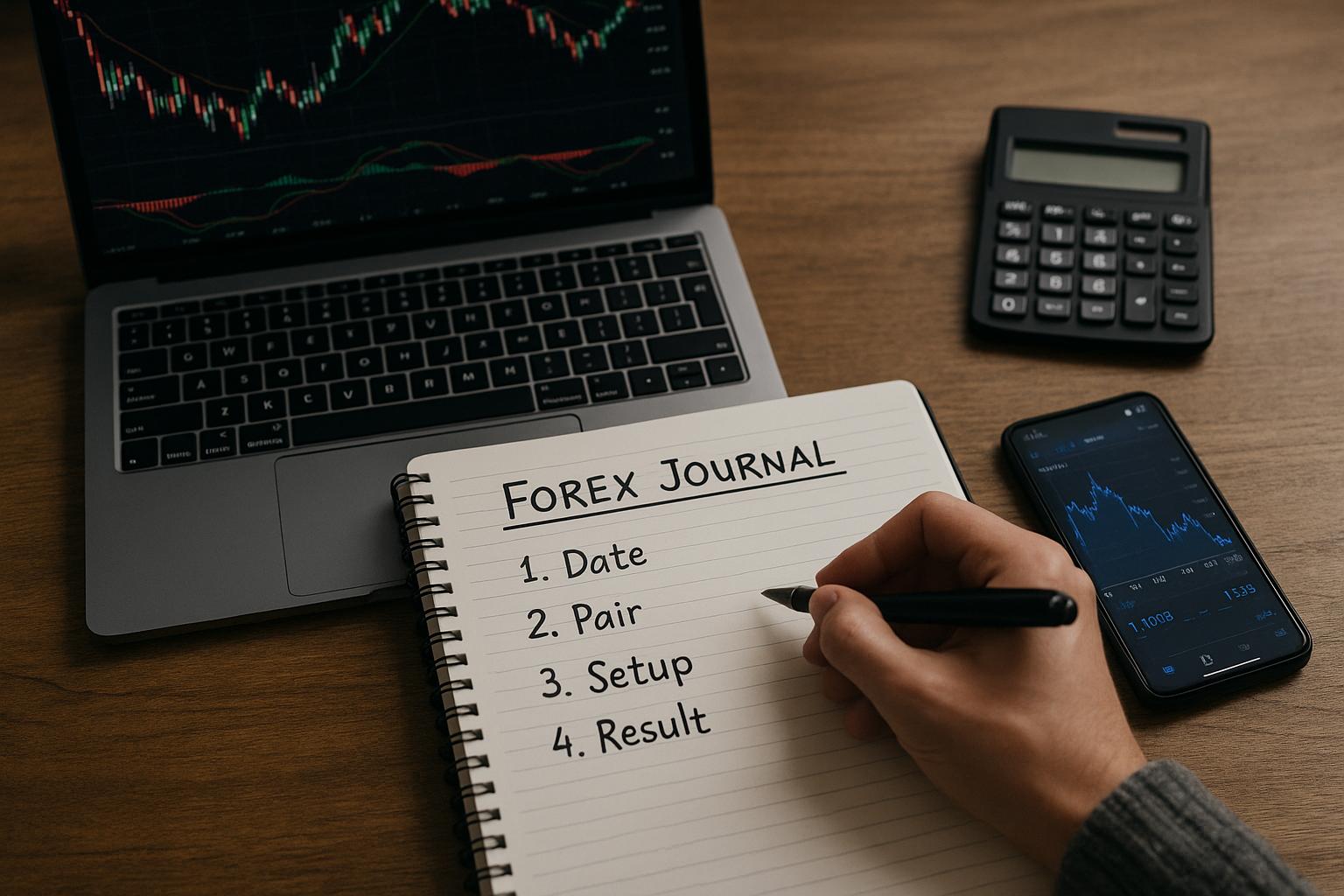
Date and Time: Record when each trade was executed. This is crucial as trades can be significantly influenced by specific market sessions, time zones, and even global economic events. Understanding what time active orders were placed helps traders correlate outcomes with broader market conditions.

Currency Pair: Specify the currency pairs traded. Different currency pairs behave uniquely, driven by factors such as interest rate differentials or political events in the countries involved. Tracking these specifics in a journal can help identify patterns and performance differences across various pairs, contributing to more strategic trading decisions.

Position Size: Document the size of the trade. Position sizing directly affects risk management and the potential for profits or losses. Thus, understanding how different position sizes perform under various conditions is critical to honing a personalized risk management strategy.

Entry and Exit Points: Note the exact entry and exit levels. Accurate documentation allows traders to evaluate the success rate of their predictions and make data-driven adjustments. Keeping track of these points is vital for reflection and analysis, leading to more precise future trade placements.

Trading Strategy: Describe the strategy applied. Defining the strategy provides a baseline for evaluating its effectiveness. For instance, a trader employing a trend-following strategy can use the journal to record how effective this has been in various market situations, thus refining their approach.

Results and Comments: Record the outcome of each trade along with any additional comments. This section is an opportunity to reflect not just on technical and fundamental factors, but also on emotional and psychological influences. Understanding how emotions such as fear or greed impact decisions can drive improvements in trading psychology.

The Role of Consistency in Journal Maintenance

Regularly updating the trading journal is paramount for gaining long-term insights. Consistency is key to tracking performance over time and eventually recognizing long-term trends and behavioral patterns. Establishing a routine—whether it is daily, weekly, or post a specific number of trades—ensures that the data remains relevant and useful.

Consistency in journaling helps prevent relying on selective memory, which can skew perceptions of past performance. A disciplined approach provides a comprehensive historical record, enabling traders to make more objective assessments and improvements.

Analyzing the Data for Continuous Improvement

Detailed analysis of journal entries is crucial for aspiring to improve trading skills continuously. By reviewing trades, traders can identify patterns, successful strategies, and recurring mistakes. This ongoing analysis serves as a feedback loop, highlighting what works and what doesn’t.

Traders benefit from not just recognizing areas that need adjustments but also from reinforcing effective practices. Armed with insights from their journal, they can adapt strategies and refine their approach to risk and reward management.

Using technologies like spreadsheet software or dedicated trading journal platforms can facilitate more efficient data organization and analysis. These tools often allow traders to visualize data through charts and graphs, aiding the interpretation of complex datasets. This visual representation can be instrumental in revealing insights that may not be immediately apparent through raw data alone.

Utilizing Technology for Enhanced Journal Management

Technology plays a significant role in optimizing the journaling process. Numerous forex trading platforms offer built-in journaling features that simplify data entry and analysis. Automated features within these platforms can capture trade data as a trader executes orders, reducing manual input and improving accuracy.

By employing such technology, traders can minimize human error, enhance data accuracy, and devote more time to interpreting outcomes rather than merely recording them. This, in turn, enables a clear focus on decision-making and strategy optimization.

Developing a forex trading journal is a process that requires diligence and commitment. By meticulously documenting and analyzing trades, traders can glean valuable insights into their performance. The journal does not just serve as a record but as a tool for continual learning and adaptation.

Through the disciplined maintenance of a trading journal, traders equip themselves with the knowledge and confidence to pursue more informed and potentially profitable trading decisions. This practice supports growth beyond the immediate gain or loss of individual trades, fostering an environment where traders can thrive in the competitive world of forex.